Live
White House
World

Iran and US say deal closer than ever

  • US President Donald Trump has repeatedly insisted that a deal was all but signed
Published June 13, 2026 Updated June 13, 2026 03:36am
By

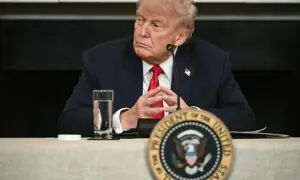
TEHRAN: Iranian and US officials said Friday a deal to end the Middle East war was closer than ever, with mediator Pakistan also expressing optimism that an elusive agreement was within reach.

But during weeks of halting negotiations – marked by threats and exchanges of fire despite an April truce – US President Donald Trump has repeatedly insisted that a deal was all but signed, only for talks to drag on.

And disagreements between the two sides persisted, with Iranian state media publishing a breakdown of what was purportedly on the table that was at odds with Washington’s account.

“The Islamabad Memorandum of Understanding has never been closer,” Iran’s foreign minister, Abbas Araghchi, wrote in a social media post, referring to the Pakistani capital that hosted previous US-Iran talks.

Trump – who on Friday morning accused the Iranians of negotiating in bad faith and misrepresenting the terms that had been agreed – posted a screenshot of Araghchi’s message on his own feed just hours later.

Also read: Iran’s foreign minister says Islamabad memorandum has ‘never been closer’

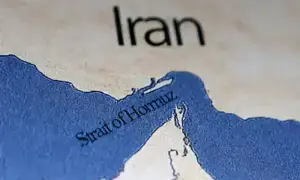
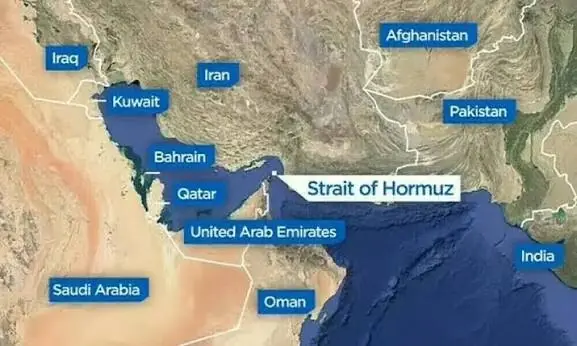
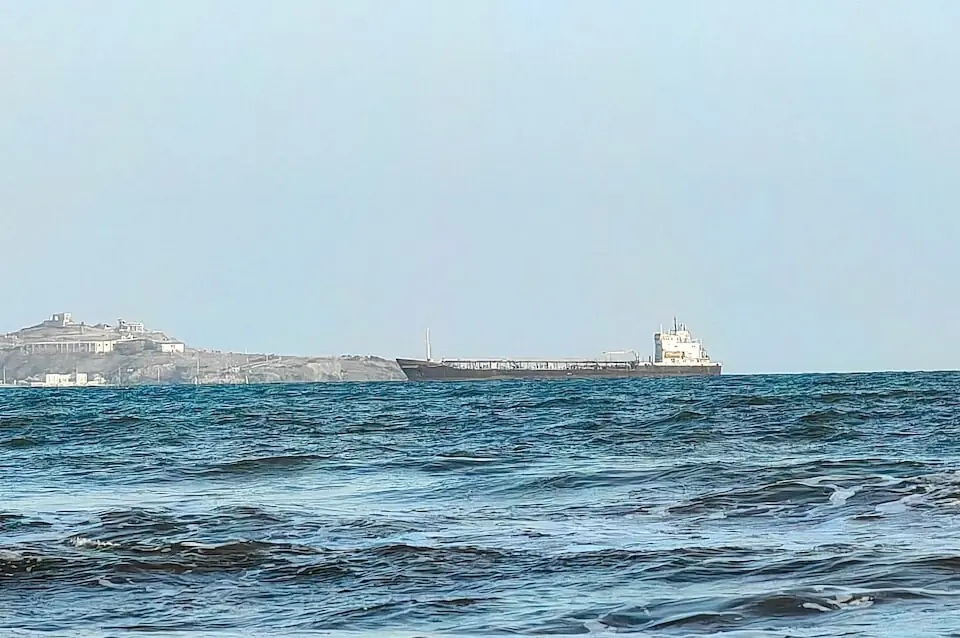
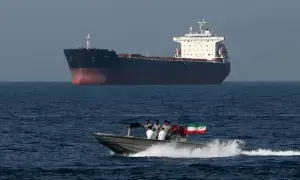
Araghchi provided some details on the agreement in an interview with state television, saying it calls for the lifting of the US naval blockade of Iran’s ports and unspecified changes to the administration of the Strait of Hormuz, a key maritime trade route for oil and gas from the Gulf.

He also said the only way to deal with the country’s enriched uranium – which Washington alleges is part of a nuclear weapons programme – “is to dilute it inside Iran.”

‘Not 100 percent’

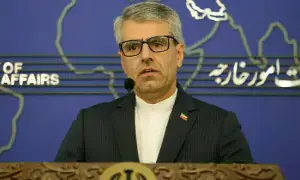
Disputing Trump’s “bad faith” accusation, Iranian foreign ministry spokesman Esmaeil Baqaei said an agreement had now been reached with Washington “on most points”.

Pakistani Prime Minister Shehbaz Sharif, whose country has been a key mediator since the initial talks, confirmed that “a final, agreed-upon text of the peace deal has been reached”.

“Peace has never been as close as it is now,” Sharif said, while acknowledging “incessant misinformation” surrounding the deal.

A senior US official also voiced optimism that the parties would be “signing this agreement over the next few days”.

“If I were to give you a confidence that we were going to be signing this agreement, I maybe would have said 75 percent this morning, it’s probably more like 80-85 percent now, but it’s not 100 percent,” the official told reporters in a call.

The Swiss foreign ministry on Friday said it had been in contact with both the United States and Iran, and had “proposed Switzerland as the venue for a possible signing, should the parties agree to it”.

But Araghchi said that upon finalisation, a draft deal with the United States would be signed “remotely”, adding that this could happen “in the coming days.”

Also read: Iran says no final decision made on deal that Trump hopes could be signed soon

US ally Israel has said that Trump had promised it that any agreement would see Iran stripped of its enriched nuclear material, but Tehran’s official IRNA news agency said this was not even on the table.

‘Benefits will flow’

According to IRNA’s account, after an initial agreement is signed, Iran and the United States would hold 60 more days of talks and “Iran’s right to enrich uranium and the retention of enriched material… will be emphasised with a view to their inclusion in the final agreement”.

Beyond this, according to IRNA, Iran would insist on managing traffic through the Strait of Hormuz, which Tehran has blockaded since the outbreak of the war, causing major disruptions to the global economy.

On Friday, Iran’s Mehr news agency, quoting a source close to the country’s negotiating team, said the deal would also see the release of $24 billion in frozen Iranian assets.

But those details clashed with a summary offered by a senior White House official, who told AFP Iran had agreed to dismantle its nuclear programme, destroy its enriched uranium stockpile and reopen the strait – and that Tehran would not see any of its frozen funds returned until it had honoured these commitments.

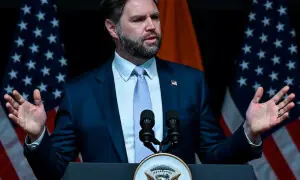
US Vice President JD Vance likewise said Iran was “not receiving any cash, and no funds are being released for simply signing a deal or attending a meeting”.

But, he added, if “Iran meets its obligations, then economic benefits will flow to them and to the entire region”.

World

Trump says will urge Netanyahu not to retaliate against Iranian missiles: Axios

  • I am going to call Bibi right now and tell him not to retaliate
Published June 8, 2026 Updated June 8, 2026 03:14am
By

WASHINGTON: US President Donald Trump said Sunday he will call Israeli Prime Minister Benjamin Netanyahu to urge him not to retaliate against Iranian missile strikes on Israel, news outlet Axios reported. 

“I am going to call Bibi right now and tell him not to retaliate,” Trump was quoted as saying by Axios journalist Barak Ravid in a phone interview, using the Israeli leader’s nickname.

“Each of them had their fun. Israel had its strike and Iran had its strike. We don’t need another one,” Trump said, according to excerpts of which Ravid posted on X.

Sunday’s missile barrage was Iran’s first against Israel since an April ceasefire took hold in the Middle East war, and Trump voiced concern it could set back negotiations.

“The Iranian strikes didn’t hurt anybody. Hopefully Israel is not going to retaliate. If Bibi strikes them back it’s just gonna keep going like the last 47 years, or the last 3,000 years,” the US president said.

“We are very close to a final deal with Iran. It is going to be a good deal. I don’t want it to blow up because of what is happening now,” he added.

Also read: Iran fires missiles at Israel for first time since truce

Iran’s powerful Revolutionary Guards called Sunday’s attack a “warning” after Israel struck Beirut’s southern suburbs earlier in the day, threatening wider strikes in the event of repeated aggression.

An April 8 ceasefire had halted major hostilities between Iran, Israel and the United States.

But efforts to turn the truce into a settlement have repeatedly stalled, and Sunday’s launches were sure to further dampen hopes for a lasting peace as the war reached its 100th day.

In a separate interview with Fox News, Trump said the Iranian strikes were not going to help negotiations, which were “very close” to reaching an agreement.

“We’re very close. I would say an agreement would be signed on Monday, Tuesday or Wednesday of this coming week. And now this takes place.”

He urged Iran to “get back to the table and make a deal.”

Trump also criticized Israel’s strikes on Beirut on Sunday, saying he was “not happy about it.”

The White House did not immediately respond to an AFP request for comment.

World Print edition: 2026-06-08

US considers buying Chagos Islands

Published June 8, 2026 Updated June 8, 2026 02:29am
Photo: Reuters
Photo: Reuters
By

WASHINGTON: The White House is considering a plan to buy the Chagos Islands from Mauritius, the Telegraph reported on Sunday. US officials have drawn up a proposal to bypass the U.K. and make their own deal to take control of Diego Garcia, the report said. Reuters could not immediately confirm the report. The White House and the UK Foreign Office did not immediately respond to a request for comment.

The plan is among several options being drafted by the White House, in a paper aimed at providing alternatives to British Prime Minister Keir Starmer ceding sovereignty of the Indian Ocean archipelago to Mauritius, the report said.

The White House has been in regular discussions with Downing Street about securing the future of Diego Garcia, the report added.

Britain’s government in April put on hold its deal to cede sovereignty of the Chagos Islands, home to the US-British Diego Garcia air base, which has been criticised by Trump.

World

Trump pardons former US congressman convicted of securities fraud

  • Buyer was found guilty in March of 2023 on four counts of securities fraud, and was sentenced in September of that year to 22 months in prison
Published June 6, 2026 Updated June 6, 2026 06:48pm
Former U.S. Congressman Stephen Buyer arrives for his insider trading trial at the United States Courthouse in the Manhattan borough of New York City, U.S., March 8, 2023. File Photo: Reuters
By

WASHINGTON: President Donald Trump has pardoned former U.S. Representative Stephen Buyer, an Indiana Republican, who was convicted of securities fraud for engaging in insider trading in 2018 as a T-Mobile US consultant ahead of a $23 billion merger with Sprint.

The proclamation, issued on Thursday and announced by the White House on Friday, gave no specific rationale for the pardon other than to assert that Buyer’s service as a U.S. Army judge advocate general and member of Congress “was distinguished and highly productive.”

It also said that Trump, in granting Buyer a “full, complete and unconditional pardon,” was acting on the “advice and recommendation” of 52 current and former members of the U.S. Senate and House of Representatives listed in the proclamation.

Buyer served in the House as a Republican from Indiana between 1993 and 2011 before working as a corporate consultant. He was found guilty in March of 2023 on four counts of securities fraud, and was sentenced in September of that year to 22 months in prison.

Prosecutors said at trial that Buyer bought Sprint stock after learning from a T-Mobile executive that the telecommunications companies were in merger talks in 2018 and made illegal trades again the following year.

According to prosecutors, Buyer made more than $100,000 from the Sprint trades and more than $200,000 from buying stock in Navigant Consulting Inc. before it was acquired by Guidehouse in 2019.

Buyer, who had served as one of the House managers in the 1999 impeachment trial of then-President Bill Clinton, took the stand at his own trial and denied trading on inside information.

Prosecutors sought three years in prison for Buyer in court filings, saying that he had abused his clients’ trust and lied on the stand.

The U.S. Supreme Court refused in May of this year to hear Buyer’s appeal of his conviction.

World

Trump lawyers deny BBC access to financial details in $10-billion lawsuit, FT says

  • The broadcaster ​and the White House did not immediately respond to requests for comment
Published June 5, 2026 Updated June 5, 2026 11:19am
Photo: Reuters
Photo: Reuters
By

US President Donald Trump’s legal team has ​refused to hand over financial information sought by BBC lawyers in his $10-billion defamation case ‌against the broadcaster, the Financial Times said on Friday, citing court filings.

Trump has accused the publicly funded broadcaster of defaming him by splicing together parts of a January 6, 2021, speech to make it appear that he directed supporters to storm ​the U.S. Capitol.

The impetus for Trump’s request to delay “appears to be the flat refusal by the ​Donald J Trump Revocable Trust . . .  to provide any financial information under subpoena”, the newspaper cited ⁠the BBC as saying in a court filing.

That action came despite Trump’s claims that the BBC ​injured “the value of his brand, properties, and businesses” and the president’s “own refusal, to date, to provide any financial ​information in discovery”, the paper added.

Trump’s lawsuit, filed in Florida in December, says the BBC violated a state law that bars deceptive and unfair trade practices. He is seeking damages of at least $5 billion on each of its two counts.

The broadcaster ​and the White House did not immediately respond to requests for comment.

A spokesperson for Trump’s legal team ​told the newspaper the BBC was liable for “intentionally and maliciously defaming him by distorting and manipulating his speech”.

In a statement, ‌the ⁠spokesperson added, “President Trump will continue to hold accountable the BBC and all those who traffic in fake news.”

Trust managed by Trump’s eldest son

In its bid to ascertain the documentary’s financial impact, the BBC has subpoenaed the trust, managed by Trump’s eldest son, Donald Trump Jr, as the sole trustee, which holds the president’s ​business interests and assets, the ​paper said.

The BBC ⁠legal team has sought financial documents that reflect the trust’s holdings and value, assets, inventories and properties, the paper added, citing court filings from May that it ​viewed.

The request covers almost 400 entities owned by or associated with the trust, ​as well ⁠as requests for tax returns, the paper said.

The documentary, first broadcast in 2024 shortly before a presidential election Trump won, featured a section in which he told supporters to march on the Capitol and another, from nearly ⁠an hour ​later, where he said, “Fight like hell.”

The BBC apologised to Trump for ​the edit, but wants his lawsuit thrown out. Trump’s subsequent reelection showed the alleged defamation did not harm his reputation, the broadcaster said ​in court papers released in March.

World Print edition: 2026-06-04

Trump touts Vance and Rubio for 2028 Republican ticket

Published June 4, 2026 Updated June 4, 2026 05:22am
By

WASHINGTON: US President Donald Trump thinks the two Republicans most likely to jockey to succeed him would make an unbeatable ticket if they run together, he told an interviewer Wednesday.

Vice President JD Vance and Secretary of State Marco Rubio are both widely seen as strong contenders to run for the 2028 Republican presidential nomination — and as rivals.

“I like them both. I like them together,” Trump said on the New York Post podcast “Pod Force One,” adding: “I don’t know how you beat them if they’re together.”

The two men would have to agree to it but “they get along really well,” Trump mused.

He did not venture to say who should be at the top of the ticket.

Neither man has officially declared his intention to run, and Rubio, 54, has publicly said that the vice president is a friend and insisted that he would not run in 2028 if Vance is a candidate.

Recent polls suggest that Vance and Rubio are nearly tied among Republican voters.

Last month, Rubio attracted buzz for confidently handling a White House press briefing, fielding questions on Iran, Cuba and China with a relaxed style and dashes of humor — and little of the invective that Trump often unleashes in his briefing room appearances.

World Print edition: 2026-06-04

Trump confirms using foul language with Israel’s Netanyahu

Published June 4, 2026 Updated June 4, 2026 05:22am
By

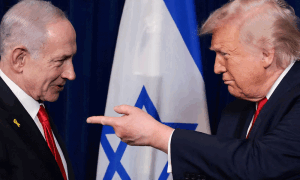
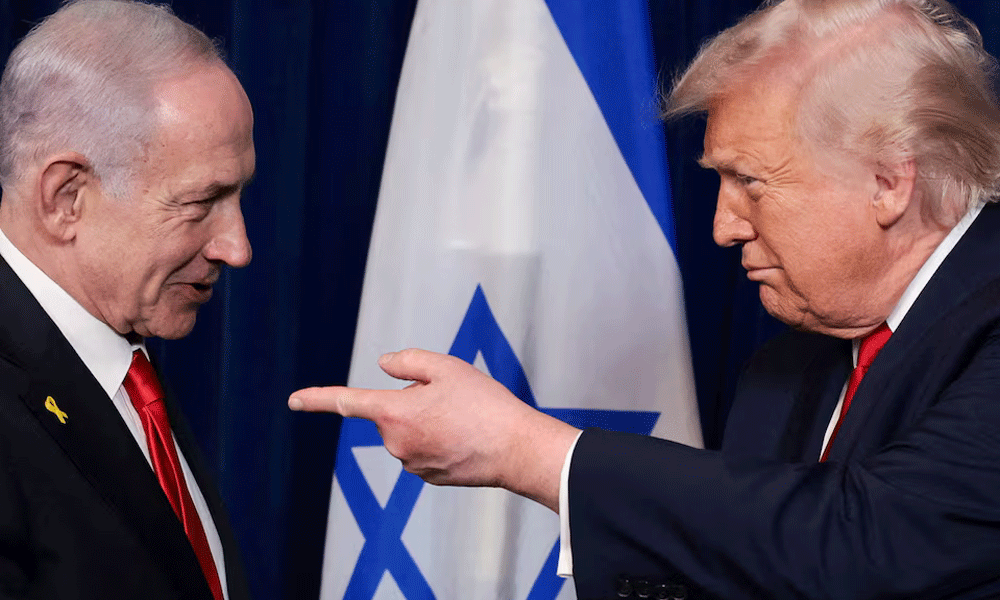
WASHINGTON: US President Donald Trump has confirmed a tense exchange with Israel’s Prime Minister Benjamin Netanyahu in which he reportedly berated his close ally with expletives.

In an interview published Wednesday in the New York Post, Trump was asked about the conversation he had with Netanyahu over the phone on Monday.

“You said, ‘Are you f-ing crazy? What are you f-ing doing? I helped you stay out of jail.’ Is that true? Did you speak to him in those terms?” the interviewer asked.

“I did,” Trump responded. “I was a little bit perturbed at his constantly fighting with Lebanon.”

“I said, ‘Bibi, we gotta stop this.’”

Trump went on to say he had a “very good relationship” with Netanyahu. “We’ve done well together… I like Bibi a lot.”

Trump unleashed the profane tirade over Israel’s threats to bomb the Lebanese capital Beirut, fearing it would undermine talks with Tehran to end the war in the Middle East, the Axios news outlet and ABC News reported.

The exchange underscored the shaky ties between two right-wing allies who started the war by launching an attack on Iran in late February that spread to Israel striking Lebanon.

Israeli media have rejected the account of the conversation.

A White House official referred AFP to Trump’s Truth Social posts from Monday in which he thanked Netanyahu for what he said was an agreement to pull troops back from Beirut.

Iran had reportedly halted peace talks because of Israel’s attacks on Lebanon.

Markets Print edition: 2026-06-03

Copper hits over two-week high amid US tariff uncertainty

Published June 3, 2026 Updated June 3, 2026 02:34am
By

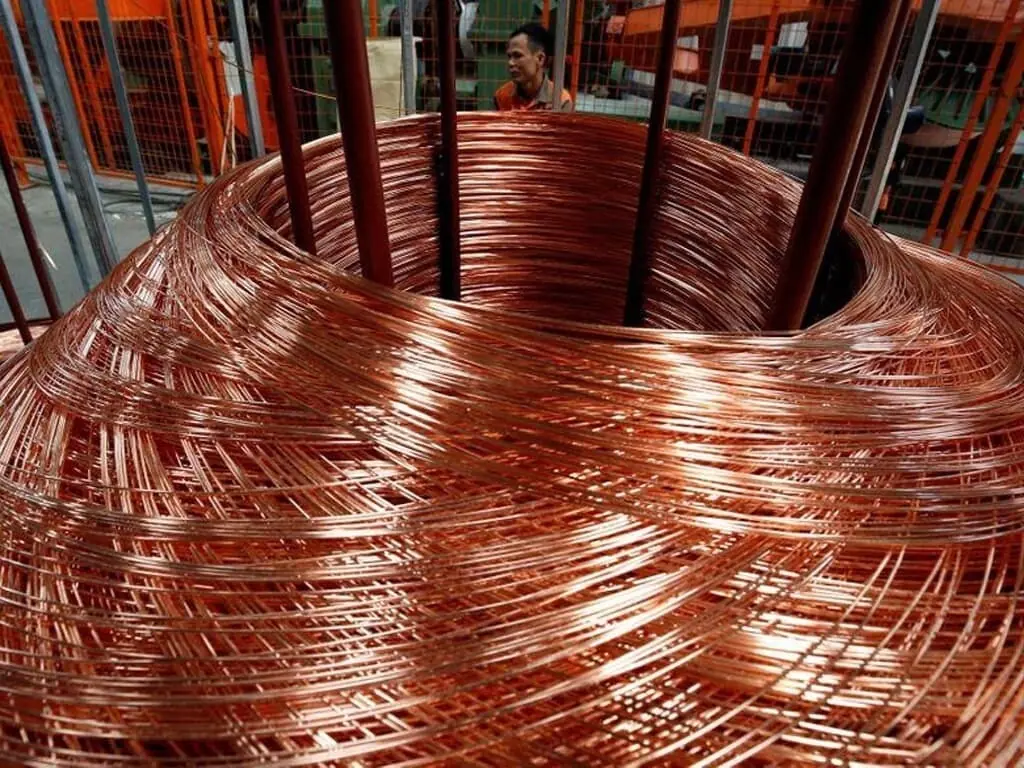
LONDON: Copper rose to a more than two-week high on Tuesday as tariff uncertainty and tightening supply outside the United States supported prices, while aluminium struck a more than four-year peak.

Benchmark three-month copper on the London Metal Exchange was up 1percent at USD13,970 a metric ton in official open outcry activity. It earlier touched USD13,994, its highest since May 14.

Investors are awaiting a recommendation from the US Department of Commerce by the end of the month on possible tariffs on imports of refined copper. The prospect of such a duty helped spur prices last year but ultimately did not materialise.

Panmure Liberum analyst Tom Price said investors he spoke to in the US last week were considering buying US copper equities for the next few weeks. “Because it worked last year, maybe it’ll work this year,” he said. Still, the elevated copper price in no way reflects fundamentals, Price added.

The White House on Monday amended tariffs on some copper, aluminium and iron imports, but the order did not resolve the broader question about refined copper that has driven regional dislocation in the market.

COMEX copper’s premium over LME price widened, encouraging shipments to US warehouses. Aluminium, meanwhile, was up 1percent at USD3,752 a ton, after touching USD3,787.50, its highest since March 2022, as LME inventories dwindled to 335,450 tons, the lowest in almost four years.

The cash LME aluminium contract traded at a USD116.50 per ton premium over the three-month forward, the highest level in at least 17 years, underscoring the shortage of immediately available metal. “Aluminium, I think, is genuinely a tight market,” Price said, pointing to slowing Chinese exports and the loss of supply from the war-hit Middle East.

“But copper and tin just look like speculative playthings at the moment,” he said. Tin added 1.9percent to USD57,725, within striking distance of its all-time peak of USD59,040 set in January.

Zinc firmed 1.3percent to USD3,626, nickel gained 0.4percent to USD19,325 and lead was up 1.2percent at USD2,029.50 after hitting its highest since January 29.

World

US in talks to expand nuclear weapons deployments in Europe, FT says

  • US officials have signaled openness to additional deployments beyond the existing six countries hosting nuclear-capable bombers
Published June 2, 2026 Updated June 2, 2026 10:34am
By

The US is discussing whether to deploy nuclear weapons in additional European NATO states, the Financial Times reported on Tuesday.

US officials have signaled openness to additional deployments beyond the existing six countries hosting nuclear-capable bombers, the FT said, citing three people briefed on the discussions.

The move would involve more countries to host so-called US dual-capable aircraft (DCA), which are able to deliver nuclear strikes, the newspaper said, while cautioning that an agreement to expand US nuclear hosting was not imminent.

Countries on NATO’s eastern flank including Poland and some Baltic states were interested in potentially hosting DCA bases, the report said, adding that discussions were ongoing in NATO channels.

Iran talks moving at ‘rapid pace’: Trump

Reuters could not immediately verify the report.

The White House, Department of Defence and NATO did not immediately respond to requests for comment. Pentagon policy chief Elbridge Colby has previously said publicly that the US will continue to use its nuclear weapons to protect NATO members, even as European allies take the lead on conventional forces.

US President Donald Trump and many of his aides have criticised European allies for not spending enough on their militaries and relying on the US for conventional defense.

World Print edition: 2026-05-31

Pentagon chief says US seeks ‘stable equilibrium’ with China in Asia

Published May 31, 2026 Updated May 31, 2026 02:34am
Photo: AFP
Photo: AFP
By

SINGAPORE: Pentagon chief Pete Hegseth struck a measured tone towards China at a major defence forum on Saturday, noting “rightful alarm” over Beijing’s military build-up but saying Washington sought a “stable equilibrium” in Asia.

Hegseth’s headline speech at Singapore’s Shangri-La Dialogue, which brings together top defence officials and experts from about 45 countries, contrasted with his strongly confrontational remarks on China at last year’s gathering.

It came as Donald Trump struggles to resolve the Middle East war — which has caused oil prices to soar, hurting major Asian economies — and after the US president met his Chinese counterpart Xi Jinping against the perennial background of tensions over Taiwan.

“When we look across the region today, there is rightful alarm regarding China’s historic military build-up and the expansion of its military activities in the region and beyond,” Hegseth said.

Washington does not seek “needless confrontation” but rather “a genuinely stable equilibrium (in Asia) that works for Americans as well as our allies”, he said.

That means “a favourable but durable balance of power in which no state, including China, can impose its hegemony and hold the security or prosperity of our nation and our allies in question”, according to Hegseth.

Unlike Beijing, which has sent a panel of military experts and scholars instead of Defence Minister Dong Jun for the second year running, Hegseth is leading a bumper US delegation to the event that provides chances for both open debate and closed-door diplomacy.

The Pentagon chief said the United States sought “respectful” and “good-faith” engagement with Beijing, adding: “I wish my counterpart was here at this conference, but I look forward to other options when we can cross paths.”

Major General Meng Xiangqing, the head of the Chinese delegation, said following the speech that “stable US-China relations are not only good for both peoples, but also good for regional stability and global peace”.

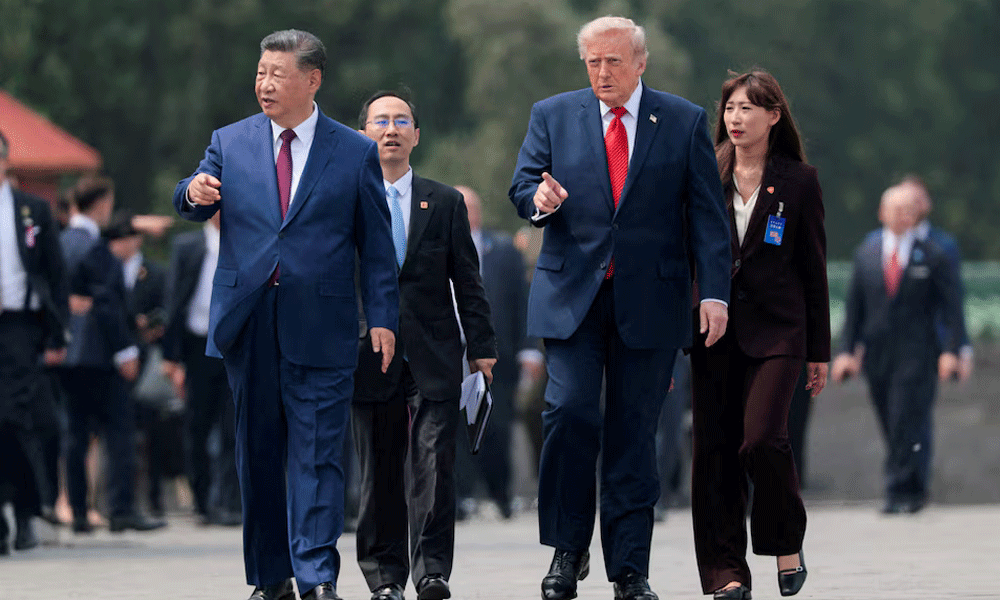
Trump visited China this month, talking up “fantastic” trade deals but giving few details and later suggesting Washington could use its arms sales to self-ruled Taiwan as a bargaining chip with Beijing.

There had been “no change” in Washington’s stance towards Taiwan, but “any decision about future Taiwan arms sales… will rest with” Trump, Hegseth said.

His remarks about the regional state of affairs contrasted sharply with last year’s event, when Hegseth painted China as a potentially “imminent” threat to security and outlined a swaggering vision of muscular American deterrence.

Chinese delegate Da Wei, director of the Center for International Security and Strategy at Beijing’s Tsinghua University, told AFP this year’s address was “much more moderate”. However, he said Hegseth’s depiction of a hegemonic China was “ironic… given what the US is doing in Iran and has done in Venezuela.”

US delegate Tammy Duckworth, a Democratic senator and Trump critic, said Hegseth’s remarks were overly conciliatory towards China.

“I worry that this administration is being distracted into wars that they’ve started in other parts of the world at the expense of our commitment here in the Indo-Pacific,” she told reporters.

Instead of Dong, China has sent experts and scholars from its army’s academic institutions, led by Meng of the National Defense University.

Analysts have said Dong’s no-show reflects Beijing’s confidence as an established power with little inclination to answer publicly for its assertive moves in the region.

Some argue, however, that China is also running the risk of having no senior policymaker present if two major security issues come up: reopening the Strait of Hormuz, and Beijing’s claim to Taiwan.

Hegseth praised nations including South Korea, Japan, Australia and the Philippines for boosting their defence spending, while threatening consequences for nations that “free-ride”.

“Those days are over. Allies who refuse to step up and carry their own weight for our collective defence will face a clear shift in how we do business.”

Hegseth’s remarks came as a peace deal between the United States and Iran to end their war remained elusive.

A White House official told AFP on Friday that Trump, who is weighing a final decision on a potential accord, would only commit if Iran met all his conditions.

But Iran has said “no final agreement” is in place, and its state media has rebutted parts of Trump’s characterisation of the deal.

World Print edition: 2026-05-31

US says capable of resuming war with Iran

Published May 31, 2026 Updated May 31, 2026 02:34am
By

WASHINGTON: The United States warned on Saturday it was “more than capable” of resuming war with Iran after President Donald Trump said any peace deal must adhere to his red lines, including Tehran never being able to develop nuclear weapons.

The White House had signaled Trump was close to a decision on a potential deal, though Tehran denied there was a final agreement on ending the conflict.

US sources had told AFP the deal was waiting on Trump’s sign-off, but he made no decision after a White House Situation Room meeting on Friday.

Meanwhile, Pentagon chief Pete Hegseth, while attending a defence summit in Singapore, said on Saturday that Washington was “more than capable” of restarting the war. US Central Command (CENTCOM) posted on X that American forces “remain present and vigilant across the region.”

The efforts to reach a deal were thrown into question this week by US strikes on the Iranian port of Bandar Abbas, countered by retaliatory Iranian fire.

Iran’s IRNA state news agency said air defenses shot down a drone “belonging to the US-Zionist aggressor enemy” on Saturday, citing a statement from the army.

Nevertheless diplomacy continued, including to stop fighting in Lebanon, which Iran has insisted be included in any end to the war and where Israeli forces advanced further even as military delegations from both nations met at the Pentagon.

Trump said his priorities in any deal include Iran agreeing to never develop nuclear weapons and the re-opening of the blockaded Strait of Hormuz.

“President Trump will only make a deal that is good for America and satisfies his red lines,” a White House official told AFP, adding: “Iran can never possess a nuclear weapon.”

Iranian foreign ministry spokesman Esmaeil Baqaei pushed back on Trump’s conditions, saying the Islamic republic “said goodbye to the language of ‘must’ 47 years ago.” Exchanges of messages were continuing, he added, but “no final agreement has been reached.”

In his social media post, Trump said Tehran would remove mines from the Strait and end its closure of the waterway with “no tolls,” while the US would lift its blockade.

The two countries would also coordinate on removing and destroying Iran’s enriched uranium, he said, adding that “no money will be exchanged, until further notice.”

Iran’s Fars news agency, however, cited sources as saying Tehran was demanding “the immediate release of $12 billion” before moving to the next phase of negotiations.

On the toll-free reopening of Hormuz, the sources said “no such clause appears in the text of the agreement,” while Trump’s comment on destroying Iran’s nuclear material “is fundamentally baseless.” Iran’s ISNA news agency on Saturday cited lawmaker Alireza Salimi as saying a plan “to implement Iran’s management and sovereignty over the Strait of Hormuz will soon be approved by parliament.”

Meanwhile, Iran’s Tasnim news agency said the US blockade in the strait remains in place and its ships “are receiving warnings from CENTCOM to stop and not cross the blockade line.”

“Both sides are speaking in a way that keeps their supporters satisfied. It’s not clear who is telling the truth,” Ali, from Tonekabon north of Tehran, told AFP.

Fighting continues on the war’s Lebanese front.

Israel’s military issued evacuation warnings on Saturday for residents of seven villages in southern Lebanon, after Prime Minister Benjamin Netanyahu said Israeli forces had pushed deeper into the country.

Israel has kept up its heavy bombardment of south Lebanon, with Lebanese President Joseph Aoun emphasising in a call with US Secretary of State Marco Rubio “the need to exert all efforts to reach a ceasefire.”

A truce between Israel and Hezbollah began on April 17 but has never been observed, with both sides accusing each other of violating it.

In early March, Tehran-backed Hezbollah launched rockets at Israel over the US-Israeli killing of Iran’s supreme leader, prompting Israeli strikes across Lebanon and a ground invasion.

Israel and Lebanon began direct talks in April, with a fourth round expected next week.

World Print edition: 2026-05-30

US judge freezes Trump ‘slush fund’ for allies

Published May 30, 2026 Updated May 30, 2026 05:48am
By

WASHINGTON: A US federal judge on Friday temporarily blocked the White House from moving ahead with a USD1.8 billion compensation package that critics have denounced as a “slush fund” for President Donald Trump’s political allies.

US District Judge Leonie Brinkema barred the administration from taking any further action to create or operate the fund while she considers whether to impose a longer-lasting pause.

Her order blocks the transfer of money into the fund, the consideration of claims and the disbursement of any payments, saying the freeze was needed to ensure that no money was “irreversibly disbursed” before the legal challenge is heard.

The decision is another setback for one of Trump’s most politically explosive second-term initiatives, which has already alarmed Democrats, legal experts and some Republicans in Congress.

The fund was created by the Justice Department as part of an extraordinary settlement of Trump’s civil lawsuit against the Internal Revenue Service over the leak of his tax returns by a former government contractor.

The administration says the program is intended to compensate people who suffered from government “weaponization” and “lawfare” — Trump’s terms for what he says was the politically motivated targeting of conservatives and his supporters.

But opponents say the fund has no clear legal basis, little public oversight and could be used to reward loyalists, including defendants convicted of crimes related to the January 6, 2021 assault on the US Capitol by Trump supporters. Brinkema’s brief order came after a lawsuit by a group of plaintiffs including Andrew Floyd, a former federal prosecutor who investigated and prosecuted the January 6 defendants, and Jonathan Caravello, a California professor arrested while protesting an immigration raid.

They argued that the fund amounted to a “collusive agreement” between Trump and his administration, with “no congressional authorization, no basis in law, and no accountability.”
The judge set a June 12 hearing to consider whether the government’s work on the fund should remain frozen for longer.

There was no immediate response to the ruling from Trump or the Justice Department.

The fund’s formal application process had not yet begun. A five-member board is expected to decide who receives compensation and how much they are paid, but the Justice Department has not announced the commissioners or detailed the criteria they would use. People claiming they were unfairly targeted by the government have already sought payments, however, according to US media.

Floyd, who previously worked in the now-closed Capitol Siege Section of the US attorney’s office in Washington, accused the administration of trying to rush money to political allies while punishing those who investigated them. The administration “is gifting the people I helped investigate and prosecute after January 6” access to an illegally created process, he wrote in a declaration.

World

Trump says Iran and Oman will not control Strait of Hormuz, deal remains elusive

  • US president's comments come after Iranian state TV reported it had obtained unofficial draft of agreement that would restore commercial shipping through strategic waterway
Published May 28, 2026 Updated May 28, 2026 11:28pm
Photo: Reuters
Photo: Reuters
By

President Donald Trump ​on Wednesday dismissed a report that Iran and Oman would manage shipping through the Strait of Hormuz as part of a deal to end the war, ‌in a sign that any potential agreement remained elusive.

Trump’s comments came after Iranian state TV reported that it had obtained an unofficial draft of an agreement that would restore commercial shipping through the strategic waterway to prewar levels within a month, with Iran and Oman jointly managing traffic.

That framework also would have the United States lift its blockade of Iranian ports and withdraw military forces from Iran’s vicinity.

Trump said no single country ​would have control over the waterway, and appeared to threaten Oman, a country with which the United States has decades-long military and economic ties.

Trump says US not satisfied yet on deal with Iran

“Nobody’s going to control (the strait),” ​Trump said at a cabinet meeting attended by reporters. “It’s international waters and Oman will behave just like everybody else or we’ll have to blow ⁠them up. They understand that, they’ll be fine.”

The White House and Oman’s embassy in Washington did not immediately respond to a request for comment.

Trump’s statement indicated the two countries remain far ​apart as they seek an initial deal to end the war, which has killed thousands and sent global energy prices sharply higher since it began with U.S. and Israeli strikes on February 28. ​

Trump has repeatedly said that a deal is close at hand since a ceasefire took effect in early April.

Sticking points in talks seeking to end the three-month-long conflict include reopening the Strait, through which a fifth of the world’s oil and liquefied natural gas traveled before the war, and the issue of the dismantling of Iran’s nuclear capacity. Iran is also seeking to lift sanctions and unfreeze funds held abroad.

The waterway is covered by international ​law that guarantees foreign vessels the right to pass through.

“We’ll watch over it, but nobody’s going to control it - that’s part of the negotiation that we have,” Trump said.

Trump has also ​asked Saudi Arabia, Qatar, Pakistan, Turkey, Egypt and Jordan to join the Abraham Accords normalizing relations with Israel as part of a deal to end the war, which they have declined to do.

He brought ‌up the ⁠issue again at the cabinet meeting. “I’m not sure we should make the deal if they don’t sign, if you want to know the truth,” Trump said.

US forces in the region

Iranian state TV said the draft deal would also have the United States withdraw military forces from the immediate vicinity, though it said the issue of U.S. troops in the region needed further discussion. The White House dismissed the report as a “complete fabrication.” Tehran did not comment.

Oil prices fell more than 5% after the Iranian television report, before regaining about a fifth of that fall.

The US military has ​some 15,000 troops enforcing a blockade of ​Iran and has thousands of additional forces ⁠at bases throughout the region, including in Gulf states like Qatar, the United Arab Emirates and Bahrain.

US naval vessels, some with thousands of sailors and Marines aboard, regularly transit the region, stopping in ports including in Oman.

The Pentagon did not immediately respond to a request for comment.

Nuclear ​issue for a second round, Iran says

The Iranian TV report did not mention Iran’s nuclear program, which the U.S. wants disbanded.

Iranian sources ​have said talks on the ⁠nuclear issue will come in a second round of negotiations - something that may not be acceptable to some of Trump’s closest supporters. Iran says its nuclear program is for peaceful purposes only.

“The bottom line is Iran’s never going to have a nuclear weapon,” U.S. Secretary of State Marco Rubio said at the cabinet meeting.

Iran’s Islamic Revolutionary Guards Navy said on Wednesday that 23 ships including oil tankers, container ⁠ships and other ​commercial vessels passed through Hormuz with its permission in the previous 24 hours, a fraction of the daily 125 ​to 140 vessels passing through before the conflict.

The war has also created political problems for Trump at home.

US polls show the war is deeply unpopular with the public, less than six months before midterm elections that will determine whether Trump’s Republican ​Party retains control of the US Senate and House of Representatives.

World

Trump says US not satisfied yet on deal with Iran

At a cabinet meeting, Trump revealed Iran's strong desire for a deal, but stressed US dissatisfaction, promising a resolution soon.
Published May 27, 2026 Updated May 27, 2026 10:04pm
By

WASHINGTON: US President Donald Trump on Wednesday told a cabinet meeting that Iran very much wanted to make a deal, but that the US was not satisfied with it yet.

“Iran is very much intent, they want very much to make a deal. So far they haven’t gotten there … we’re not satisfied with it, but we will be. We will be either that or we’ll have to just finish the job,” Trump told reporters at a cabinet meeting at the White House.

World

White House says Iran report on draft deal is 'complete fabrication'

US White House calls Iranian state TV report of a Middle East peace deal a 'complete fabrication,' urging disbelief.
Published May 27, 2026 Updated May 27, 2026 09:57pm
By

WASHINGTON: The White House on Wednesday blasted an Iranian state television report about a framework deal with the United States to end the Middle East war as a “complete fabrication.”

The Iranian report cited a draft outline of a memorandum of understanding (MOU) that it said included a US commitment to lift the naval blockade on Iran and withdraw its forces from the Gulf region.

“This report from Iranian controlled media is not true and the MOU they ‘released’ is a complete fabrication. Nobody should believe what Iranian state media is putting out. FACTS MATTER,” the White House said on X as it lashed out at US media for reporting the Iranian claims.

World Print edition: 2026-05-27

Trump declares himself in perfect health after physical exam

Published May 27, 2026 Updated May 27, 2026 03:13am
By

WASHINGTON: US President Donald Trump, who turns 80 next month, said “everything checked out perfectly” after having his physical on Tuesday at Walter Reed National Military Medical Center, following a year of public attention on apparently minor health issues.

Trump offered no details of the physical in a brief Truth Social post saying he had completed his six-monthly exam. Trump frequently casts himself as more energetic and fitter than Joe Biden, his Democratic predecessor who left office last year at age 82 after facing questions about his fitness for the job.

Still, recent photographs showing a blotchy neck rash have added to questions about Trump’s health, following images in July 2025 of swollen ankles and a bruised hand concealed with makeup.

Trump, whose birthday is June 14, became the oldest person to assume the presidency when he began his second term in January 2025.

The visit to Walter Reed National Military Medical Center was Trump’s third in 13 months.

Trump maintains an active golf schedule, but joked about his relative lack of exercise at a recent Oval Office event where his health secretary, Robert F. Kennedy Jr, said the president walks nine miles (14.5 km) every time he goes golfing.

“When I am not using the cart,” Trump said.

White House physician Sean Barbabella has said Trump is using a common cream as “a preventative skin treatment” to address the neck rash, but he has not given details of the condition being treated.

World Print edition: 2026-05-27

Trump to meet cabinet at Camp David on Iran

Published May 27, 2026 Updated May 27, 2026 04:12am
By

WASHINGTON: US President Donald Trump is set to hold a rare cabinet meeting at the Camp David presidential retreat on Wednesday as Iran talks near a critical point, a White House official told AFP.

The choice of the secluded retreat in the Maryland mountains — which Trump hardly ever visits, in a break with previous presidents — reflects the sensitive nature of discussions.

The New York Post reported that Iran was set to dominate the meeting, which was expected to be attended by all cabinet members. The economy was also on the agenda, it said.

Trump said Saturday that a deal with Tehran to end the Middle East war was close but negotiations are still tense, with the US leader warning that strikes on Iran could resume.

Camp David has been the scene of major US-led diplomatic developments in the past, including the 1978 accords between Israel and Egypt under President Jimmy Carter and a failed 2000 Israeli-Palestinian summit under Bill Clinton.

Trump has however been an infrequent visitor.

It will be only the second time that Trump has gone to Camp David in his second term. The first was just days before the United States launched strikes on Iran’s nuclear program in June 2025.

During his first term Trump said he had cancelled a planned summit with Taliban leaders at the retreat following an attack on US forces.

World

Trump says US will not 'rush into a deal' with Iran

Trump tells US negotiators not to rush the Iran deal, emphasizing patience is key to securing a lasting, certified agreement.
Published May 24, 2026 Updated May 24, 2026 08:40pm
By

WASHINGTON: President Donald Trump said Sunday that he had told US negotiators “not to rush into a deal” with Iran, amid anticipation that an agreement to end the war in the Middle East was close.

“The negotiations are proceeding in an orderly and constructive manner, and I have informed my representatives not to rush into a deal in that time is on our side,” Trump wrote on his Truth Social account.

“The Blockade will remain in full force and effect until an agreement is reached, certified, and signed.”

The United States has imposed a blockade of Iranian ports since April 13 after Tehran virtually halted traffic through the economically vital Strait of Hormuz in response to the US-Israeli attacks on Iran that began February 28.

Trump’s comments came as bipartisan opposition mounted in Washington overnight with several current and former lawmakers and officials criticizing supposed aspects of the deal that began to leak.

“Both sides must take their time and get it right,” Trump wrote in the same Truth Social post, while slamming the 2015 nuclear deal that former president Barack Obama agreed with Iran.

While the White House has not released aspects of the deal, Iran Foreign Ministry spokesman Esmaeil Baqaei said Saturday on state television that the two sides were nearing a “a memorandum of understanding, a kind of framework agreement composed of 14 clauses,” in “a trend toward rapprochement.”

Later on Saturday, Trump wrote on Truth Social that an agreement was “largely negotiated” but “subject to finalization.”

World

Suspect dies after trading gunfire with officers near White House, Secret Service says

  • The man approached the ​checkpoint at 17th Street and Pennsylvania Avenue near the ​White House, pulled a gun out of his bag ⁠and started shooting at officers
Published May 24, 2026 Updated May 24, 2026 10:08am
Photo: Reuters
Photo: Reuters
By

WASHINGTON: A gunman who fired at a White House checkpoint ‌was shot by officers and died after being taken to the hospital on Saturday evening, the Secret Service said.

The man approached the ​checkpoint at 17th Street and Pennsylvania Avenue near the ​White House, pulled a gun out of his bag ⁠and started shooting at officers, according to a Secret ​Service statement sent to Reuters. Officers returned fire and shot ​the suspect, the agency said.

A bystander was struck by gunfire, the statement said, but it did not make clear how badly the person ​was hurt. Another Secret Service statement, cited by multiple news ​outlets, said it was not clear whether the bystander was hit when ‌the ⁠gunman began shooting or during the subsequent exchange of gunfire.

Secret Service says it exchanged gunfire with armed suspect near White House

The shooting suspect was identified as an emotionally disturbed person, a law enforcement official told Reuters, adding that a “stay-away order” had ​been issued ​to him previously.

No ⁠law enforcement personnel were injured, the Secret Service said, adding that President Donald Trump was ​at the White House during the incident.

White House dinner shooting suspect seeks end of suicide precautions

The ​shooting comes ⁠nearly a month after a gunman fired shots inside the hotel hosting the White House Correspondents’ Association dinner, prompting Trump and ⁠other officials ​to be rushed out.

Markets Print edition: 2026-05-24

Chicago grain, oilseed futures fall on uncertainty, favorable weather

Published May 24, 2026 Updated May 24, 2026 02:23am
By

CHICAGO: Chicago soybean and wheat futures eased on Thursday, with analysts highlighting uncertainty over the impact of the US and Israeli war on Iran and trade with China ahead of the US Memorial Day holiday.

Meanwhile, beneficial weather in the US Midwest favoured early crop germination and potential yields. The most active wheat contract on the Chicago Board of Trade (CBOT) settled down 13 cents to USD6.47-1/2 a bushel. Soybeans dipped 5-1/2 cents to end at USD11.94-1/4 a bushel, while corn lost 3-1/2 cents to finish at USD4.62-1/4 a bushel. Traders grappled with alack of specifics arising from trade talks last week during a meeting in Beijing between China’s President Xi Jinping and US President Donald Trump, as well as ongoing concerns about the direction of the Iran war, said Don Roose, president of US Commodities.

After the meeting, the White House said China had agreed to buy USD17 billion worth of US agriculture annually on top of an existing multi-billion-dollar soybean commitment, but Beijing was less specific in its statements after the meeting.

“All we hear is that they’re working on a framework deal,” said Roose. “The market is a little bit skeptical.” Meanwhile, rains have boosted soil moisture in the Midwest, favouring early germination of crops, forecaster Vaisala said, adding that warmer-than-normal temperatures in the northern Midwest next week should accelerate early growth.

Traders also monitored potential for rain in the drought-hit US Plains, where months of dryness have already left wheat fields with wide cracks and stunted crops.

In China, the world’s largest soybean buyer, imports from the US in April more than doubled from a year earlier, as cargoes booked after Beijing resumed purchases late last year gradually arrived at Chinese ports.

World Print edition: 2026-05-23

Rubio sees progress in Iran talks

Published May 23, 2026 Updated May 23, 2026 05:43am
By

WASHINGTON/DUBAI: The United States has seen some progress towards a deal with Iran but more work is required, Secretary of State Marco Rubio said on Friday, as diplomatic efforts intensified to find an end to a conflict that has roiled the global economy.

Iran’s foreign minister met his Pakistani counterpart on Friday to discuss proposals to end the war, Iranian media reported, while Qatar sent a negotiating team to Tehran to try to resolve key differences.

While gaps have been narrowed between the two sides, there are still sticking points over Iran’s enriched uranium and control over the Strait of Hormuz, whose closure since the beginning of the war has triggered a global energy crisis. “There’s been some progress. I wouldn’t exaggerate it. I wouldn’t diminish it,” Rubio told reporters after a meeting of NATO ministers in Sweden. “There’s more work to be done. We’re not there yet. I hope we get there.”

READ MORE: Pakistan steps up diplomatic bid to get US-Iran peace talks on track

Rubio reiterated comments made on Thursday that Iran’s plans for a tolling system for the strait through which a fifth of the world’s oil and liquefied natural gas flows were “unacceptable”.

“We’re dealing with a very difficult group of people, and if it doesn’t change, then the president’s been clear he has other options,” Rubio said.

He also said the US had not asked the NATO military alliance for help on the Strait of Hormuz but that there needed to be a Plan B if Iran refuses to reopen the waterway.

Two days after presenting the Iranians with the latest US message in the negotiations, Pakistani Interior Minister Syed Mohsin Naqvi held another round of talks with Iranian Foreign Minister Abbas Araghchi in Tehran, the semi-official Tasnim news agency reported.

The Qatari team, which is working in coordination with the United States, arrived in Iran on Friday, a source with knowledge of the situation told Reuters. Qatar has been a key player in mediating between Israel and Hamas over the war in Gaza and in other areas of international tension, but had distanced itself so far from the current conflict after coming under fire from Iranian missiles and drones.

Uncertainty fuels oil-price gain

The war has wreaked havoc on the global economy, with the surge in oil prices stoking fears of rampant inflation. The US dollar was near its highest level in six weeks on Friday amid the uncertainty over peace talks, while oil prices climbed as investors doubted the prospects of a breakthrough.

“We’re coming to the end of week 12, we’re six weeks in the ceasefire, and I’m just not really that convinced we’re any closer to a resolution between the US and Iran,” Tony Sycamore, a market analyst at IG, said of the Middle East war.

US President Donald Trump said the US would eventually recover Iran’s stockpile of highly enriched uranium - which Washington believes is destined for a nuclear weapon, though Tehran says it is intended purely for peaceful purposes. Two senior Iranian sources told Reuters before Trump’s comments that Iranian Supreme Leader Ayatollah Mojtaba Khamenei had issued a directive that the uranium should not be sent abroad. Trump faces domestic pressure ahead of November midterm elections, with Americans angry over the surge in fuel prices and his approval rating near its lowest level since he returned to the White House last year. Tehran submitted its latest offer to the US earlier this week.

Iran’s descriptions suggest it largely repeats terms Trump previously rejected, including demands for control of the Strait of Hormuz, compensation for war damage, lifting of sanctions, release of frozen assets and the withdrawal of US troops.

Traffic through the strait has fallen to a trickle compared with 125 to 140 daily passages before the war. Iran has said it aims to reopen the strait to friendly countries that abide by its terms that could potentially include fees.

In the past 24 hours, 35 tankers, cargo and other commercial vessels passed through the Strait of Hormuz after obtaining permission from the Revolutionary Guards Navy, its public relations division said.

The US and Israel say their war aims are to curb Iran’s support for regional militias, dismantle its nuclear program, destroy its missile capabilities and make it easier for Iranians to topple their rulers.

But Iran has so far retained its stockpile of near-weapons-grade enriched uranium, and its ability to threaten neighbours with missiles, drones and proxy militias.

World

Gabbard resigns as Trump's top US intelligence official

  • Gabbard advised Trump of her intention to step down
Published May 23, 2026 Updated May 23, 2026 03:25am
Director of National Intelligence (DNI) Tulsi Gabbard testifies before a U.S. House Intelligence Committee hearing on worldwide threats, on Capitol Hill in Washington, D.C., U.S., March 19, 2026. REUTERS
By

WASHINGTON: Tulsi Gabbard said on Friday she is resigning from her job as President Donald Trump’s director of national intelligence, saying her husband had been diagnosed with a rare form of bone cancer and that she was stepping away from her role to help him.

Gabbard advised Trump of her intention to step down during an Oval Office meeting on Friday, Fox News Digital reported earlier. The resignation is effective June 30, it said.

A source familiar with the matter said that Gabbard had been forced out by the White House. Davis Ingle, a White House spokesperson, said on X that Gabbard was stepping aside in light of her husband’s diagnosis.

“Tulsi Gabbard is an America First patriot who has served this country faithfully and extremely well over the last 16 months,” Ingle said.

In her resignation letter posted on X, Gabbard told Trump she was “deeply grateful for the trust you placed in me and for the opportunity to lead the Office of the Director of National Intelligence for the last year and a half.”

She cited her husband Abraham Williams’ recent diagnosis with a rare form of bone cancer.

Also read: Trump says intel chief Tulsi Gabbard ‘softer’ than him on Iran nuclear issue

“I cannot in good conscience ask him to face this fight alone while I continue in this demanding and time-consuming post,” she said.

In a post on his Truth Social platform, Trump said the Principal Deputy Director of National Intelligence, Aaron Lukas, would serve as acting director of national intelligence.

He said Gabbard had done “a great job” but with her husband diagnosed with bone cancer, “she, rightfully, wants to be with him, bringing him back to good health as they currently fight a tough battle together.”

Trump has hinted in the past at differences with Gabbard on their approach to Iran, saying in March that she was “softer” than him on curbing Tehran’s nuclear ambitions.

In April, several sources told Reuters that Gabbard could lose her role in a broader cabinet shakeup.

A senior White House official said then that Trump had expressed displeasure with Gabbard in recent months. Another source with direct knowledge of the matter said the president had asked allies for their thoughts on potential replacements for his intelligence chief.

‘Pushed out’

Signs of the White House displeasure have included Gabbard’s absence from deliberations between Trump and his top national security advisers on the U.S. military operation that deposed former Venezuelan President Nicolas Maduro, the Iran war and Cuba.

“She was pushed out by the White House,” a source familiar with Gabbard’s departure told Reuters. “The White House has been unhappy with her for quite some time.”

The person said among other reasons for the displeasure with Gabbard were the activities of her taskforce known as the Director’s Initiatives Group. Among other activities, it has worked to declassify documents related to the death of former President John F. Kennedy, investigate the security of election machines, and probe the origins of COVID-19.

Another source of friction, the person said, was Gabbard’s revocation last August of the security clearances of 37 current and former U.S. officials that exposed the name of an intelligence officer serving undercover overseas.

Gabbard led several initiatives aimed at rooting out politicization from the intelligence community and approved the stripping of security clearances from former intelligence officials, including former CIA Director John Brennan.

Senator Mark Warner, the top Democrat on the Senate Intelligence Committee, told reporters after a Friday event in Manassas, Virginia, that Gabbard’s job itself had become too politicized.

“This position now more than ever needs to be an independent, experienced intelligence professional,” Warner said.

The next leader should understand the “Director of National Intelligence should be focusing on foreign intelligence and not involving himself or herself in domestic election incidents,” he said.

World

Trump skips son's wedding as Iran talks continue

  • Trump had said a day earlier that the Iran war made it “bad timing” for him to attend Donald Trump Jr’s wedding
Published May 23, 2026 Updated May 23, 2026 12:12am
By

WASHINGTON: US President Donald Trump confirmed Friday he would miss his son’s wedding, insisting he had to stay in Washington because of “circumstances pertaining to government.”

Trump had said a day earlier that the Iran war made it “bad timing” for him to attend Donald Trump Jr’s wedding to Bettina Anderson in the Bahamas this weekend.

“While I very much wanted to be with my son, Don Jr., and the newest member of the Trump Family, his soon to be wife, Bettina, circumstances pertaining to Government, and my love for the United States of America, do not allow me to do so,” Trump said on his Truth Social network.

“I feel it is important for me to remain in Washington, D.C., at the White House during this important period of time. Congratulations to Don and Bettina!”

Also read: Rubio cites some progress on Iran talks but ‘we’re not there yet’

The White House later announced changed travel plans for Trump, saying he would no longer head for planned weekend trip to his New Jersey golf resort and would stay in the US capital instead.

Trump didn’t specify why it was an “important period” although it comes as talks to end the Middle East war appear to be reaching a crunch point.

Iran is examining a new US proposal and the powerful army chief of mediator Pakistan is heading to Tehran.

But tensions are also rising with Cuba, with the United States ramping up its pressure campaign on the communist-run island by indicting former president Raul Castro.

The US military has also dispatched an aircraft carrier and its escort warships to the Caribbean.

World

US House Republicans cancel Iran war powers vote

  • The vote had been scheduled to take place late Thursday afternoon, just before lawmakers left Washington for their Memorial Day recess
Published May 22, 2026 Updated May 22, 2026 11:44am
Photo: Reuters
Photo: Reuters
By

WASHINGTON: Republican leaders of the US House of Representatives unexpectedly canceled a vote on Thursday on a resolution seeking to end the Iran war ​unless President Donald Trump obtains Congress’ authorization, two days after a similar ‌measure advanced in the U.S. Senate.

The vote had been scheduled to take place late Thursday afternoon, just before lawmakers left Washington for their Memorial Day recess.

The House had blocked three previous war ​powers resolutions in close votes earlier this year, with near-unanimous support from Republicans, ​underscoring the strong backing for the Iran war and the president ⁠within his party.

But the margins had become increasingly narrow - the last resolution failed on ​a tie vote - as weeks passed since the US and Israel began striking Iran ​on February 28.

Thursday’s measure looked likely to pass, given expected defections by a handful of Republicans and the absences of others.

“We had the votes without question, and they knew it,” Representative ​Gregory Meeks, the top Democrat on the House Foreign Affairs Committee, told reporters after ​the vote was canceled.

He said the chamber’s Republican leaders had delayed the vote until early June, ‌after ⁠the Memorial Day recess.

Democrats, and a few Republicans, have called on Trump to come to Congress for authorization to use military force, noting that the U.S. Constitution says that Congress, not the president, can declare war. They have expressed concerns that Trump ​may have entered the ​country into a ⁠long conflict without setting out a clear strategy.

Pivotal US-Iran war deadline approaches with no end in sight for conflict

Most Republicans, and the White House, say Trump’s actions are legal and within his ​rights as commander-in-chief to protect the U.S. by ordering limited military ​operations to ⁠stop imminent threats.

Republicans control narrow majorities in both the House and Senate.

On Tuesday, the Senate advanced a separate, but similar, war powers resolution, in a rare rebuke of Trump. That ⁠procedural ​vote on whether to advance the measure for further ​votes was 50 to 47, as four of Trump’s fellow Republicans voted with every Senate Democrat but one ​in favor. Three Republicans missed that vote.

Markets Print edition: 2026-05-22

Wall St falls as waning ME peace hopes fuel oil surge

Published May 22, 2026 Updated May 22, 2026 06:05am
By

NEW YORK: Wall Street’s main indexes declined on Thursday as resurgent oil prices reignited inflation fears and pressured equities after a Reuters report signaled Tehran’s hardening stance in talks with Washington.

Brent crude futures reversed earlier losses and rose 2.6 percent to USD107.75 a barrel.

Oil had dipped earlier in the session on hopes that diplomatic efforts could diffuse tensions, but prices turned higher after Reuters reported Iran’s Supreme Leader Ayatollah Mojtaba Khamenei had issued a diktat that the country’s near-weapons-grade uranium not be shipped abroad.

The report diminished expectations for progress in US-Iran talks and revived concerns about a prolonged disruption around the Strait of Hormuz, a critical route for global oil supplies.

The yield on the benchmark 10-year US Treasury note rose to 4.615 percent, resuming its recent climb after it snapped a three-day winning streak on Wednesday. Investors worried a lack of meaningful progress toward reopening the Strait could keep oil prices elevated, adding to inflationary pressures and weighing on equities.

“The market had briefly stabilized yesterday because investors believed the White House may have been making progress toward a truce with Iran. But that optimism faded, and as a result, oil prices and Treasury yields began moving higher again,” said Art Hogan, chief market strategist at B Riley Wealth.

Investors also focused on a fresh batch of corporate earnings. Walmart tumbled 7.9 percent after the largest global retailer maintained its annual targets and forecast second-quarter profit below estimates.

The S&P 500 consumer staples sector led losses with a 2 percent drop, weighed by Walmart’s fall.

Shares of Nvidia, the world’s most valuable company, edged down 1.5 percent as the AI heavyweight’s upbeat second-quarter revenue forecast and USD80 billion share repurchase program failed to impress investors.

Its stock has jumped about 18 percent so far this year but the pace of growth has slowed as investors believe Nvidia will face tougher competition, not only from Big Tech but also chip rivals including Intel and Advanced Micro Devices.

At 11:54 a.m. ET, the Dow Jones Industrial Average fell 85.05 points, or 0.17 percent, to 49,924.30, the S&P 500 dropped 19.06 points, or 0.26 percent, to 7,413.91, and the Nasdaq Composite lost 88.03 points, or 0.33 percent, to 26,182.33.

In economic data, jobless claims fell last week, pointing to continued labor market resilience, giving the US Federal Reserve room to keep its focus on inflation risks.

US manufacturing activity rose to a four-year high in May as businesses built inventories to guard against potential shortages and rising prices tied to the Iran war.

Among other movers, IBM rose 8.1 percent on the news the Trump administration will fund a handful of quantum computing companies, including a new IBM venture, in exchange for stakes in some of the firms.

GlobalFoundries climbed 10 percent, D-Wave Quantum jumped 24 percent, Rigetti Computing gained 24.4 percent and Infleqtion surged 31.3 percent.

World

Tehran reviewing latest US response as Trump suggests he can wait

  • The Strait of Hormuz, which carried a fifth of oil and liquefied natural gas shipments before the war
Published May 21, 2026 Updated May 21, 2026 09:54am
Photo: Reuters
Photo: Reuters
By

DUBAI/WASHINGTON: Iran said on Thursday it was reviewing Washington’s latest position on ending the war after US President Donald Trump suggested he was prepared to wait a few days to “get the right answers” ​from Tehran but warned of renewed attacks if it did not agree to a deal.

“We have received US views and are reviewing them,” Iranian ‌state-run agency Nour News quoted Foreign Ministry spokesperson Esmaeil Baghaei as saying.

Pakistan, which hosted peace talks last month and is acting as the conduit for messages between the two sides, continues to mediate between Tehran and Washington, he added, with several rounds of communication having taken place. Pakistan’s interior minister was in Tehran on Wednesday.

Six weeks since a fragile ceasefire came into force, talks to end the war have shown ​little progress, while soaring oil prices have raised concern over inflation and the impact on the global economy. Trump is also under pressure at home ahead ​of midterm elections in November, with his approval rating dropping close to its lowest level since he returned to the White House on ⁠the surge in fuel prices.

“Believe me, if we don’t get the right answers, it goes very quickly. We’re all ready to go,” Trump told reporters at Joint Base Andrews. ​Asked how long he would wait, Trump said, “It could be a few days, but it could go very quickly.”

Trump reiterated his determination not to allow Iran to acquire a nuclear ​weapon. “We’re in the final stages of Iran. We’ll see what happens. Either have a deal or we’re going to do some things that are a little bit nasty, but hopefully that won’t happen,” Trump told reporters earlier in the day. “Ideally, I’d like to see few people killed, as opposed to a lot. We can do it either way.”

Earlier, Iran’s Revolutionary Guards warned against renewed attacks. “If aggression against Iran ​is repeated, the promised regional war will extend beyond the region this time,” it said in a statement.

Iran submitted its latest offer to the U.S. this week. Tehran’s descriptions suggest ​it largely repeats terms Trump previously rejected, including demands for control of the Strait of Hormuz, compensation for war damage, lifting of sanctions, release of frozen assets and the withdrawal of U.S. troops.

Chinese ‌tankers cross ⁠strait

The Strait of Hormuz, which carried a fifth of oil and liquefied natural gas shipments before the war, has been all but closed since the war began in the most serious disruption to global energy supplies in history.

On Wednesday, Iran released a map showing a “controlled maritime zone” at the strait and said transit would require authorisation from an authority set up to control the area. It says it aims to reopen the strait to friendly countries that abide by its terms. That could potentially include fees for access, which Washington says ​would be unacceptable.

Two Chinese supertankers carrying a ​total of around 4 million barrels of ⁠oil exited the strait on Wednesday, while a South Korean tanker with 2 million barrels of crude loaded in Kuwait was also crossing the strait in cooperation with Iran.

Shipping monitor Lloyd’s List said at least 54 ships had transited the strait last week, about double ​the previous week. Iran said 26 ships had crossed in the past 24 hours, still only a fraction of the 125 ​to 140 daily passages ⁠before the war.

U.S.-Israeli bombing killed thousands of people in Iran before the ceasefire. Israel has also killed thousands more and driven hundreds of thousands from their homes in Lebanon, which it invaded in pursuit of the Iran-backed Hezbollah armed group. Iranian strikes on Israel and neighbouring Gulf states have killed dozens of people.

Trump and Israeli Prime Minister Benjamin Netanyahu said their war aims were ⁠to curb Iran’s ​support for regional militias, dismantle its nuclear programme, destroy its missile capabilities and make it easier for ​Iranians to topple their rulers.


World Print edition: 2026-05-20

Vance says ‘a lot of progress’ made in Iran talks

Published May 20, 2026 Updated May 20, 2026 02:34am
By

WASHINGTON: US Vice President JD Vance said on Tuesday the United States and Iran have made a lot of progress in their talks and neither side wants to see a resumption of the military campaign.

“We think that we’ve made a lot of progress. We think the Iranians want to make a deal,” Vance told reporters at a White House briefing. Vance said he had just spoken to Trump, who stressed that the core issue for the US is that Iran can never have a nuclear weapon. If that happens, Vance said, countries around the Gulf would then want their own weapon, then other countries across the world would as well.

“We want to keep the number of countries that have nuclear weapons small, and that’s why Iran cannot have a nuclear weapon,” he said.

The United States wants Iran to work with Washington on a process to ensure that the Iranians would not rebuild their nuclear weapons capacity in the years to come.

“That’s what we’re trying to accomplish in negotiations,” he said. When asked if Russia could take possession of Iran’s enriched uranium, Vance said: “That is not currently the plan of the United States government. The Iranians have not raised it.”

Markets Print edition: 2026-05-19

China, HK stocks end lower as weak data

Published May 19, 2026 Updated May 19, 2026 06:02am
By

SHANGHAI: Mainland China and Hong Kong stocks ended lower on Monday as investor focus shifted from US-China talks to escalating tensions in the Middle East and a global bond selloff, while a string of weaker-than-expected activity data also weighed on sentiment.

At the close, the Shanghai Composite Index slipped0.1 percent, while China’s blue-chip index CSI300 lost 0.5 percent.

Hong Kong’s benchmark Hang Seng Index led losses across Asian markets, down 1.1 percent, mirroring an overnight decline on Wall Street.

Market sentiment weakened after data showed China’s growth lost momentum in April, with industrial output and retail sales both sharply missing expectations as the world’s second-largest economy grappled with higher energy costs from the Iran war and persistently weak domestic demand.

Fresh attacks in the Gulf pushed oil prices and bond yields higher, further dampening investors’ risk appetite.

A drone strike caused a fire at a nuclear power plant in the United Arab Emirates, while Saudi Arabia said it intercepted three drones. US President Donald Trump also warned Iran to move “fast” on a deal.

Investors are increasingly concerned that central banks may tighten policy further to contain inflation pressures, overshadowing the Trump-Xi summit, which produced limited concrete outcomes.

“In our view, the summit delivered short-term stabilization for both leaders,” Nomura economist Lu Ting said, referring to a new paradigm described by Washington as a pragmatic arrangement and by Beijing as a “Constructive Strategic Stability US-China Relationship”.

“We believe the summit is overall a success, though it might disappoint some people who had too high expectations right before the summit.”

China-listed agriculture stocks fell more than 2 percent after the White House said Beijing committed to buying at least USD17 billion worth of US agricultural products annually from 2026 to 2028.

In contrast, Chinese chipmakers rose after US officials indicated during the two-day summit in Beijing last week that semiconductor export controls were not a key issue, suggesting any breakthrough on Nvidia’s H200 chip sales to China remained distant.

Markets Print edition: 2026-05-19

Chicago grain, oilseed futures jump on China’s commitment

Published May 19, 2026 Updated May 19, 2026 06:02am
By

BEIJING: Chicago grain and oilseed futures rose on Monday after the White House said China had committed to buying at least USD17 billion of US agricultural products in the next three years.

The most-active soybean contract on the Chicago Board of Trade (CBOT) gained 1.6percent to USD11.95-1/2 a bushel by 0317 GMT. Wheat climbed 2.6percent to USD6.52-1/2 a bushel, while corn rose 2.4percent to USD4.66-1/2 a bushel.

China made the commitment during meetings between US President Donald Trump and Chinese President Xi Jinping last week, the White House said in a fact sheet released on Sunday.

The USD17 billion purchase will not include the soybean buying commitments China made in October 2025, the White House said. Markets were not anticipating that Beijing would raise the soybean target beyond 25 million metric tons.

“The White House announcement signals potential increases of Chinese buying of US corn, wheat and sorghum besides meat products,” said a Beijing-based analyst, who asked not to be named due to the sensitivity of the matter.

China’s farm imports from the US still face an additional 10percent levy after last year’s rounds of tit-for-tat tariffs sharply curtailed trade, which fell 65.7percent year-on-year to USD8.4 billion in 2025, according to US Department of Agriculture data.

The Chinese commerce ministry said on Saturday that both sides aim to promote two-way trade, including in agricultural products, through measures such as reciprocal tariff reductions across a range of goods. It did not specify which products.

China resumed purchases of some US farm goods after an October meeting, fulfilling a US-stated commitment to buy 12 million tons of soybeans by the end of February. It has also purchased some US wheat cargoes and large volumes of sorghum.

Markets Print edition: 2026-05-19

Paris wheat higher as China pledge boosts demand hopes

Published May 19, 2026 Updated May 19, 2026 06:02am
By

HAMBURG: European wheat futures in Paris rose on Monday, lifted by a sharp increase in US wheat futures in Chicago supported by expectations that China would buy more US farm products.

September milling wheat on the Paris-based Euronext exchange rose 1percent to 212 euros (USD247) a metric ton at 1404 GMT, recovering from sharp losses seen on Friday.

Chicago wheat rose 3.6percent on Monday after the White House said China had committed to buying at least USD17 billion of US agricultural products in the next three years.

“Euronext wheat erased Friday’s losses, supported by a surge in US wheat futures, especially Chicago wheat, after fresh details from US and Chinese leaders suggested funds may have been too quick to sell grains off last week,” said Donatas Jankauskas, analyst at CM Navigator.

“A reported USD17 billion additional Chinese agricultural commitment could extend beyond soybeans to other grains such as wheat and corn, helping restore some risk premium across the complex.”

However, Euronext is not following US futures one-for-one, Jankauskas said. “If Chinese purchases from the US materialise, they would not necessarily create new global demand, but rather shift demand away from other suppliers.”

The weather remains mostly favourable in the EU, with French wheat ratings well above average and the Baltics now receiving much-needed rains as well, he added.

Meanwhile, high US domestic wheat prices were generating sales of Polish wheat to US buyers, traders said. This follows previous US purchases of Polish wheat from the 2026 new crop reported in April. The latest purchases were estimated at between 120,000 and 200,000 metric tons. One trader estimated as much as 350,000 tons.

“This is welcome new export business for the EU, and if US domestic prices remain high, we could see more sales,” a German trader said.

Print Print edition: 2026-05-17

Peace engagement: Congressman Bergman appreciates Pak leadership

US Congressman Jack Bergman laudes Pakistan's 'visionary diplomatic role' in bringing the US and Iran to the negotiating table for peace.
Published May 17, 2026 Updated May 17, 2026 10:19am

ISLAMABAD: Pakistan’s diplomatic role in facilitating the ongoing United States-Iran peace engagement received fresh international recognition on Saturday after US Congressman Jack Bergman praised Islamabad’s leadership for helping bring both sides to the negotiating table.

According to details, Congressman Bergman, who also serves as Co-Chair of the Congressional Pakistan Caucus, sent an appreciation letter to Prime Minister Shehbaz Sharif and Field Marshal Syed Asim Munir, acknowledging Pakistan’s “constructive and visionary diplomatic role” in the evolving US-Iran peace process.

READ ALSO: At Pakistan’s request, Trump extends ceasefire until Iran submits new proposal

The letter expressed sincere gratitude and lasting appreciation for the Pakistani political and military leadership, stating that Pakistan’s efforts reflected true statecraft at a critical moment for regional and global stability.

“Pakistan bringing the United States and Iran to the negotiating table is evidence of genuine strategic vision,” Bergman said, thanking the Pakistani leadership for its guidance and role in facilitating ongoing peace talks between the two sides.

The US Congressman further stated that Pakistan-US relations carried long-term strategic importance, adding that both the White House and the US Congress had publicly acknowledged Pakistan’s unique and positive diplomatic role in the evolving regional situation.

He also expressed his intention to visit Pakistan in the near future to further strengthen strategic relations between Islamabad and Washington.

The development comes amid increasing international attention on Pakistan’s role as a neutral facilitator in backchannel diplomacy and regional de-escalation efforts involving Washington and Tehran.

Copyright Business Recorder, 2026

World

Trump returns from China with stability and a stalemate

Published May 16, 2026 Updated May 16, 2026 07:06pm
US President Donald Trump (L) meets with China’s President Xi Jinping on the sidelines of their visit to Zhongnanhai Garden in Beijing on May 15, 2026. Photo: AFP
By

WASHINGTON/BEIJING: President Donald Trump’s visit to Beijing this week may have produced modest results by the standards of U.S.-China summits but it highlighted a clear benefit for China: after the extremes of last year’s trade war, the countries have reverted to their familiar economic and strategic standoff.

Two days of talks between Trump and Chinese leader Xi Jinping underscored that even after Trump’s “Liberation Day” tariffs and the ensuing trade detente the two sides reached late last year, Washington and Beijing are still locked in the contest that Trump inherited when he started his second term.

For the United States, that means that the most troubling aspects of the relationship - from what it considers Beijing’s mercantilist trade policies to its efforts to increase its military clout in the Indo-Pacific - remain largely unaddressed.

But for Xi it offers some breathing room and a return to a more predictable set of challenges. He appeared to describe the change this week with a new framework for the countries’ relations he called “constructive strategic stability.”
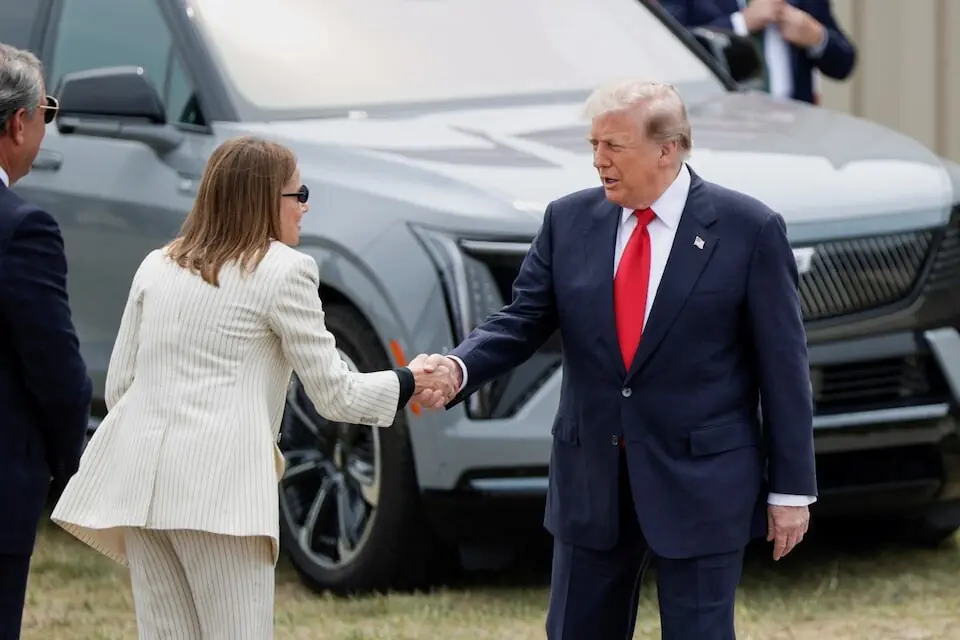
Trade war truce

China came out ahead, given the retreat from the Trump administration’s brash approach on trade from early 2025, said Scott Kennedy, a China expert at Washington’s Center for Strategic and International Studies.

“Compared to where we were a year ago, with 145% tariffs and the U.S. really trying to push China and the rest of the world to fundamentally change, we’ve had a counterrevolution and we’re back at stability,” Kennedy said.

Trump brought to the Thursday-Friday summit some of America’s most powerful executives, from Tesla’s Elon Musk to Nvidia’s Jensen Huang, but most had little to show for their time, aside from a lavish banquet.

The meeting also did not secure any public commitment from China to help the U.S. end the war in Iran that has roiled global markets and dented Trump’s approval ratings.

“The summit projected stability but it left the stalemate intact,” said Craig Singleton, a China expert at the Foundation for Defense of Democracies. It “produced modest, marketable and managed outcomes, which is about all the U.S.-China relationship can bear right now.”

Asked for comment, a White House official said, “President Trump leveraged his positive relationship with President Xi of China in order to bring home deliverables for the American people,” citing the sale of Boeing aircraft and agricultural agreements to expand American exports.

A spokesperson with the Chinese embassy in Washington called the meetings between Xi and Trump “candid, in-depth, constructive and strategic,” adding that they “explored the right way for two major countries to get along with each other.”

With last year’s trade war, Trump appears to have overestimated the power of tariffs to coerce China into unilateral concessions, analysts say. Beijing retaliated with its own tariff hikes and threatened to choke off supplies of critical minerals needed by U.S. industries, forcing an uneasy standoff.

Since then, the White House has shown itself unwilling to bear the economic consequences that would come with applying the other forms of U.S. financial and technological leverage, such as sanctions on China’s major banks.

Reflecting the change in tone, there was no public mention this week of many long-standing U.S. demands, such as for China to address industrial overcapacity that its trade partners say unfairly floods their markets with low-cost goods.

China appears content with the fragile truce as it navigates a weak domestic economy and seeks to shore up technologies it hopes will turn the tide in long-term competition with the U.S.

Senior Trump administration officials had downplayed a desire for big outcomes even in the run-up to the meeting, saying there was no rush to extend a trade truce, expiring in five months, which the leaders reached after talks in South Korea in October.

‘Below expectations’

A person familiar with the trade negotiations said China wanted a longer extension of the truce than the Trump administration was willing to give, as well as reassurances over pending U.S. investigations likely to revive some tariffs on goods entering the U.S. that were struck down by the Supreme Court this year.

Overall, neither side put much on the table for the summit, the source told Reuters, adding that some commercial deals could be saved for the fall, when Xi is expected to make a reciprocal visit to the White House.

The source requested anonymity to speak candidly about the negotiations.

The summit’s thin commercial results contrast with Trump’s 2017 visit to China, when companies accompanying him signed deals and memorandums of understanding valued at $250 billion.

This week’s meeting produced no breakthrough on selling Nvidia’s advanced H200 artificial intelligence chips to China, likely to the relief of Republican and Democratic China hawks in Washington, who had warned the administration against feeding China’s AI development.

Though still not confirmed, Trump said Boeing had sealed a deal for China to purchase 200 jets, well below the 500 anticipated and the 300 Beijing agreed to purchase during the 2017 visit.

The White House official said the U.S. had established a new Board of Trade that U.S. officials had mentioned as a joint mechanism to lower tariffs on non-sensitive goods, but offered few details.

Wendy Cutler, a former acting deputy U.S. Trade Representative, called the economic deliverables “way below expectations.”

For China, however, the meetings were a positive move toward clear-eyed competition, said Cui Shoujun, a professor of international affairs at Renmin University in Beijing.

The summit showed that Washington and Beijing are “no longer aspiring to pull China-U.S. relations back to a cooperative golden age, but instead acknowledging the long-term nature of competition and disagreement,” he said.

World

Trump says did not discuss tariffs during summit with Xi

Published May 15, 2026 Updated May 15, 2026 07:01pm
US President Donald Trump (L) meets with China’s President Xi Jinping on the sidelines of their visit to Zhongnanhai Garden in Beijing on May 15, 2026. Photo: AFP
By

ABOARD AIR FORCE ONE: US President Donald Trump said Friday he did not bring up the issue of tariffs during a landmark summit with Chinese counterpart Xi Jinping.

Returning to Washington after making what he called “fantastic trade deals” with Beijing, Trump said on tariffs: “We didn’t discuss those… It wasn’t brought up.”

The pair had been widely expected to discuss extending the one-year tariff truce reached during their last meeting in October in South Korea.

The truce brought a pause to a blistering trade war that had seen tariffs on many goods exceed 100 percent.

Conditions have shifted since.

The deal saw Washington maintain some tariffs over China’s alleged role in global fentanyl supply chains and accusations of unfair practices.

But the US Supreme Court in February struck down many of Trump’s duties, including those imposed over drug trafficking.

The White House quickly moved to impose a 10-percent global tariff using temporary powers, and opened investigations that could lead to more lasting duties.

The 10-percent global tariff has also been challenged in US courts.

Trump had arrived in Beijing earlier this week seeking to seal accords in sectors including agriculture, aviation and artificial intelligence.

After the first day wrapped, Trump said Xi had agreed to help open the Strait of Hormuz, as well as buy Boeing jets and American oil and soybeans.

But there have been no formal announcements, and the Chinese foreign ministry would not confirm or deny Trump’s statements when asked on Friday afternoon.

Markets Print edition: 2026-05-15

Dollar higher

Published May 15, 2026 Updated May 15, 2026 06:03am
By

NEW YORK: The dollar climbed for a fourth straight day on Thursday, after economic data kept expectations intact that the Federal Reserve was unlikely to adjust interest rates this year, while investors awaited the upshot of talks between the US and China.

The Commerce Department said retail sales rose 0.5 percent last month, matching the estimate of economists polled by Reuters, after a downwardly revised 1.6 percent jump in March.

“It’s very difficult for FX traders or investors in general to place bets right now when the outcomes from a fundamental standpoint haven’t shifted all that much,” said Karl Schamotta, chief market strategist at Corpay in Toronto.

“It’s remarkable the extent to which there was no surprise in today’s print… when we look at the fundamentals here, American consumers are still spending. They are telling pollsters that they’re more cautious, but at the same time, they’re not walking the talk, they’re spending as they have.”

Separately, the Labor Department said weekly initial jobless claims rose by 12,000 to a seasonally adjusted 211,000, slightly above the 205,000 estimate, indicating the job market remains stable.

In addition, the Labor Department said import prices increased 1.9 percent last month, well above the 1.0 percent estimate, after an upwardly revised 0.9 percent rise in March, with the cost of fuels posting the largest increase in four years. The increase comes after strong readings on both consumer and producer inflation earlier this week.

The dollar index, which measures the greenback against a basket of currencies, rose 0.14 percent to 98.60, with the euro down 0.13 percent at USD1.1695. The greenback was on track for a fourth straight day of gains, its longest run since late March.

Markets have largely priced out any chance of a rate cut this year, with expectations for a hike in 2027 slowly increasing as the Iran war drags on, keeping oil prices elevated as the Strait of Hormuz remains largely shuttered, and recent comments from Fed officials flagging inflation concerns.

Kansas City Federal Reserve President Jeffrey Schmid said on Thursday that inflation is the biggest risk to a US economy that has shown “remarkable resilience” in the face of numerous challenges, and the job market is stable.

The US Senate on Wednesday approved Kevin Warsh as chair of the Federal Reserve and now awaits final White House signatures on paperwork sent by the Senate.

US crude rose 0.11 percent to USD101.13 a barrel and Brent fell to USD105.57 per barrel, down 0.06 percent on the day after Iran’s state media said about 30 vessels had crossed the Strait of Hormuz.

Crude prices and the dollar briefly dropped after the Financial Times reported Saudi Arabia had floated a Middle Eastern non-aggression pact with Iran.

Xi told Trump trade talks were making progress at the start of a two-day summit on Thursday, but cautioned that disagreement over Taiwan could send relations down a dangerous path and even lead to conflict.

The dollar weakened 0.03 percent to 6.784 versus the offshore Chinese yuan, on track for its eighth straight daily decline.

Against the Japanese yen, the dollar strengthened 0.02 percent to 157.88. Bank of Japan board member Kazuyuki Masu said earlier that the central bank should move to raise interest rates promptly if there are no clear signs of an economic slowdown.

Japanese authorities are believed to have intervened several times in the past couple of weeks to temper the dollar’s strength, but with increasing expectations for a potential Fed hike, the yen has resumed softening.

World

Iran urges BRICS nations to condemn war, Indian-flagged vessel sunk

Published May 14, 2026 Updated May 14, 2026 06:07pm
By

NEW DELHI: Iran’s foreign minister urged BRICS nations on Thursday to condemn what he called violations of international law by the United States and Israel, as diplomats from emerging economies met for talks in Delhi in the shadow of war in the Middle East.

Foreign Minister Abbas Araqchi accused U.S. ally the United Arab Emirates of direct involvement in military operations against Iran, in a rare moment when Iranian and Emirati officials have been in the same room since the U.S.-Israeli war against Iran began on February 28.

Araqchi said Iran was a “victim of illegal expansionism and warmongering”. He asked the BRICS+ grouping - comprising Brazil, Russia, India, China, South Africa, Egypt, Ethiopia, Indonesia, Iran and the UAE - to resist “Western hegemony and the sense of impunity that the U.S. believes it is entitled to”.

“Iran therefore calls upon BRICS member states and all responsible members of the international community to explicitly condemn violations of international law by the United States and Israel,” he said.

Later, he told the gathering that the UAE was “directly involved in the aggression against my country”, the Iranian semi-official Mehr news agency reported. The UAE was represented by its Deputy Foreign Minister Khalifa Shaheen Al Marar.

In response to the U.S. and Israeli attacks on Iran, Tehran launched strikes on Gulf States including the UAE. Their differences could make it difficult for BRICS, which operates by consensus, to agree on a joint statement.

It was not immediately clear how or whether the UAE and other nations attending the BRICS+ meeting had responded to Araqchi’s remarks.

Divided priorities

India, whose partnership with the UAE is deepening, is the BRICS chair for 2026 and is one of the parties most affected by Iran’s effective closure of the Strait of Hormuz since the war.

The waterway usually handles about a fifth of global oil shipments, and its blockade has triggered one of the biggest supply disruptions in recent history. India, the world’s third-biggest oil importer and a big user of the strait, has suffered big supply disruptions and lost sailors in attacks on ships in the Gulf.

Although a ceasefire is in place, sporadic attacks have continued.

On Wednesday, an Indian-flagged vessel travelling from Somalia to the UAE and carrying cargo of live livestock sank in Omani waters after a fire on board, though all 14 crew members were rescued by the Omani Coast Guard. India did not specify the nature of the attack or who was behind it, but British maritime risk management group Vanguard said it involved an explosion believed to have been caused by a drone or missile strike.

“Continuing tensions, risks to maritime traffic, and disruptions to energy infrastructure highlight the fragility of the situation,” Indian Foreign Minister Subrahmanyam Jaishankar said. “Safe and unimpeded maritime flows through international waterways, including the Strait of Hormuz and Red Sea, remain vital for global economic well-being.”

Without naming any sides, he also noted the “increasing resort to unilateral coercive measures and sanctions inconsistent with international law and the UN Charter”.

“Such measures disproportionately affect developing countries,” he said. “These unjustifiable measures cannot substitute dialogue, nor can pressure replace diplomacy.”

In a visit to Beijing coinciding with the BRICS meeting, U.S. President Donald Trump discussed the Iran war with China’s President Xi Jinping, and a White House official said they agreed that the strait should be open, and that Tehran should never obtain nuclear weapons.

World

New attacks reported on ships near Hormuz as Trump discusses Iran with Xi

Published May 14, 2026 Updated May 14, 2026 06:02pm
By

BEIJING: U.S. President Donald Trump discussed the Iran war with China’s President Xi Jinping in Beijing on Thursday, while new attacks on vessels near the Strait of Hormuz brought a reminder of the costs of a prolonged stalemate, with peace talks stalled.

After Trump and Xi met, a White House official said the leaders had agreed that the strait should be open, and that Iran should never obtain nuclear weapons. China is close to Iran and the main buyer of its oil.

In an interview with CNBC in Beijing, U.S. Treasury Secretary Scott Bessent said he believed China would “do what they can” to help open the strait, which he said was “very much in their interest”.

But diplomacy to end the war has been on hold since last week when Iran and the United States each rejected the other’s latest proposals, sticking to initial demands that each considers to be “red lines”.

Iran has largely shut the Strait of Hormuz to ships apart from its own since the United States and Israel launched their bombing campaign two-and-a-half months ago, causing the biggest ever disruption to global energy supplies. The U.S. paused the bombing last month but added a blockade of Iran’s ports.

In the latest incident on the trade route, India said one of its ships had come under attack off the coast of Oman. It did not immediately give further details but said all crew were safe.

Separately, British maritime security agency UKMTO reported on Thursday that “unauthorised personnel” had boarded a ship anchored off the coast of the United Arab Emirates port of Fujairah, and were steering it towards Iran.

Security in that area is particularly sensitive, as Fujairah is the UAE’s sole oil port on the far side of the strait, allowing some exports to reach markets without passing through it. Iran included that part of the coast on an expanded map it released last week of waters it claimed were under its control.

Iran has lately been letting the occasional ship pass through the strait under special agreements. It let a Japanese tanker through on Wednesday. Its Fars news agency reported on Thursday an agreement to let some Chinese ships pass.

Iran’s Judiciary Spokesperson Asghar Jahangir said on Thursday the seizure of “U.S. tankers” violating Iranian regulations was being carried out under domestic and international law.

Little progress in talks

After intensively bombing Iran for six weeks, the United States and Israel paused their campaign more than a month ago to allow for what Trump said were promising peace talks. But after a single round of talks in Pakistan last month, there has been little progress and no further face-to-face meetings.

Trump had said his aims in starting the war were to destroy Iran’s nuclear programme, end its capability to attack its neighbours and make it easier for Iranians to overthrow their government.

But none of those objectives has been achieved so far, with Iran still in possession of more than 400 kg (900 pounds) of near-weapons-grade highly enriched uranium, and missiles and drones with demonstrated ability to hit neighbours.

Iran’s rulers, who had to use force to put down anti-government protests at the start of the year, have faced no organised opposition since the war began. And their new-found ability to close off the strait has given them additional leverage in negotiations.

Washington wants Tehran to hand over the uranium and forgo further enrichment. Iran is seeking the lifting of sanctions, reparations for war damage and acknowledgment of its control over the strait.

Trump’s trip to China, initially scheduled for the end of March, was postponed because of the war at a time when Trump was predicting a quick end to it. In the end, he travelled with the standoff still unresolved, allowing it to loom over the first visit by a U.S. president in nearly a decade.

The United States hopes to convince China “to play a more active role in getting Iran to walk away from what they’re doing now and trying to do now in the Persian Gulf,” U.S. Secretary of State Marco Rubio told Fox News in an interview on board Air Force One en route to China.

“We’ve made clear to them that any support for Iran would obviously be detrimental for our relationship.”

World

Warsh clinches Senate approval to be Fed's next chair as inflation intensifies

  • The vote was 54-45 in the most-partisan-ever US Senate confirmation of a Fed chair
Published May 14, 2026 Updated May 14, 2026 12:24am
By

WASHINGTON: The US Senate on Wednesday approved Kevin Warsh as chair of the Federal Reserve, putting the 56-year-old lawyer and financier at the helm as the US central bank grapples with intensifying inflation that may make it hard to push through the interest-rate cuts that President Donald Trump has demanded.

The vote was 54-45 in the most-partisan-ever US Senate confirmation of a Fed chair. A single Democrat, John Fetterman of Pennsylvania, voted with the Republican majority.

His swearing-in to the four-year Fed chair term and a concurrent 14-year term as a Fed governor approved by the Senate on Tuesday awaits final White House signatures on paperwork sent by the Senate. The White House did not respond to questions about when Trump would complete the final paperwork or the timing of his swearing in.

Warsh will take the leadership baton from Fed Chair Jerome Powell, whose term ends on Friday but who will remain a Fed governor. Fed Governor Stephen Miran, currently the central bank’s biggest advocate of rate cuts, will vacate his spot on the board to make room for Warsh.

Also read: US Senate panel votes to advance Trump’s Fed chair nominee

Expected to be in place to chair the Fed’s next meeting June 16 to 17, Warsh joins a central bank whose policymakers are engaged in a vigorous debate on the direction of interest rates.

Several central bankers have argued that the Fed should consider rate hikes, concerned that inflation is broadening even beyond the impact of the Trump administration’s tariffs and the spike in oil prices from the Iran war.

An index of producer prices, a key component of overall inflation, jumped 6% in April from a year earlier, the Labor Department reported on Wednesday. That’s the fastest pace since December 2022 when the Fed was battling a 40-year record surge in prices with sharp rate hikes.

Analysts expect the Personal Consumption Expenditures price index to have risen 3.8% last month, moving further from the Fed’s target of 2%.

In the run-up to his first meeting, Warsh may have to navigate a divided group of policymakers with growing support for more hawkish language indicating that a rate increase is as likely as a rate cut in coming months. At least five of the Fed’s 19 policymakers have said they wanted that change as of April.

Also in June, Fed policymakers are scheduled to release fresh rate-path forecasts. March’s projections for a single rate cut this year look increasingly stale as the unemployment rate hovers around 4.3%, indicating the labor market may not need the support of a rate cut. However, inflation has continued to gain steam: a government report on Tuesday showed consumer prices rose in April at the fastest pace in three years.

Financial markets now expect no change to the Fed’s 3.5%-3.75% policy rate target this year, with a rate hike as soon as January.

Warsh is no stranger to discord within the Fed. As a Fed governor during Ben Bernanke’s tenure as chair, he expressed reservations about policy, though he left the Board in 2011 before ever casting a dissenting vote.

Also read: Trump’s Fed chair pick vows to safeguard independence at confirmation hearing

At his confirmation hearing he told senators he welcomes a “family fight” at the Fed as policymakers hammer out the right monetary policy response to economic conditions.

Unlike during Warsh’s first stint at the Fed, the current president has been badgering the central bank for rate cuts.

Trump has also undertaken what Powell calls a “series of legal attacks” on the central bank, including an attempt to fire Fed Governor Lisa Cook last year. Trump’s Department of Justice also launched a criminal investigation of Powell which it has dropped for now but has left the door open to reviving.

Powell and others have said those attacks threaten the Fed’s ability to set interest rates according to economic fundamentals. Powell has opted to buck tradition and stay on at the Fed beyond the end of his chair term, at least until the DOJ probe is definitively closed.

Warsh also faces a different inflation backdrop than he did the last time he was a Fed governor. Then, inflation was mostly running below the Fed’s 2% target, yet Warsh argued that policymakers should tighten financial conditions with a smaller balance sheet.

Trump expects Warsh to advocate for lower rates, and Warsh had expressed support for Trump’s view. Still, he told senators at his confirmation hearing last month that he had not made any promises.

World

Suspect in Trump attempted assassination pleads not guilty

  • Prosecutors allege Allen fired a shotgun at a U.S. Secret Service agent and stormed a security checkpoint in a foiled attack on Trump.
Published May 11, 2026 Updated May 11, 2026 06:57pm
Photo: Reuters
Photo: Reuters
By

WASHINGTON: The man accused of attempting to assassinate U.S. President Donald Trump at a White House reporters’ gala last month pleaded not guilty to all charges on Monday.

Cole Allen, 31, did not speak in court as his attorney entered the plea on his behalf. The charges include attempted assassination of the president, assault on a federal officer and firearms offenses.

Prosecutors allege Allen fired a shotgun at a U.S. Secret Service agent and stormed a security checkpoint in a foiled attack on Trump and other members of his administration at the White House Correspondents’ Dinner.

World Print edition: 2026-05-11

Trump’s economic handling: FT poll shows rising voter discontent

Trump faces widespread voter disapproval over inflation, the economy, and the Iran war, jeopardizing Republican prospects in the midterms.
Published May 11, 2026 Updated May 11, 2026 09:18am

KARACHI: More than half of American voters disapprove of Donald Trump’s handling of inflation and the economy, according to a new poll that suggests his tariff policies and the war involving Iran are weighing on Republican prospects ahead of the US midterm elections.

The nationwide survey, conducted last week by research firm Focaldata for the Financial Times, found that inflation and the rising cost of living remain the top concerns for voters ahead of November’s congressional elections, when control of both chambers of Congress will be contested.

The poll showed that nearly 58 percent of registered voters either “strongly” or “somewhat” disapproved of Trump’s management of inflation and living costs. More than half also expressed dissatisfaction with his handling of jobs and the broader economy.

READ MORE: Trump’s approval hits new 36 pc low as fuel prices surge amid Iran war: poll

Around 55 percent of respondents said Trump’s tariffs had negatively affected the US economy, while only about one-quarter believed his trade policies had benefited economic conditions.

The findings come at a politically sensitive moment for the Trump administration, with six months remaining before the midterms.

The ongoing conflict with Iran has pushed fuel and consumer prices higher and exposed divisions within Trump’s “Make America Great Again” support base, which backed him in the 2024 election on promises to curb inflation and prioritize domestic interests.

Although Trump recently claimed petrol prices were “way down,” average gasoline prices in the US reportedly climbed to about USD4.60 per gallon last week — nearly 50 percent higher than before the conflict began.

The war escalated after the United States and Israel launched air strikes on Iran in late February, triggering a prolonged confrontation that effectively disrupted shipping through the Strait of Hormuz and tightened global oil supplies.

While a fragile ceasefire remains in place, Trump has been attempting to negotiate an agreement with Tehran to prevent further escalation and limit inflationary pressure before the elections.

The poll also found that nearly 54 percent of voters disapproved of Trump’s handling of the Iran war, while fewer than one-third approved. Even among Republicans, roughly one in five respondents expressed dissatisfaction with his management of the conflict.

Overall, more than 54 percent of voters said they disapproved of Trump’s performance as president, compared with just over 39 percent who approved. Independent voters were particularly critical, with more than 58 percent holding an unfavourable view of him.

According to the survey, Democrats currently hold an eight-point advantage over Republicans among registered voters heading into the midterms, with an even wider lead among independents. Republicans presently control both the United States House of Representatives and the United States Senate, though Democrats are aiming to regain control of Congress in November.

White House spokesperson Kush Desai defended the administration’s policies, saying Trump’s tax cuts, deregulation measures and energy agenda would keep the US economy on a “solid economic trajectory.”

He added that once disruptions linked to the Iran conflict eased, Americans would see falling gas prices, lower inflation and continued investment growth.

The online poll was conducted by Focaldata between May 1 and May 5 among 3,167 registered voters and carried a margin of error of plus or minus 2.1 percentage points.

Copyright Business Recorder, 2026

Business & Finance Print edition: 2026-05-08

IMF warns of ‘inevitable’ AI-powered threats to global financial system

Published May 8, 2026 Updated May 8, 2026 06:08am
By

WASHINGTON: The International Monetary Fund (IMF) warned on Thursday of the risks to global financial stability posed by cyberattacks powered by advanced artificial intelligence tools, calling for greater international cooperation on the issue.

“IMF analysis suggests that extreme cyber-incident losses could trigger funding strains, raise solvency concerns, and disrupt broader markets,” the lender warned in a new report.

The study’s authors highlighted the risks posed by the highly interconnected nature of the global financial system, with advanced AI models able to “dramatically reduce” the time and cost of exploiting vulnerabilities.

The warning comes weeks after AI company Anthropic cautioned that its yet-to-be-released “Mythos” model was incredibly adept at finding and exploiting such weaknesses.

The model was particularly efficient at identifying vulnerabilities that developers and users had been previously unaware of.

In the hands of hackers, such so-called “zero-day” vulnerabilities are considered particularly dangerous.

On Wednesday, White House economic adviser Kevin Hassett told Fox News that an “all-government” and private sector effort was being made to test the model and ensure it does not cause harm to US businesses or government.

A day earlier, the US government announced a policy shift in which it would have access to tech giants’ new AI models to evaluate them before they are released.

The IMF warned that emerging and developing countries, “which often have more severe resource constraints, may be disproportionately exposed to attackers targeting regions with weaker defenses.”

The risks, the authors said, were systemic, cut across sectors and came with the threat of contagion, with the reliance on a small number of platforms and cloud providers likely to increase “the impact of any single exploited weakness.”

“Defenses will inevitably be breached, so resilience must also be a priority, specifically to limit how far incidents spread and ensure rapid recovery,” the report said.

IMF chief Kristalina Georgieva warned last month that the global financial system was not ready for the cybersecurity threats posed by AI.

“We are very keen to see more attention to the guardrails that are necessary to protect financial stability in a world of AI,” she told CBS News, seeking global collaboration on the issue.

World

US senators urge stability, cooperation between US, China

  • Donald Trump is scheduled to travel to the Chinese capital to meet with Xi Jinping on May 14 and 15
Published May 7, 2026 Updated May 7, 2026 10:52am
Photo: Reuters
Photo: Reuters
By

BEIJING: A delegation of United States senators visiting Beijing has called for stability and peaceful cooperation between the world’s two largest economies a week before the countries’ leaders meet.

“I strongly believe that we want to de-escalate, not decouple. We want stability, we want mutual respect,” Senator Steve Daines, who is leading the bipartisan delegation, said in opening remarks at a meeting with Chinese Foreign Minister Wang Yi.

White House quiet as China ramps up trade leverage before Trump-Xi summit

US President Donald Trump is scheduled to travel to the Chinese capital to meet with President Xi Jinping on May 14 and 15.

The Republican senator said he hopes the leaders’ meeting would result in Boeing jet orders, even as he warned of both countries facing trade issues.

Trump sees swift end to war as Iran reviews US peace proposal

“It’s been about nine years since there was a purchase made of Boeing aircraft here,” he said, according to a media pool report.

World

Trump sees swift end to war as Iran reviews US peace proposal

  • Trump has repeatedly played up the prospect of an agreement to end the war that started on February 28, so far without success
Published May 7, 2026 Updated May 7, 2026 10:34am
Photo: Reuters
Photo: Reuters
By

ISLAMABAD/WASHINGTON/TEL AVIV: US President Donald Trump predicted a swift end to the war with Iran as Tehran considered a US peace proposal that sources said would formally end the conflict while leaving unresolved key US demands that Iran suspend its nuclear programme and reopen the Strait of Hormuz.

An Iranian foreign ministry spokesperson cited by Iran’s ISNA news agency said Tehran would convey its response, while Iranian lawmaker Ebrahim Rezaei, a spokesperson for parliament’s powerful foreign policy and national security committee, described the proposal as “more of an American wish-list than a reality.”

“They want to make a deal. We’ve had very good talks over the last 24 hours, and it’s very possible that we’ll make a deal,” Trump told reporters in the Oval Office on Wednesday, saying later “it’ll be over quickly.”

Trump has repeatedly played up the prospect of an agreement to end the war that started on February 28, so far without success.

The two sides remain at odds over a variety of difficult issues, such as Iran’s nuclear ambitions and its control of the Strait of Hormuz, which before the war handled one-fifth of the world’s oil and gas supply.

Trump pauses Hormuz operation: PM Shehbaz says ‘grateful’ for courageous leadership

A Pakistani source and another source briefed on the mediation said an agreement was close on a one-page memorandum that would formally end the conflict.

That would kick off discussions to unblock shipping through the strait, lift US sanctions on Iran and set curbs on Iran’s nuclear programme, the sources said.

Iran’s parliament speaker Mohammad Baqer Qalibaf appeared to mock reports that indicated the two sides were close, writing on social media in English that “Operation Trust Me Bro failed.”

Qalibaf said such reports amounted to US spin following its failure to open the Strait of Hormuz.

Deal hopes drive oil down, shares rise

Reports of a possible agreement caused global oil prices to tumble to two-week lows on Wednesday, with benchmark Brent crude futures falling about 11% to around $98 a barrel at one point before rising back above the $100 mark.

Global share prices also leapt and bond yields fell on optimism about an end to a war that has disrupted energy supplies.

“The contents of the US-Iran peace proposals are thin, but there is an expectation in the market that further military action will not take place,” said Takamasa Ikeda, a senior portfolio manager at GCI Asset Management.

Trump on Tuesday paused a two-day-old naval mission to reopen the blockaded strait, citing progress in peace talks.

NBC News, citing two unnamed US officials, said Trump’s abrupt reversal came after Saudi Arabia suspended the US military’s ability to use a Saudi base for the operation.

Saudi officials were surprised and angered by Trump’s announcement that the US would help escort ships through the Strait of Hormuz, leading them to tell Washington they would deny the US permission to fly military aircraft out of a Saudi base or through Saudi airspace, NBC reported.

The White House did not immediately respond to a request for comment on the report.

The US military has kept up its own blockade on Iranian ships in the region. US Central Command said forces fired at an unladen Iranian-flagged tanker on Wednesday, disabling the vessel as it attempted to sail toward an Iranian port in violation of the blockade. 

No mention of key us demands

The source briefed on the mediation said the US negotiations were being led by Trump’s envoy Steve Witkoff and son-in-law Jared Kushner. If both sides agreed on the preliminary deal, that would start the clock on 30 days of detailed negotiations to reach a full agreement.

While the sources said the memorandum would not initially require concessions from either side, they did not mention several key demands Washington has made in the past, which Iran has rejected, such as the restrictions on Iran’s missile programme and an end to its support for proxy militias in the Middle East.

The sources also made no mention of Iran’s existing stockpile of more than 400 kg (882 pounds) of near-weapons-grade uranium.

Print Print edition: 2026-05-07

‘Project Freedom’: PM lauds Trump following pause

Published May 7, 2026 Updated May 7, 2026 02:13am

ISLAMABAD: Prime Minister Shehbaz Sharif on Wednesday expressed gratitude to US President Donald Trump after he announced a pause in “Project Freedom,” a military operation designed to escort ships through the Strait of Hormuz.

Trump cited “great progress” towards a comprehensive agreement with Iran and referenced requests from Pakistan and other nations.

In a post on X, Prime Minister Sharif thanked President Trump for his “courageous leadership and timely announcement,” noting that the decision responded to appeals from Pakistan and “other brotherly countries,” particularly Saudi Arabia and its Crown Prince and Prime Minister, Mohammed bin Salman.

READ ALSO: Trump pauses Hormuz operation: PM Shehbaz says ‘grateful’ for courageous leadership

“The President’s [Trump] gracious response […] will go a long way towards advancing regional peace, stability and reconciliation during this sensitive period,” Sharif wrote.

He added that Pakistan remained “firmly committed to supporting all efforts that promote restraint and a peaceful resolution of conflicts through dialogue and diplomacy” and expressed hope that “the current momentum will lead to a lasting agreement that secures durable peace and stability for the region and beyond.”

Hours before President Trump’s announcement, US Secretary of State Marco Rubio outlined the operation, which began on Monday, to escort stranded tankers out of the Gulf.

The strait has been effectively closed since the conflict began, blocking nearly 20 per cent of the world’s oil supplies and contributing to a global energy crisis.

“Based on the request of Pakistan and other countries, the tremendous military success […] great progress has been made towards a complete and final agreement with representatives of Iran,” Trump wrote on Truth Social.

The White House gave no details on progress or the duration of the pause. Iran has threatened mines, drones, missiles, and fast-attack craft, while the US countered with blockades and escorted transits.

The conflict began on 28 February after a US-Israel offensive on Iran. A two-week ceasefire, mediated by Pakistan on 8 April, remains in place after high-level talks in Islamabad concluded last weekend without a formal agreement.

Copyright Business Recorder, 2026

World Print edition: 2026-05-07

Iran says it is reviewing new US proposal

Published May 7, 2026 Updated May 7, 2026 02:13am
By

ISLAMABAD/WASHINGTON/TEL AVIV: Iran said on Wednesday it was reviewing a new US proposal, after sources said Washington and Tehran were closing in on a one-page memorandum to end the war in the Gulf while leaving tricky issues such as Iran’s nuclear programme for later.

An Iranian foreign ministry spokesperson, cited by Iran’s ISNA news agency, said Iran would convey its response soon via Pakistan, which hosted the war’s only peace talks and has since served as the main conduit for messages between the sides.

In an early morning social media post, US President Donald Trump gave no details of any specific proposal but said the war could end if “Iran agrees to give what has been agreed to”. He later told the New York Post it was still too soon to consider face-to-face meetings to sign an agreement. A Pakistani source and another source briefed on the mediation confirmed information initially reported by the US media outlet Axios about a proposed 14-point, one-page memorandum that would formally end the war.

The memorandum would be followed by discussions to unblock shipping through the Strait of Hormuz, lift US sanctions on Iran and agree curbs on Iran’s nuclear programme, the sources said.

“We will close this very soon. We are getting close,” said the source from Pakistan.

The White House, the State Department and Iranian officials contacted by Reuters did not immediately respond to requests for comment.

By late afternoon there had also been no public comment from Washington’s wartime ally Israel, which has pressed Washington to stand tough on demands before any agreement. An Israeli source told Reuters Israel was not aware that Trump was potentially close to a deal to end the war, and that Israel was instead preparing for an escalation in fighting.

OIL PRICES TUMBLE

Reports of the possible agreement caused global oil prices to plunge, with benchmark Brent crude futures falling around 11% to around $98 a barrel. Global share prices also leapt and bond yields fell on optimism of an end to a war that has disrupted energy supplies.

In his morning post, Trump said: “Assuming Iran agrees to give what has been agreed to, which is, perhaps, a big assumption, the already legendary Epic Fury will be at an end, and the highly effective Blockade will allow the Hormuz Strait to be OPEN TO ALL, including Iran.”

Markets Print edition: 2026-05-07

Dubai leads Gulf gains on Iran peace hopes

Published May 7, 2026 Updated May 7, 2026 02:13am
By

DUBAI: Dubai led gains across most Gulf stock markets on Wednesday after a report said the White House believed it was nearing agreement on a memorandum to end the war with Iran, while falling oil prices weighed on Saudi Arabia’s index.

News outlet Axios reported that the US expected Iranian responses on several key points in the next 48 hours. A Pakistani source involved in the peace efforts confirmed the report to Reuters on Wednesday.

“Markets in GCC rebounded as sentiment improved amid calmer conditions in the region and a more reassuring rhetoric from US officials,” said Joseph Dahrieh, managing director at Tickmill.

Opinion Print edition: 2026-05-07

Pricing headlines

Published May 7, 2026 Updated May 7, 2026 02:15am

Oil traders are once again behaving as though peace has broken out somewhere between a White House briefing and a futures screen. Brent crude has slipped back below the $100 mark after reports that Washington and Tehran may be inching toward some form of understanding, with the latest headlines speaking of “progress”, “frameworks” and “de-escalation”. Markets, predictably, heard the one word they always hear first: relief.

The reaction has been familiar. Equities rallied, the dollar softened and risk appetite returned almost on cue. It was not long ago that the same market was pricing missile strikes, disrupted shipping lanes and fears of a prolonged supply shock. Now it is pricing diplomacy again. The question is whether anything materially changed in the underlying energy picture, or whether traders have simply resumed their favourite modern investment strategy: buying every Trump pivot as though it were permanent policy.

Because the physical market still looks far less relaxed than the paper market. Oil may have retreated from the panic highs reached after the opening phase of the war, but prices remain materially above pre-conflict levels and volatility continues to swing sharply with each new headline. Physical crude cargoes are still trading at elevated premiums in some regions, shipping risks around the Strait of Hormuz have not fully disappeared, and insurers remain cautious about Gulf exposure. If the disruption is genuinely behind us, why does the market infrastructure still behave as though it is not entirely convinced?

That contradiction matters because oil is no ordinary commodity. It feeds directly into freight, diesel, aviation, fertiliser and industrial production. Even when crude prices pull back, the inflationary after-effects can linger far longer through transport and supply-chain costs. Bond markets appear noticeably more cautious than equities. Yields remain elevated relative to pre-war levels and expectations for aggressive rate cuts have cooled noticeably since the conflict began. If energy risk is fading as quickly as equity traders now assume, why are monetary-policy expectations still behaving so cautiously?

The answer may lie in the difference between temporary calm and actual resolution. Markets appear willing to believe that the immediate escalation phase has passed. Yet many of the underlying points of tension remain unresolved. The Strait of Hormuz has not magically become irrelevant to global trade, and Iran has hardly behaved like a state negotiating from collapse. The regime has survived – by some estimates even grown stronger – and continues demonstrating that it still possesses leverage over the world’s most sensitive energy corridor. That alone complicates the assumption that this episode can simply be filed away as another short-lived geopolitical scare.

It also exposes the awkward strategic arithmetic behind the conflict. Washington appeared to expect that military pressure would quickly reshape the balance in its favour while reassuring allies that energy markets would remain manageable. Instead, the world spent weeks discovering how fragile the entire pricing structure around oil still is. Even the largest coordinated release from strategic reserves in history failed to calm markets for very long. Strategic stockpiles can smooth volatility for a while; they cannot manufacture uninterrupted shipping lanes.

Meanwhile, the political messaging has become almost as volatile as the oil market itself. One week the language suggests overwhelming escalation, the next week diplomacy suddenly returns to fashion. Markets swing accordingly. Oil falls on optimism, rebounds on setbacks, then falls again on rumours of talks. At times the crude market has looked less like a pricing mechanism and more like a real-time opinion poll on presidential mood swings.

That is why the divergence between futures optimism and physical caution deserves more attention. Futures traders can rapidly price in peace headlines because paper barrels move instantly. Real barrels do not. Tankers still require security guarantees, refiners still worry about supply continuity and insurers still calculate geopolitical risk the old-fashioned way, by assuming the next disruption may arrive before the previous one has fully faded.

There is also a broader structural question quietly emerging beneath the noise. The UAE’s decision to leave OPEC has added another layer of uncertainty to the longer-term supply picture, even if the war currently dominates short-term pricing. Cartel discipline was already weakening before missiles started flying across the Gulf. The conflict has merely exposed how dependent global markets remain on a region that simultaneously powers the world economy and periodically terrifies it.

For Pakistan, the implications remain uncomfortably familiar. Every sustained rise in oil prices eventually arrives at domestic inflation, currency pressure and renewed strain on already fragile external accounts. Policymakers may welcome lower prices this week, but relief built entirely on shifting headlines is not much of an energy strategy. Pakistan has learned repeatedly that imported energy shocks have a habit of returning just when governments begin believing the worst has passed.

Which leaves the market confronting the same question once again. Is oil finally pricing genuine de-escalation, or merely reacting to the latest round of diplomatic theatre before the next interruption arrives?

Copyright Business Recorder, 2026

Shahab Jafry

The writer can be reached at [email protected]

World

Trump pauses Hormuz operation: PM Shehbaz says ‘grateful’ for courageous leadership

  • Trump halts military operation in a bid to reach a deal with Iran to end the Middle East war
Published May 6, 2026 Updated May 6, 2026 01:45pm

WASHINGTON: President Donald Trump said Tuesday he was halting the US military operation to escort ships through the Strait of Hormuz after just one day, in a bid to reach a deal with Iran to end the Middle East war.

Trump’s so-called “Project Freedom” to help vessels leave the Strait of Hormuz, the narrow chokepoint to the Gulf where Iran has seized control in response to being attacked, began on Monday.

But the US leader said on Truth Social that he was now pausing it after a request by mediator Pakistan and other countries, saying that “Great Progress has been made toward a Complete and Final Agreement” with Tehran.

READ MORE: Trump urges Iran to ‘do the smart thing’

“We have mutually agreed that, while the Blockade will remain in full force and effect, Project Freedom… will be paused for a short period of time to see whether or not the Agreement can be finalized and signed,” Trump said.

PM Shehbaz says ‘grateful’ to Trump

Meanwhile, Prime Minister Shehbaz Sharif expressed his gratitude to President Trump for his courageous leadership and timely announcement regarding the pause in Project Freedom in the Strait of Hormuz.

“President Trump’s gracious response to the request made by Pakistan and other brotherly countries, particularly the Kingdom of Saudi Arabia and my dear brother Crown Prince and Prime Minister of Saudi Arabia Prince Mohammed bin Salman, will go a long way towards advancing regional peace, stability and reconciliation during this sensitive period,” the PM said.

Moreover, the PM added that Pakistan remained firmly committed to supporting all efforts that promote restraint and a peaceful resolution of conflicts through dialogue and diplomacy.

“We are very hopeful that the curent momentum will lead to a lasting agreement that secures durable peace and stability for the region and beyond.”

Washington is maintaining a blockade of Iran’s ports in a bid to pressure Iran to make a deal to end the war that the United States and Israel launched on February 28.

Tensions had been soaring over the Hormuz operation, with the United States saying it had sunk seven Iranian boats, and several civilian vessels coming under attack, allegedly from Iran.

US Secretary of State Marco Rubio said earlier Tuesday that the United States has completed its offensive operations against Iran, which it dubbed “Operation Epic Fury”.

Rubio’s comments echoed statements to Congress nearly a month into a fragile ceasefire.

“The operation is over – Epic Fury – as the president notified Congress. We’re done with that stage of it,” Rubio told reporters at the White House.

The clashes in the Strait of Hormuz were not part of the original war, he said.

“This is not an offensive operation; this is a defensive operation,” Rubio said. “And what that means is very simple – there’s no shooting unless we’re shot at first.”

Israel and the United States attacked Iran on February 28, killing top leaders and destroying major military and economic sites but not forcing the collapse of the Islamic republic, which has responded with missile and drone attacks across the region.

Trump on April 8 declared a ceasefire with Iran that he has since extended even though negotiations with Tehran have been at a standstill.

Rubio said the United States has “achieved the objectives” of the war.

“These guys are facing, they are facing real, catastrophic destruction to their economy,” he said, while adding that Trump still preferred a negotiated deal with Iran.

World

Rubio says Israel-Lebanon peace deal is achievable but Hezbollah is a problem

  • I think a peace deal between Lebanon and Israel is imminently achievable, and should be
Published May 6, 2026 Updated May 6, 2026 01:36am
By

WASHINGTON: US Secretary of State Marco Rubio said on Tuesday that peace between Israel and Lebanon was achievable but that the Lebanese group Hezbollah was a problem.

“By and large, I think a peace deal between Lebanon and Israel is imminently achievable, and should be,” Rubio told reporters at the White House.

“The problem with Israel and Lebanon is not Israel or Lebanon, it’s Hezbollah,” he added.

Lebanon’s government wants a permanent deal with US ally Israel that would end a repeated cycle of Israeli invasions and strikes, while stopping short of saying it wants a peace agreement. Israel says any deal must permanently disarm Hezbollah.

“What has to happen in Lebanon, what everybody wants to see, is that you have a Lebanese government with the capability to go after Hezbollah and take Hezbollah apart,” Rubio said.

Also read: Israel, Lebanon agree to direct negotiations after ‘productive’ talks: US

Israel intensified air attacks on Lebanon after Hezbollah fired missiles at Israel on March 2, three days into the US-Israeli war on Iran. Israel, thereafter, widened a ground invasion into Lebanon’s south.

Lebanon’s health ministry says more than 2,600 people have been killed in Israeli attacks since March 2, with over a million people being displaced. Israel says 17 of its soldiers have been killed in southern Lebanon while two civilians have been killed by Hezbollah attacks.

Israel and Lebanon agreed to a fragile ceasefire in mid-April which has since been extended into May.

However, Israel has maintained an occupation of southern Lebanon and demolished villages there, while Hezbollah has continued attacks on Israeli forces.

Tehran says any deal to end the wider Iran war must also halt Israeli attacks in Lebanon. Washington says the issues are separate.

World

Iran warns US Navy to stay clear of Hormuz after Trump says US to help stranded ships

  • Last month, the US imposed its own blockade of ships from Iranian ports
Published May 4, 2026 Updated May 4, 2026 12:42pm
Photo: Reuters
Photo: Reuters
By

DUBAI/DORAL: Iran’s military warned US forces on Monday not to enter the Strait of Hormuz after President Donald Trump said the United States would start helping to free ships stranded in the Gulf by the US-Israeli war on Iran.

Trump gave few details of the plan to aid ships and their crews that have been “locked up” in the vital waterway and are running low on food and other supplies more than two months since the conflict began.

“We have told these Countries that we will guide their Ships safely out of these restricted Waterways, so that they can freely and ably get on with their business,” Trump said in a post on his Truth Social site on Sunday.

The unified command of Iran’s armed forces responded by warning US forces to stay out of the strait.

Its forces would “respond harshly” to any threat, it added, telling commercial ships and oil tankers to refrain from any movement in the absence of coordination with Iran’s military.

“We have repeatedly said the security of the Strait of Hormuz is in our hands and that the safe passage of vessels needs to be coordinated with the armed forces,” Ali Abdollahi, the head of the forces’ unified command said in the statement.

“We warn that any foreign armed forces, especially the aggressive US army, will be attacked if they intend to approach and enter the Strait of Hormuz.”

US Central Command said it would support the effort with 15,000 military personnel, more than 100 land and sea-based aircraft, along with warships and drones.

“Our support for this defensive mission is essential to regional security and the global economy as we also maintain the naval blockade,” Admiral Brad Cooper, the CENTCOM commander, said in a statement.

Hundreds of ships and as many as 20,000 seafarers have been unable to transit the strait during the conflict, the International Maritime Organization says.

Soon after Trump’s comments, the United Kingdom Maritime Trade Operations agency said a tanker had reported being hit by unknown projectiles in the strait.

The agency said all crew were reported safe in the incident, which occurred 78 nautical miles north of Fujairah, in the United Arab Emirates, but few details were immediately available.

Iran has been blocking nearly all shipping from the Gulf apart from its own for more than two months, sending energy prices soaring.

Some vessels attempting to transit the strait have reported being fired on, and Iran seized several other ships.

Last month, the US imposed its own blockade of ships from Iranian ports.

The Trump administration has been seeking help from other countries to form an international coalition to secure shipping in the strait. CENTCOM said the latest effort would combine “diplomatic action with military coordination.”

It was not immediately clear which countries the US operation would aid or how the operation would work.

It will not necessarily include US Navy ships escorting commercial ships, Axios reporter Barak Ravid said in a post on X.

The White House did not immediately respond to a request for comment.

Trump threatened that any interference with the US operation would “have to be dealt with forcefully.” 

Iran reviewing us response on peace proposal

Equity markets edged higher on Monday while crude oil prices were little moved, having surged back above $100 a barrel last week amid uncertainty over when and how the conflict will be resolved.

On Sunday, Iran said it had received a US response to its latest offer for peace talks a day after Trump said he would probably reject the Iranian proposal because “they have not paid a big enough price.”

Trump, responding to shouted questions from reporters, said on Sunday evening talks were going “very well”, without elaborating. Iranian state media said Washington had conveyed its response to Iran’s 14-point proposal via Pakistan, and that Tehran was now reviewing it. There was no immediate confirmation from Washington or Islamabad of the US response.

“At this stage, we do not have nuclear negotiations,” state media quoted Iran’s foreign ministry spokesperson Esmaeil Baghaei as saying. The comment was an apparent reference to Iran’s proposal to set aside talks on nuclear issues until after the war has ended and the foes have agreed to lift opposing blockades of Gulf shipping.

The United States and Israel suspended their bombing campaign against Iran four weeks ago, and US and Iranian officials held one round of talks. But attempts to set up further meetings have so far failed. 

Iran’s proposal vs Washington’s demands

 The proposal to delay talks on nuclear issues until a later phase would appear at odds with Washington’s repeated demand that Iran accept stringent restrictions on its nuclear program before the war can end.

Washington wants Tehran to give up its stockpile of more than 400 kg (900 pounds) of highly enriched uranium, which the United States says could be used to make a bomb.

Iran says its nuclear program is peaceful, although it is willing to discuss some curbs in return for the lifting of sanctions.

It had accepted such curbs in a 2015 deal that Trump abandoned.

Trump says US operation will aid ships stranded in Strait of Hormuz

While repeating he is in no hurry, Trump faces domestic pressure to break Iran’s hold on the Strait of Hormuz, which has choked off 20% of the world’s oil and gas supplies and driven up US gasoline prices.

Trump’s Republican Party faces the risk of a voter backlash over higher prices in midterm congressional elections due in November.

Iranian media said Tehran’s 14-point proposal includes withdrawing US forces from nearby areas, lifting the blockade, releasing frozen assets, paying compensation, lifting sanctions, ending the war on all fronts including Lebanon, and creating a new control mechanism for the strait.

World

Trump says US operation will aid ships stranded in Strait of Hormuz

  • Iran has been blocking nearly all shipping from the Gulf apart from its own for more than two months
Published May 4, 2026 Updated May 4, 2026 08:16am
Ships and boats in the Strait of Hormuz, Musandam, Oman.Photo: Reuters
By

DUBAI/DORAL: President Donald Trump said on Sunday the US would start an effort on Monday morning to free ships stranded in the Strait of Hormuz as a “humanitarian gesture” to aid neutral countries in the US-Israeli war with Iran.

Trump provided few details about the plan, which he said would aid ships and their crews that have been “locked up” in the strait and are running low on food and other supplies as Iran blocks access through the crucial waterway.

“We have told these Countries that we will guide their Ships safely out of these restricted Waterways, so that they can freely and ably get on with their business,” Trump said in a post on his Truth Social site.

Iran has been blocking nearly all shipping from the Gulf apart from its own for more than two months.

Trump says US could restart Iran strikes ‘if they misbehave’

Last month, the US imposed its own blockade of ships from Iranian ports. It was not immediately clear which countries the US operation would aid or how the operation would work. The White House did not immediately respond to a request for comment on the matter and the Pentagon declined to comment.

Trump threatened that any interference with the US operation would “have to be dealt with forcefully.”

Iran said on Sunday it had received a US response to its latest offer for peace talks a day after Trump said he would probably reject the Iranian proposal because “they have not paid a big enough price.”

Iran reviewing US response on peace proposal

Iranian state media reported that Washington had conveyed its response to Iran’s 14-point proposal via Pakistan, and that Tehran was now reviewing it. There was no immediate confirmation from Washington or Islamabad of the U.S. response.

“At this stage, we do not have nuclear negotiations,” state media quoted Iran’s Foreign Ministry spokesperson Esmaeil Baghaei as saying, an apparent reference to Iran’s proposal to set aside talks on nuclear issues until after the war has ended and the foes have agreed to lift opposing blockades of Gulf shipping.

On Saturday, Trump said that he had yet to review the exact wording of the Iranian peace proposal, but that he was likely to reject it.

“I will soon be reviewing the plan that Iran has just sent to us, but can’t imagine that it would be acceptable in that they have not yet paid a big enough price for what they have done to Humanity, and the World, over the last 47 years,” he wrote on social media.

The United States and Israel suspended their bombing campaign against Iran four weeks ago, and US and Iranian officials held one round of talks. But attempts to set up further meetings have so far failed.

Iran handed over its latest proposal on Thursday, and a senior Iranian official confirmed on Saturday that Tehran envisions ending the war and resolving the shipping standoff first, while leaving talks on Iran’s nuclear program for later.

Though Trump initially said on Friday that he was not satisfied with the Iranian proposal, he said on Saturday he was still looking at it.

“They told me about the concept of the deal. They’re going to give me the exact wording now,” he told reporters. Asked if he might restart strikes on Iran, Trump replied: “I don’t want to say that. I mean, I can’t tell that to a reporter. If they misbehave, if they do something bad, right now we’ll see. But it’s a possibility that could happen.”

Iran’s proposal vs Washington’s Demands

The proposal to delay talks on nuclear issues until a later phase would appear at odds with Washington’s repeated demand that Iran accept stringent restrictions on its nuclear program before the war can end.

Washington wants Tehran to give up its stockpile of more than 400 kg (900 pounds) of highly enriched uranium, which the United States says could be used to make a bomb. Iran says its nuclear program is peaceful although it is willing to discuss some curbs in return for the lifting of sanctions. It had accepted such curbs in a 2015 deal that Trump abandoned.

While saying repeatedly he is in no hurry, Trump is under domestic pressure to break Iran’s hold on the Strait of Hormuz, which has choked off 20% of the world’s oil and gas supplies and pushed up US gasoline prices. Trump’s Republican Party faces the risk of a voter backlash over higher prices in midterm congressional elections in November.

Iranian media said Tehran’s 14-point proposal includes withdrawing US forces from nearby areas, lifting the blockade, releasing frozen assets, paying compensation, lifting sanctions, ending the war on all fronts including Lebanon, and creating a new control mechanism for the strait.

UAE leaves OPEC and OPEC+ in huge blow to global oil producers’ group

Speaking on condition of anonymity to discuss confidential diplomacy, the senior Iranian official said Tehran believed its latest proposal to shelve nuclear talks for a later stage was a significant shift aimed at facilitating an agreement.

“Under this framework, negotiations over the more complicated nuclear issue have been moved to the final stage to create a more conducive atmosphere,” the official said.

Israel orders Lebanon evacuations

On Sunday, Israel ordered thousands of Lebanese to leave villages in southern Lebanon, an escalation of a war between Israel and Iran’s Hezbollah allies there that has run in parallel to the Iran war and could further complicate wider peace efforts.

Iran has said talks with Washington cannot resume unless a ceasefire also holds in Lebanon, which Israel invaded in March to attack Hezbollah after the Iranian-backed Lebanese group fired across the border in support of Tehran.

Lebanon and Israel agreed to a separate truce last month, but fighting has continued, although on a smaller scale. The Israeli military issued an urgent warning on Sunday to residents of 11 towns and villages in Lebanon’s south, urging them to evacuate their homes and move at least 1,000 metres (3,300 feet) away to open areas.

Trump says US could restart Iran strikes ‘if they misbehave’

The military said it was conducting operations against Hezbollah following what it described as a violation of the ceasefire, warning that anyone near Hezbollah fighters or facilities could be at risk.

World

White House dinner shooting suspect seeks end of suicide precautions

  • Cole Tomas Allen allegedly stormed a security checkpoint and fired a shotgun outside the White ​House Correspondents’ Dinner on April 25
Published May 3, 2026 Updated May 3, 2026 10:46am
Law enforcement personnel detain Cole Tomas Allen, a suspect in the shooting incident at the White House Correspondents' Association dinner, in Washington, D.C., US. Photo: Reuters
By

BOSTON: Attorneys for the man accused of attempting to assassinate President Donald Trump at a black-tie press gala ​last weekend asked a judge on Saturday to remove ‌him from suicide precautions while in jail in Washington.

Cole Tomas Allen allegedly stormed a security checkpoint and fired a shotgun outside the White ​House Correspondents’ Dinner on April 25.

When he was initially ​booked into the jail facility on April 27, ⁠Allen was assigned a “safe cell,” described as a padded room ​with 24-hour lockdown procedures and a requirement to wear “a vest ​akin to a strait jacket,” according to a filing by his lawyers in the US District Court for the District of Columbia.

Trump safe after shooting at White House correspondents dinner, suspect in custody

He was then ​downgraded to “suicide precautions,” which means Allen could still not ​make phone calls, receive visits from anyone aside from his legal team, ‌or ⁠spend time outside his cell except for legal visits or showers, with an escort, the filing states. A nurse on Friday recommended those precautions be ended, but they remained in place ​as of ​a visit by ⁠one of his public defense lawyers that day, the filing states.

Allen’s status “amounts to punishment” and ​denies him resources such as the use of ​a ⁠jail tablet, “which would permit him to communicate with loved ones outside of the jail,” the filing states.

Melania Trump says she never had a connection to Epstein

Allen is charged with attempted ⁠assassination, ​discharging a firearm during a crime ​of violence and illegally transporting guns and ammunition across state lines. He has ​not yet entered a plea.


World Print edition: 2026-05-03

Aviation companies step up as Spirit winds down

Published May 3, 2026 Updated May 3, 2026 02:25am
By

WASHINGTON: US air carriers mobilized Saturday to help passengers and crew members stranded by the overnight shutdown of Spirit Airlines, after last-minute talks with creditors and the White House collapsed.

The budget airline known for its bright yellow planes succumbed to crushing fuel prices and announced in the early hours of Saturday that “all flights have been canceled, and customer service is no longer available” as it “started winding down its global operations, effective immediately.”

Other carriers, including American, Delta, United, and jetBlue, leapt at the news Saturday, offering what some dubbed “rescue fares” to those waking up with cancelled itineraries.

Some said they were increasing flights or the size of planes in and out of airports where Spirit had a significant presence.

Carriers also sought to support marooned Spirit staff — and hire them. Several carriers encouraged now-jobless crew members to apply to their open roles.

Spirit had been in bankruptcy since August 2025 — its second in less than a year — and the White House had been considering a bailout.

“The recent material increase in oil prices and other pressures on the business have significantly impacted Spirit’s financial outlook,” the company said in a statement. “With no additional funding available to the company, Spirit had no choice but to begin this wind-down.”

It has promised refunds.

US Transportation Secretary Sean Duffy scrambled to defend the Trump administration’s position as a rescue plan never materialized.

“The President was like a dog on a bone trying to figure out a way to keep Spirit afloat,” Duffy said in a morning press conference at Newark Liberty International Airport in New Jersey. “In the end, this was a creditor issue. Again, they have the final say of whether they want to do a deal with the government,” he added. “But also from the government’s perspective, we oftentimes don’t have a half a billion dollars laying around in a spare account that we can put into a bailout of an airline.”

Duffy blamed the previous Biden administration for blocking a proposed merger between Spirit and JetBlue in March 2024.

“We had an airline go down because the markets were trying to allow two airlines to merge, make them stronger and offer more competition for the American consumer,” he said. “History has judged the denial of the merger between jetBlue and Spirit through the Biden administration with, I think, a view that it was a massive mistake.”

Duffy assured ticket holders that they would get their refunds.

Ramon, 60, from Palm Beach County, Florida, had planned to see family in Honduras this week.

He and his son, Kevin, saw headlines in recent days that Spirit was in trouble.

They contacted Spirit but decided not to take a refund offer since there was no concrete sign the airline would fold and alternative flights were far more expensive.

“I was trying to go today on another airline, but it was like $1,000 a ticket,” Ramon told AFP, asking only to be identified by his first name.

Now, the family says they’ll wait for the refund and book a flight in early June.

World Print edition: 2026-05-02

White House says Iran war ‘terminated,’ as war powers deadline arrives

Published May 2, 2026 Updated May 2, 2026 07:57am
By

WASHINGTON: US President Donald Trump’s administration argued that a ceasefire with Tehran had “terminated” hostilities as a legal deadline arrived on Friday for coming to Congress about the two-month Iran war.

Under the 1973 War Powers Resolution, the president can wage military action for only 60 days before ending it, asking Congress for authorisation or seeking a 30-day extension due to “unavoidable military necessity regarding the safety of United States Armed Forces” while withdrawing forces.

The war began on February 28, when Israel and the US began airstrikes on Iran. On Friday, Iranian state news agency IRNA said Tehran had sent its latest proposal for negotiations with the US to Pakistani mediators.

READ MORE: Pivotal US-Iran war deadline approaches with no end in sight for conflict

Trump formally notified Congress of the conflict 48 hours after the first airstrikes, starting the 60-day clock that ends May 1. As that date approached, congressional aides and analysts said they expected the Republican president to sidestep the deadline. A senior Trump administration official said on Thursday the administration’s view was that the war powers law deadline did not apply.

“For War Powers Resolution purposes, the hostilities that began on Saturday, February 28, have terminated,” said the official, requesting anonymity while describing the administration’s thinking.

No way out: Democratic senator

Congressional Democrats, who have tried repeatedly to pass war powers legislation that would force Trump to end the war or come to Congress for authorization, dismissed that characterization, saying there was nothing in the 1973 law allowing for a ceasefire.

They also said the continuing deployment of US ships blockading Iranian oil exports was evidence of continuing hostility, not a ceasefire.

“After sixty days of conflict, President Trump still does not have a strategy or way out for this poorly planned war,” Senator Jeanne Shaheen of New Hampshire, the top Democrat on the Senate Foreign Relations Committee, said in a statement calling the deadline “a clear legal threshold” for Trump to act.

Party loyalty as elections loom

Trump’s fellow Republicans, who hold slim majorities in the Senate and House of Representatives and rarely break from Trump, have voted almost unanimously to block every resolution seeking to end the conflict. The Iran war has killed thousands, caused billions of dollars in damage and roiled world markets, disrupting energy shipments and boosting a wide range of consumer prices.

Polls show the war is unpopular among Americans, six months before November elections that will determine who controls Congress next year. Trump’s approval rating sank to the lowest level of his current term this week, as Americans blamed the war for higher prices.

The US Constitution says only Congress, not the president, can declare war, but that restriction does not apply to short-term operations or to counter an immediate threat.

On Thursday, Trump received a briefing on plans for fresh military strikes to compel Iran to negotiate an end to the conflict.

If fighting resumes, Trump can tell lawmakers he has started a new 60-day clock. Presidents from both parties have repeatedly done so when waging intermittent hostilities since Congress passed the war powers law in response to the Vietnam War.

That conflict, widely unpopular with Americans, was also not authorized by Congress.

World Print edition: 2026-05-02

Trump says ‘not satisfied’ with new Iran proposal

Published May 2, 2026 Updated May 2, 2026 07:20am
By

WASHINGTON: US President Donald Trump said Friday that he was “not satisfied” with a new Iranian negotiating proposal, with peace talks between the two sides frozen despite a weeks-long ceasefire.

Iran delivered the text of the proposal to mediator Pakistan on Thursday evening, the IRNA news agency reported, without offering details as to its contents.

“At this moment I’m not satisfied with what they’re offering,” Trump told reporters, laying blame for the stalled talks with Iran due to “tremendous discord” within its leadership.

“Do we want to go and just blast the hell out of them and finish them forever — or do we want to try and make a deal? I mean, those are the options,” he said when asked about next steps, adding he would “prefer not” to take the first option “on a human basis”.

READ MORE: Pivotal US-Iran war deadline approaches with no end in sight for conflict

The war, launched by the United States and Israel with a wave of surprise strikes on February 28, has been on hold since April 8, but only one failed round of direct talks has taken place between Iranian and US representatives.

In the meantime, Iran has maintained its stranglehold on the Strait of Hormuz, cutting off vast amounts of oil, gas and fertiliser from the world economy, while the US has imposed a counterblockade on Iranian ports.

Despite the failure to negotiate an end to the war, the ceasefire has held. On Friday, judiciary chief Gholamhossein Mohseni Ejei said “the Islamic Republic has never shied away from negotiations”.

But he added in a video shared by the judiciary’s Mizan Online website, “we certainly do not accept imposition” — though Tehran did not want a return to war.

The White House has declined to comment on the details of the new Iranian proposal.

But the news site Axios reported that US envoy Steve Witkoff earlier this week had submitted amendments to a previous proposal seeking to reinject the issue of Tehran’s nuclear programme into the negotiations.

Citing a source familiar with the matter, Axios said they included a demand that Iran not try to move enriched uranium out of sites bombed during a brief war last year, or resume any activity there while talks continue.

Optimism after news of the Iranian proposal sent oil prices falling by nearly five percent for US benchmark West Texas Intermediate.

However, prices are still roughly 50 percent above their prewar levels as traders confront the prolonged closure of Hormuz.

An EU official told AFP that the bloc’s foreign affairs chief Kaja Kallas had spoken with Iran’s top diplomat Abbas Araghchi by phone Friday about diplomatic efforts to reopen the strait.

Tehran resident Amir told Paris-based AFP journalists that the current stalemate in talks “feels like we are stuck in purgatory”.

Still, the 40-year-old held out little hope for the new proposal.

“This is all to waste time,” he said, predicting the US and Israel “will attack again”.

Washington, meanwhile, was gripped by a legalistic debate over whether Trump had passed a deadline for requesting congressional approval for his war with Iran.

Administration officials have insisted that the ceasefire means the clock is paused on a 60-day deadline requiring the president to seek war powers authorisation from Congress.

Trump echoed that rationale on Friday, insisting the United States was “in the midst of a big victory”.

Trump is under increasing domestic pressure over the war, with inflation spiking, no clear victory in sight and midterm elections due in November.

In Iran, meanwhile, the economic consequences of the war, which come on top of years of fierce international sanctions, were beginning to bite.

The US imposed new sanctions Friday on three Iranian foreign currency exchange firms, while the Treasury warned others that paying a “toll” to Tehran for safe passage through the Strait of Hormuz could trigger sanctions as well.

On Thursday, the US military said its blockade had stopped Iran from exporting $6 billion worth of oil, while inflation has risen past 50 percent in recent weeks.

“For many people, paying rent and even buying food has become difficult, and some have nothing left at all,” 28-year-old Mahyar told an AFP reporter based outside Iran.

Trump has repeatedly lashed out at Washington’s international allies for failing to join efforts to reopen the Strait of Hormuz.

France and Britain have led efforts to bring together an international coalition of dozens of countries that would help reopen the strait, but only once peace is secured.

But on Thursday, a US official confirmed to AFP that Washington was launching its own international coalition to restart shipping.

That prompted French Foreign Minister Jean-Noel Barrot to insist that the US mission was “not of the same nature as the one we established”, and would instead serve as “a sort of complement” to it.

Meanwhile, the USS Gerald R. Ford aircraft carrier has left the Middle East after taking part in operations against Iran, a US official said Friday, though two other carriers remain.

World

Trump says 'not satisfied' with new Iran proposal

  • The president’s remarks came after Iranian state media reported that Tehran had delivered the text of a talks proposal to mediator Pakistan
Published May 1, 2026 Updated May 1, 2026 10:57pm
By

WASHINGTON: President Donald Trump said Friday he was unhappy with a new proposal from Iran for peace talks with the United States, and threatened to “blast them to hell” if they failed to strike a deal.

“At this moment I’m not satisfied with what they’re offering,” Trump told reporters at the White House.

The president’s remarks came after Iranian state media reported that Tehran had delivered the text of a talks proposal to mediator Pakistan on Thursday evening.

The war, launched by the United States and Israel with a vast wave of surprise strikes on February 28, has been on hold since April 8 with a ceasefire. But only one failed round of direct talks has taken place between Iranian and US representatives.

Meanwhile Iran has maintained its stranglehold on the Strait of Hormuz, cutting off vast amounts of oil, gas and fertilizer from the world economy, while the US has imposed a counterblockade on Iranian ports.

Asked why he was unsatisfied with the Iranian offer, Trump said: “They’re asking for things that I can’t agree.” He gave no details.

Also read: Trump discussed new Iran proposal with national security aides on Monday, White House says

Trump said Iran had “made strides” in negotiations, but added that there was “tremendous discord” in the Islamic republic’s leadership and warned: “I’m not sure if they ever get there.”

Trump was asked what he would do if there was no deal but refused to say whether he would launch more strikes.

“Do we want to go and just blast the hell out of them and finish them forever – or do we want to try and make a deal? I mean, those are the options,” he said.

Trump added that he would “prefer not” to launch a huge offensive but added: “That’s the option: do we want to go in there heavy and just blast them away or do we want to do something?”

He was also asked about blowing past the 60-day deadline set out in the War Powers Act for getting congressional approval for the war and claimed that the notion that he would need approval was “totally unconstitutional.”

“Also, we had a ceasefire so that gives you additional time, but no other country has done it,” he said. “We’re in the midst of a big victory. This is a victory like we haven’t had since Venezuela.” He meant the US ouster of Nicolas Maduro in January.

World

White House declines to comment on new Iran proposal

  • 'Negotiations continue to ensure the short- and long-term national security of the United States.' Anna Kelly tellls
Published May 1, 2026 Updated May 1, 2026 08:47pm
By

WASHINGTON:  The White House said on Friday it will not detail private diplomatic conversations when asked about Iran’s new proposal to the United States that was submitted to Pakistani mediators.

“We do not detail private diplomatic conversations. President Trump has been clear that Iran can never possess a nuclear weapon, and negotiations continue to ensure the short- and long-term national security of the United States,” spokeswoman Anna Kelly told Reuters.

World

After charming Trump, King Charles gets Appalachian welcome then heads to Bermuda

  • The official reason for the royal US trip was to mark the 250th anniversary of the US winning its independence from monarchy and British colonial rule under Charles' forebear George ​III
Published May 1, 2026 Updated May 1, 2026 11:04am
Photo: Reuters
Photo: Reuters
By

FRONT ROYAL: Britain’s King Charles and Queen Camilla wrapped up their four-day state visit to the U.S. on Thursday with a quick stop by the White House to bid farewell to ‌President Donald Trump, having already charmed him at a formal dinner two days prior.

After barely six minutes indoors, Charles, always fond of the countryside, and Camilla departed to spend their final hours in small-town America and Appalachian wilderness: marching bands, Little League baseball, bluegrass music, sheep farmers and the bird-filled Blue Ridge Mountains.

The official reason for the royal US trip was to mark the 250th anniversary of the US winning its independence from monarchy and British colonial rule under Charles’ forebear George ​III.

But it was also designed to mend what Charles called an “indispensable alliance” between the two countries, lately strained by the UK, alongside other European allies, declining to join the U.S.-Israeli war against ​Iran, infuriating Trump.

The trip seemed to work as intended. As enraged as he has been by British Prime Minister Keir Starmer, Trump told reporters at some length ⁠how fond he was of his “great friend” Charles after Tuesday’s state dinner: “When you like the king of a country so much, it probably helps your relationship with the prime minister.”

With one relationship tended to, ​Charles flew from the U.S. to Bermuda on Thursday for three days, his first visit as sovereign to the British territory that, unlike the U.S., has not obtained independence.

The centerpiece of the U.S. trip came on ​Tuesday, when Charles addressed a joint meeting of Congress followed by the White House state dinner. The king emphasized the historical military and cultural ties between the two nations, the need for U.S. support for Ukraine in its war with Russia and the importance of the NATO military alliance, which Trump has threatened to upend.

‘The greatest king’

Posing for photographs outside the White House on Thursday, Trump, who sometimes revels in his political opponents denouncing him as a would-be king, pointed to ​the monarch and said: “He’s the greatest king, in my book.” The two men, joined by Camilla and U.S. first lady Melania Trump, went inside, came back out six minutes later, and the royals got in ​their car to tour several sites in Virginia.

“Great people,” Trump, who ran on an anti-immigration platform, said toward the departing motorcade, giving it a wave and a thumbs up. “We need more people like that in our country.”

Earlier in ‌the week, Trump’s ⁠staff released a photograph of Charles and Trump with the briefest of captions: “TWO KINGS” followed by a crown emoji.

On his trip to stoke transatlantic goodwill, Charles drew smiles from lawmakers in the U.S. Congress to young Harlem school children at an urban farm in New York City.

Among the biggest smiles of all came from Trump himself, as Charles revealed a gift for the president at Tuesday’s White House reception: the original bell that hung from the conning tower of a Royal Navy submarine launched from a UK shipyard in 1944 and named HMS Trump.

Suspect in Washington dinner shooting charged with trying to assassinate Trump

“And should you ever need to get hold of us,” Charles said as Trump ​viewed his new bell with evident delight, “well, just ​give us a ring.”

Charles views a potluck

Before heading ⁠to a street party in the small Virginia town of Front Royal on Thursday, Charles crossed the Potomac River to pause at Arlington National Cemetery, a venerated site where tens of thousands of the country’s war dead are buried. A 21-gun salute greeted him before he laid a wreath at the Tomb of ​the Unknown Soldier.

In the streets of Front Royal, home to about 15,000 people, tiny American and British flags were distributed before the arrival of who ​locals agreed was the most ⁠famous person the town has welcomed since 1950, when the singer and actor Bing Crosby made a visit.

Tables were laden with apple-butter donuts, pulled pork, crab tots, jerk chicken wings, burgers and Girl Scouts’ cookies in what Buckingham Palace explained in an advisory was the apparently exotic “North American tradition” of “a ‘potluck’ meal.” Charles and Camilla looked at the food with curiosity, but did not eat it.

“I wish that I was on old Rocky Top, down in the ⁠Tennessee hills,” ​sang a bluegrass band in a paean to simple mountain life as Charles and Camilla stopped to listen. “Ain’t no smoggy smoke ​on Rocky Top, ain’t no telephone bills.”

The royal couple spent about 40 minutes at the party before continuing their tour, with Charles heading to the mountains of Shenandoah National Park, where a bald eagle, the U.S. national bird, awaited him on a park ​ranger’s arm at his tour’s final stop.

World

Pivotal US-Iran war deadline approaches with no end in sight for conflict

  • Republicans blocked ​a sixth such effort in the Senate on Thursday, a day before the war powers deadline
Published May 1, 2026 Updated May 1, 2026 02:24pm
Photo: Reuters
Photo: Reuters
By

WASHINGTON: US President Donald Trump faces a deadline on Friday to end the Iran war or make the case to Congress for extending it, but the date is most ​likely to pass without altering the course of a conflict that has lapsed into a standoff over shipping routes.

Ending the war appears highly unlikely.

Instead, analysts and congressional aides said they ‌expect Trump to notify Congress that he plans a 30-day extension or disregard the deadline, with his administration arguing that a current ceasefire with Tehran marked an end to the conflict.

Like most policies in a bitterly divided Congress, war powers have become deeply partisan, with opposition Democrats calling for Congress to reassert its constitutional right to declare war and Republicans accusing Democrats of trying to use War Powers law to weaken Trump.

Democrats have tried repeatedly since the war began on February 28 to ​pass resolutions to force Trump to withdraw U.S. forces or obtain congressional authorization. But Trump’s Republicans, who hold slim majorities in the Senate and House of Representatives, have voted them down almost unanimously.

Republicans blocked ​a sixth such effort in the Senate on Thursday, a day before the war powers deadline, although Senator Susan Collins of Maine, who has voted against ⁠previous resolutions, became the second member of her party to back the measure, along with Senator Rand Paul of Kentucky, who has backed all of the resolutions.

Iran threatens painful response if US resumes attacks, oil prices seesaw

Under the 1973 War Powers Resolution, the president can wage ​military action for only 60 days before ending it, coming to Congress for authorization or seeking a 30-day extension due to “unavoidable military necessity regarding the safety of United States Armed Forces.”

The Iran conflict began on February ​28, when Israel and the United States began airstrikes on Iran. Trump formally notified Congress of the conflict 48 hours later, starting the 60-day deadline clock that ends May 1.

Frail ceasefire

Trump was scheduled to receive a briefing on Thursday on plans for fresh military strikes on Iran to compel it to negotiate an end to the conflict, a U.S. official told Reuters.

If fighting resumes, Trump can tell lawmakers he has started another 60-day clock, something presidents from both parties have done repeatedly since Congress passed ​the War Powers law, over then-President Richard Nixon’s veto, in response to the Vietnam War.

That conflict also was not authorized by Congress.

The administration may also argue that May 1 is not the deadline, because of ​a ceasefire that Trump announced on April 7. Secretary of Defence Pete Hegseth told a Senate hearing on Thursday that his understanding was that the 60-day clock stopped during a ceasefire.

Democrats disputed that, saying there was no such provision in ‌the war ⁠powers law.

Iran said on Thursday that if Washington renewed attacks it would respond with “long and painful strikes” on US positions, complicating Washington’s hopes for an international coalition to open the Strait of Hormuz.

Polls show the Iran war is unpopular among Americans, six months before November elections that will determine who controls Congress next year.

Trump’s approval rating sank to the lowest level of his current term this month, as Americans soured on the cost of living and blamed the war for higher prices.

But Trump remains strongly in control of his party and few Republicans have objected to his policies. Additionally, Republicans strongly back Israel, which is also striking Iran, and welcome weakening of ​Iran, a bitter enemy of the United States.

“It’s partisanship, ​plain and simple,” said Christopher Preble, a senior ⁠fellow at the Stimson Center think tank in Washington. “Republicans refuse to defy the president, simple as that.”

‘Active conversations’

The White House has not said how it plans to proceed, or if it will ask Congress to authorize the Iran campaign.

“The administration is in active conversations with the Hill on this topic. Members of Congress who try ​to score political points by usurping the Commander-in-Chief’s authority would only undermine the United States Military abroad, which no elected official should want to do,” a ​White House official said on ⁠condition of anonymity.

The U.S. Constitution says only Congress, not the president, can declare war, but that restriction does not apply for short-term operations or to counter an immediate threat.

Trump in fresh attack on Germany’s Merz over Iran

A few Republicans who have voted against war powers resolutions said they may reconsider after May 1.

Republican Senator John Curtis of Utah published an essay, opens new tab saying he supported Trump’s actions but would not support ongoing military action beyond the deadline without congressional approval.

Others said they would wait and see.

Senator John Thune ⁠of South Dakota, ​the Senate’s Republican majority leader, said it would be “ideal” if Washington and Tehran could reach a peace agreement.

Democratic Senate leader Chuck ​Schumer of New York has co-sponsored resolutions seeking to end the war.

“Republicans know Trump’s handling of this war has been a disaster. They see how much the American people are hurting right now,” he said in a Senate speech, referring to sharp increases in ​gasoline and other prices.

“How many War Powers Resolutions do Democrats need to put forward before Senate Republicans do what’s right?” Schumer asked.

Markets Print edition: 2026-05-01

Chinese tech shares jump, help key indexes notch best month in eight

Published May 1, 2026 Updated May 1, 2026 05:18am
By

SHANGHAI: Chinese tech shares jumped on Thursday, helping major indexes notch their best month since August, while Hong Kong stocks fell after the Federal Reserve flagged rising inflation concerns.

At the close, the benchmark Shanghai Composite index was up 0.11 percent, while the blue-chip CSI300 Index lost 0.06 percent.

For the month, the SSEC jumped 5.66 percent and the CSI300 gained 8.03 percent. Both indexes recorded their biggest monthly gains since August.

Tech shares outperformed the broader market, with China’s tech-focused STAR 50 index jumping 5.19 percent, as artificial intelligence-related stocks advanced across Asia, buoyed by a raft of generally upbeat earnings reports.

Chinese chip designer Cambricon Technologies closed up 20 percent, hitting its daily upside limit, after it said its first-quarter net profit soared 185 percent year-on-year.

China’s factory activity expanded for a second straight month in April on firmer output and stockpiling activity, an official survey showed, suggesting that growth momentum held despite external shocks stemming from the Middle East war.

“Price pressures stayed firmly in expansionary territory, suggesting China’s reflation is continuing,” said Lynn Song, chief economist for Greater China at ING.

In Hong Kong, the benchmark Hang Seng Index lost 1.28 percent.

Fed Chair Jerome Powell closed out eight years as head of the US central bank with interest rates on hold, rising concerns about inflation, and an announcement that he would stay on as a Fed governor for now to defend the agency’s independence from Trump administration “battering.”

Developments around the Middle East remained key market focus. US President Donald Trump discussed how to mitigate the impact of a possible months-long US blockade of Iran’s ports with oil companies, a White House official said on Wednesday.

Mainland China’s financial markets will be closed for the Labor Day holiday from Friday, and trading will resume next Wednesday. Hong Kong markets will only be closed on Friday for the holiday.

World

White House quiet as China ramps up trade leverage before Trump-Xi summit

  • The rules, announced just weeks ahead of President Donald Trump’s May ​14-15 summit with Chinese leader Xi Jinping
Published April 30, 2026 Updated April 30, 2026 12:02pm
Photo: Reuters
Photo: Reuters
By

WASHINGTON: Beijing rolled out new trade rules this month that have alarmed US businesses and which analysts say could seriously undercut American efforts to reduce supply chain dependence on China.

But the Trump administration’s reaction has been uncharacteristically muted - US officials have so far not spoken publicly about Beijing’s move.

The rules, announced just weeks ahead of President Donald Trump’s May ​14-15 summit with Chinese leader Xi Jinping, lay the legal groundwork for punishing foreign companies that seek to shift their sourcing away from China.

The Trump administration has ‌urged businesses to “derisk” - to be less dependent on goods from China - and retake “sovereignty” in strategic industries, including critical minerals and medicines. Beijing’s new rules effectively push US and other foreign businesses in the other direction.

One US official told Reuters on condition of anonymity that the timing of Beijing’s announcement, ahead of Trump’s China trip, suggested Beijing was testing how eager the White House is to maintain the pause in the trade war, which started early ​last year with a U.S. tariff broadside and Chinese retaliatory levies.

“It’s a clear attempt to stop derisking,” the official said.

Business groups have sounded the alarm about the Chinese regulations. ​The American Chamber of Commerce in China told Reuters China could cut purchases from foreign firms with little consequence, while foreign companies could face investigation ⁠by Chinese authorities for reducing their dependence.

“Washington’s response so far has been silence. That risks signaling weakness,” said Craig Singleton, a China expert at the Foundation for DefenCe of Democracies (FDD) think tank.

With ​the summit approaching, the administration appeared to want to avoid escalating publicly, he added.

Bessent, Chinese vice premier to meet to try to defuse US tariff hike

White House spokesman Kush Desai did not respond directly to Reuters’ questions on the measures, stating only that the Trump ​administration “will continue to leverage every bit of America’s economic might to safeguard our national and economic security.”

The Treasury Department and the Office of the U.S. Trade Representative did not respond to Reuters’ request for comment.

Departure from trade brinkmanship

The Trump administration’s reticence on the new rules, which many in US industry see as a shot across the bow, is a departure from the bilateral trade brinkmanship that characterized the lead-up to Trump’s October meeting with ​Xi in South Korea.

In Busan, the two sides ultimately reached an uneasy trade truce, but Trump had threatened to cut off all U.S. software exports to China and levy 100% tariffs on ​Chinese goods in response to Chinese controls on critical minerals exports.

China’s new measures state that foreign entities that take actions “such as suspending normal transactions with our nation’s citizens or organizations,” are subject to investigation and ‌punishment.

The rules do ⁠not highlight specific industries for enforcement but say Chinese agencies will develop a “key sectors list” to safeguard “circulation of raw materials, technology, equipment” and other products.

The measures could affect a wide range of companies.

US pharmaceutical companies, for example, have increasingly looked to move some production and sourcing to India and other countries that have less geopolitical rivalry with Washington.

WTO urges US, China to de-escalate trade war

Under China’s new rules, such actions could be seen as a threat to China’s security, resulting in companies facing investment and import or export bans, and seeing staff prevented from entering the country.

A second set of Chinese regulations published days later lays out ​punishments for foreign firms that comply with “unjustified extraterritorial ​jurisdiction,” Beijing’s term for U.S. sanctions and ⁠export controls.

China emboldened

Analysts and some US officials worry about the precedent set by Beijing’s measures.

“Left unaddressed, these new rules will normalize supply chain coercion and accelerate China’s development of other economic weapons to lock in corporate dependence and prevent supply chain shifts out of China,” FDD’s Singleton said.

Two US ​industry sources told Reuters the Trump administration had been briefed by industry groups on the rules and the new leverage they gave China.

The ​U.S. officials had been ⁠in “listening mode,” but offered no concrete stance or objection, said the sources, who spoke to Reuters on condition of anonymity in order to speak candidly about their discussions with the administration.

“It’s almost like loading the gun without actually firing it,” one of the industry sources said of the Chinese rules, adding that they believed it was unlikely that the US would respond ahead of the summit given the administration’s ⁠interest in “preserving strategic ​stability.”
Another US business source said acknowledging China’s new supply chain rules would require the Trump administration to fight back ​despite limited appetite for escalation.

Reva Goujon, geopolitical strategist and a director at Rhodium Group, said the measures are so broad that US negotiators could accuse Beijing of “violating the spirit of Busan and basically the whole idea of trade and investment ​reciprocity.”

“China is clearly in a much more emboldened position,” Goujon said.