


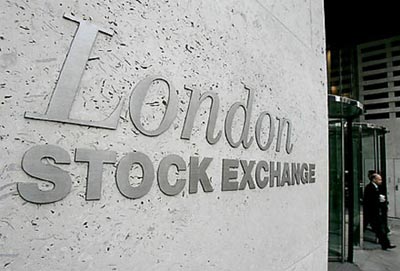
 LONDON: British stocks are adopting the brace position ahead of what investors fear will be a self-induced recession.
Shares in banks and housebuilders were among the hardest hit in the immediate aftermath of the country's decision to leave the European Union.
The silver lining is that Britain's banking system is better equipped to deal with financial turmoil than a decade ago.
As leveraged bets on the domestic economy, lenders like Royal Bank of Scotland and Barclays as well as homebuilders Persimmon and Barratt Developments were among the biggest fallers in Britain's blue-chip FTSE 100 index.
Though shares regained some ground after Prime Minister David Cameron said he would step down and Bank of England Governor Mark Carney pledged to support markets with 250 billion pounds of liquidity, investors are expressing the belief that leaving the EU will lead to an economic contraction.
British property groups have long ridden an investment bubble in housing, so a period of declining prices need not be a catastrophe. Banks, however, pose the greater systemic threat, especially as plunging share prices invoke memories of the financial crisis.
The good news is that they have at least shored up their defences. Since the crisis, UK banks have more than doubled the amount of capital they hold to 200 billion pounds. They had also been stockpiling cash and other liquid assets in anticipation of a vote to leave the EU.
Financial institutions will face an unpleasant reckoning nonetheless. Britain faces a near-certain downgrade of its AAA rating from ratings agency Standard & Poor's, raising funding costs for the sector.
If the Bank of England responds by cutting its base rate from 0.5 percent, lenders would face pressure on their net interest margins.
Meanwhile, loan growth depends on continued economic expansion, notes Citi. Shares in Royal Bank of Scotland, Lloyds Banking Group and Barclays - all with similar exposure to the UK economy - experienced equivalent falls. Specialised challenger banks such as Aldermore and Shawbrook, which focus on smaller company lending, lost more.
But UK investors are not alone in facing uncertainty. Shares in many European banks were down at least as much, and even more so in the case of Greece.
Britain's self-inflicted wounds may be felt elsewhere.

























Comments
Comments are closed for this article.