


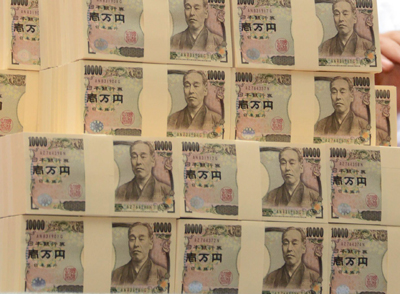
 TOKYO: The yen rose in Asia on Tuesday after the head of the Bank of Japan indicated concern about the negative impact of its recent weakness on the country's struggling economy.
In Tokyo afternoon trading, the dollar slipped to 117.93 yen from 118.25 yen in New York Monday, while the euro eased to 146.49 yen from 147.10 yen.
The single currency, which rallied Monday in response to a pick-up in German business confidence, slipped back to $1.2425 from $1.2439.
BoJ governor Haruhiko Kuroda said policymakers were aware of the impact of the yen's sharp decline on the economy, after it tumbled to multi-year lows against the dollar and euro since the central bank ramped up its stimulus programme on October 31.
"We will monitor (market movements) carefully, including their impact on the actual economy," Kuroda was quoted by the Nikkei business daily as telling business leaders in a speech on Tuesday.
He acknowledged that while a weak yen is positive for exporters, it weighs on household incomes and hurts smaller firms' earnings because of rising import costs.
Kuroda gave no hint of further easing in the immediate future, despite recent data showing Japan fell into recession in the third quarter.
But he said "the bank will make adjustments without hesitation" if necessary to achieve an inflation target of two percent by next year, adding: "This policy stance remains unchanged."
His comments follow remarks Friday by Finance Minister Taro Aso who said the yen's fall to a seven-year low against the dollar had been too rapid.
"All this combined may be weighing on the (dollar-yen) pair, although its upward trend is still very much intact," Minori Uchida, chief currency analyst at the Bank of Tokyo-Mitsubishi UFJ, told Dow Jones Newswires.
The dollar was mixed against other Asia-Pacific currencies.
It edged up to 44.97 Philippine pesos from 44.94 pesos on Monday, to 32.81 Thai baht from 32.79 baht, to 12,162 Indonesian rupiah from 12,125 rupiah, to 61.92 Indian rupees from 61.73 rupees, and to Sg$1.3028 from Sg$1.2995.
The greenback weakened to 1,111.88 South Korean won from 1,113.16 won while it was flat at Tw$30.91.
The Australian dollar fell to 86.00 US cents from 86.87 cents and the Chinese yuan inched down to 19.20 yen from 19.22 yen.

























Comments
Comments are closed for this article.