


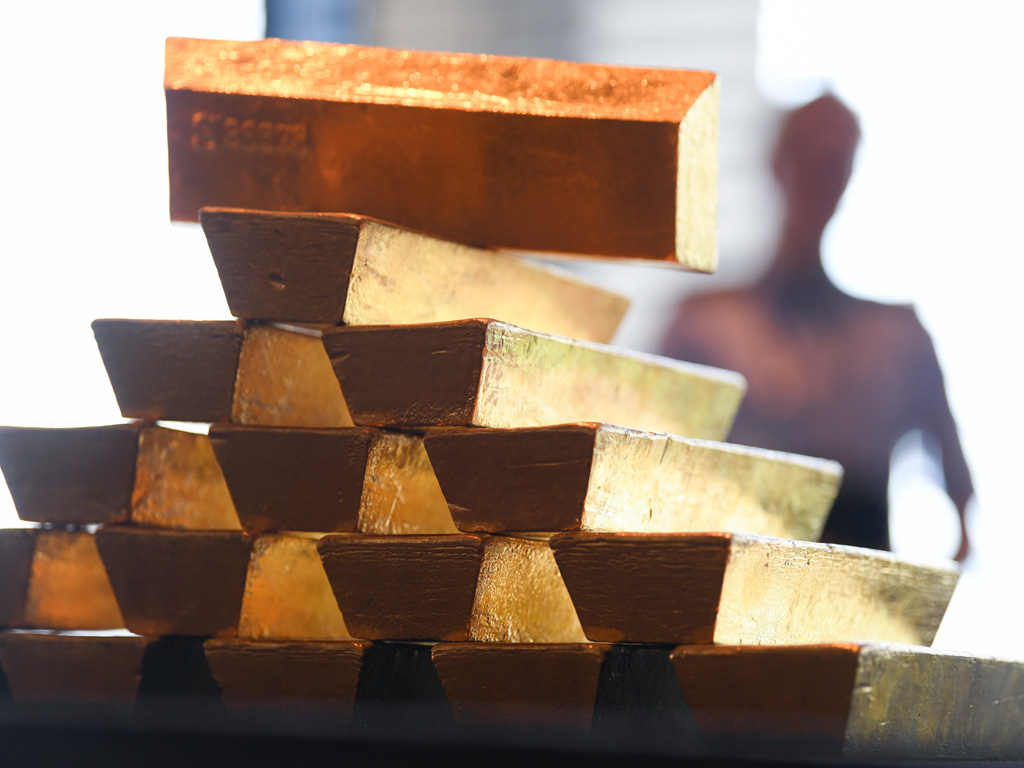
 OUAGADOUGOU: Burkina Faso expects to produce a record 55 tonnes of gold in 2018, a two-thirds increase on five years ago, as new projects in the landlocked West African country come on tap, the mines minister told Reuters in an interview.
Speaking in his office in the capital Ouagadougou late on Thursday, Oumarou Idani said gold production had hit 45.5 tonnes last year. That puts it ahead of Tanzania as Africa's fourth-biggest gold producer -- after South Africa and Burkina Faso's neighbours Ghana and Mali.
The forecast for this year represents a 20 percent increase on 2017, and at current levels would put its industrial production on a par with No.3 producer Mali.
"There is gold everywhere in Burkina Faso, in every region," Idani said. "With this strong potential, naturally it is attracting investment."
A decade ago Burkina Faso was better known for the cotton it grows than the gold it mines, but since then a gold rush has transformed it into one of Africa's hottest destinations for frontier mining.
In 2008 it poured just 5.5 tonnes of gold from two large-scale projects; in 2013, that figure had increased fivefold to 33 tonnes. The 2018 projection would mark a tenfold increase in industrial production on a decade earlier.
Idani said $100 million had been invested by companies looking to discover new gold fields.
"Burkina is more dynamic, and is progressing faster," Idani said. "We are second only to Democratic Republic of the Congo on the continent in terms of investment in exploration."
Miners such as Canada's IAMGold, Semafo and Endeavour have large projects in Burkina.
Most projects have been profitable, although others such as Avocet Mining have struggled with financing.
In addition to mechanised production, 9.5 tonnes a year is dug up by artisanal miners, Idani estimated. Of that artisanal output, all but about 200-400 kg was smuggled out via neighbours such as Togo, he said.
All over the country, small-scale miners lower themselves into holes up to 25 metres deep, break rocks with hammers and pan for gold using buckets of water. But the largely unregulated sector goes untaxed and has other problems such as use of toxic mercury and cyanide, as well as child labour.
Efforts to regulate it included the creation of a national agency for artisanal miners that would enable their output to be monitored and improve traceability, Idani said. Another agency for investigating tax fraud in the gold sector had been given more resources to crack down on cheats, he said.
"Our big problem today is showing that we have other things besides gold," he added. "We have to diversify production. We mostly only produce gold, but we have huge potential in manganese, zinc, lead, copper, nickel and limestone".


























Comments
Comments are closed for this article.