


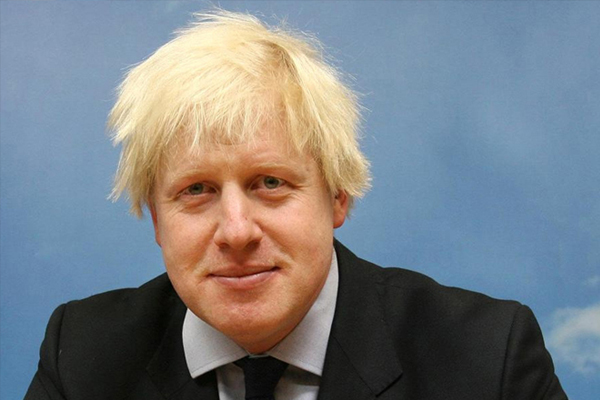
 LONDON: London Mayor Boris Johnson has long been both ally and nemesis to Britain's Prime Minister David Cameron but dealt his old friend the heaviest blow yet Sunday by backing the campaign to leave the EU.
The leave campaign had lacked a unifying figurehead but Johnson's support is a major boost for them -- and a significant blow for Cameron, who he could eventually succeed as Conservative leader.
Commentators say Johnson's desire for the top job is likely to have played a major part in his decision to back Brexit.
With his shock of blond hair and frequent gaffes, Johnson, 51, is one of Britain's most recognisable politicians, known to millions simply as Boris.
His witty quips and shambolic appearance make him popular even with voters who do not share his political views.
Johnson once said his chances of being prime minister were on a par with "my being reincarnated as an olive" and urged men to vote Conservative because it will "cause your wife to have bigger breasts and increase your chances of owning a BMW M3".
Born in New York in 1964, Alexander Boris de Pfeffel Johnson's family was competitive and high-achieving.
His father was a Conservative member of the European Parliament, one brother, Jo, is a minister in Cameron's government and his sister Rachel is a journalist and writer.
She told his biographer that, as a child, he wanted to be "king of the world" when he grew up.
Johnson won a scholarship to Eton, one of Britain's most prestigious schools, which Cameron also attended two years below him.
The pair were then contemporaries at Oxford University and both members of the Bullingdon Club, an elite, all-male dining society known for its rowdy behaviour.
Biographers say Johnson was touted as a future prime minister at Oxford while Cameron kept a lower profile, sowing the seeds of their rivalry in government.
- 'Win-win' decision -
After graduating, Johnson became a journalist, working at newspapers The Times and The Daily Telegraph -- including as Brussels correspondent -- and editing right-wing political magazine The Spectator.
He became a lawmaker for the then opposition Conservatives in 2001 and was later appointed as a shadow arts minister before being sacked from the role over accusations of lying about an alleged extra-marital affair.
In 2008, he became London Mayor and stepped down from the House of Commons.
Johnson's proudest achievements at City Hall include overseeing the 2012 Olympics -- during which he was pictured dangling, stuck, from a zip wire -- and major transport works like Crossrail, a £15 billion (19 billion euro, $21 billion) rail project which when finished will connect areas east and west of the city.
The city's cycle rental scheme also bears his name -- "Boris Bikes" are now a highly popular method of getting around the congested city.
While broadly seen as an ally of Cameron, Johnson -- who is married with four children -- has not always been seen as helpful to his old rival.
In the run-up to last year's general election, Cameron reportedly used the f-word in a text message to Johnson telling him to "shut up" after the mayor wrote about how many Old Etonian prime ministers there had been.
Johnson will step down as mayor at elections in May and is among the favourites to succeed Cameron, who will not stay on beyond the next general election in 2020.
Commentators say Johnson is likely to have decided to come out in favour of Brexit based on what was most likely to win him the Conservative leadership.
George Eaton, political editor of the New Statesman magazine, wrote Sunday that Johnson had calculated that backing out was a "win-win".
"Should the UK vote to leave, David Cameron will almost certainly resign as prime minister and the mayor will be best placed to succeed him," he wrote.
And if Britain votes to stay, Johnson will have "earned the affection" of grassroots Conservative members, many of whom are eurosceptics, which would also boost his leadership hopes, Eaton added.


















Comments
Comments are closed for this article.