


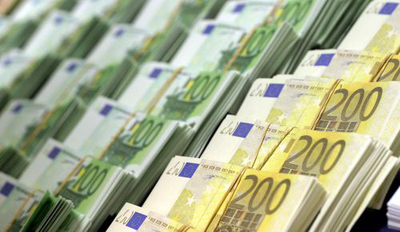
 LONDON: The euro fell to less than $1.23 for the first time in more than two years on Thursday, finding few friends in a market that is wagering the European Central Bank will be forced to inject even more stimulus into a moribund euro zone economy.
The yen was also teetering on the brink against the dollar, although dealers said there was at least $1 billion in sell orders fending off a break through 120 yen per dollar.
While a full-blown quantitative easing programme after Thursday's policy review is unlikely, some believe the ECB may lay the groundwork for such a move early next year.
Dealers said any detailed discussion of the mechanics of QE from Governor Mario Draghi or a clear indication that the bank is headed for a programme of outright money-printing in the first quarter would push the euro lower.
Some said it might not be enough for Draghi to indicate the bank was moving ahead with corporate bond buying or easier terms on its loans for banks.
"The euro could easily pop a cent and a half in either direction today, depending on Draghi's message," said Graham Davidson, a spot currency trader with National Australia Bank in London.
"If he only says they will buy corporate bonds or he will ease the terms of the TLTRO (loans) then I think the euro will jump. But if it gets up well into the $1.24-1.25 area then I'd look to sell into the rally."
About an hour into European trading the euro had found a foothold, trading flat on the day at $1.2315 after falling to a low of $1.2295.
The dollar touched another seven-year high against the yen, rising as high as 119.98 yen on trading platform EBS.
"There seems to be strong interest to sell the dollar at 120 but I would imagine it would go at some point," said another London-based dealer. "Draghi could well be the trigger there as well."
The dollar last traded at 119.91 yen, up 0.1 percent on the day.
ABE BOOST
Japanese media projections showing that Prime Minister Shinzo Abe's coalition may keep its two-thirds majority in the lower house of parliament in general elections on Dec. 14 were supportive for the dollar versus the yen.
A strong mandate for "Abenomics", Abe's push to revive the economy through a mix of hyper-easy monetary policy, government spending and reforms, would be expected to encourage more yen printing after the election.
"It would be much more of a threat to dollar/yen if the polls had turned down against him materially because that in turn would be a threat to the macro economic policies that he has pursued," said Callum Henderson, global head of FX research for Standard Chartered Bank in Singapore.
The dollar set a fresh 5-1/2 year high against a basket of currencies at 89.044, its highest level since March 2009. But it then retreated to 88.91.
The Australian dollar fell 0.4 percent to $0.8372, having fallen to as low as $0.8358 earlier on Thursday, its lowest level since mid-2010.
There was some support for the currency from better than expected Australian retail sales data but that proved shortlived. Data on Wednesday showing that economic growth slowed last quarter had prompted markets to price in more chance of an interest rate cut by the Reserve Bank of Australia, dampening sentiment toward the Aussie.

























Comments
Comments are closed for this article.