


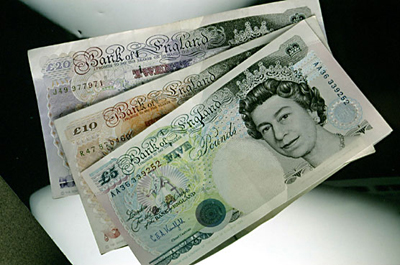
 LONDON: Sterling fell to a 10-week low against the dollar on Wednesday after the Bank of England slashed its forecast for wages growth in half and said earnings would help determine the timing and pace of interest rate rises.
The new forecast, outlined in the bank's inflation report, prompted markets to push back expectations of when rates will rise. Sterling overnight interbank average rates were pricing in the chance of a February hike, compared with a slight chance of a rise in December before the report was released.
The report came an hour after data showed average wages in Britain suffered an outright fall in the second quarter of 2014. The BoE said it expected earnings to grow just 1.25 percent this year.
Sterling fell by more than a cent to $1.6699 - its lowest since June 5 - after the report, from $1.6839 ahead of its release, down over 0.6 percent on the day and on track for its worst daily fall in more than six months.
The central bank indicated that wage developments would be key to the exact timing of a rate move, noting "the importance of monitoring the expected path of costs, particularly wages" in determining how much slack remained in the economy.
"Coming after those wage numbers, his (BoE Governor Mark Carney's) comments about the importance of the wage growth story really helped cement this idea that we really shouldn't be talking until 2015 about rate hikes," said Simon Derrick, head of currency research at Bank of New York Mellon in London.
"I think the market had got carried away with when those hikes were going to take place and I suspect that was simply down to the fact that there were so few other clearly defined stories in the second quarter of this year."
The earlier data painted a mixed picture of the labour market, with British workers' wages falling by 0.2 percent on a yearly basis, but with unemployment falling to 6.4 percent - its lowest since the end of 2008.
"On balance the numbers (were) a little bit softer than expected, but not really game-changing to the extent that the trend in ... employment is still favourable," said Adam Cole, global head of currency strategy at RBC Capital Markets.
At the news conference to accompany the inflation report's release, Carney said contingency plans were in place in the event that a forthcoming referendum on Scottish independence undermines Britain's financial stability.
EURO STRONGER
The euro rose past 80 pence for the first time in 1-1/2 months, hitting a high of 80.03 pence, up 0.6 percent on the day.
Sterling's broad-based losses saw it fall to a two-month low of 87.7 against a trade-weighted basket of currencies.
The single currency's gains came despite the release of data earlier in the day showing an unexpected drop in euro zone industrial production, as the region felt effects from conflicts in Ukraine, Iraq and Gaza.
That followed a survey on Tuesday showing investor morale in Germany, Europe's biggest economy, at its lowest in over 1-1/2 years - a further sign that the euro zone recovery is faltering.
"I would still think the pound could regain some ground against the euro once the positioning clear out has been completed," said Valentin Marinov, head of European G10 currency strategy at Citi.
"The policy divergence between the European Central Bank and the BoE should continue to keep the risk for euro/sterling on the downside."

























Comments
Comments are closed for this article.