

Industrialists urged to phase out use of HCFC in compressors

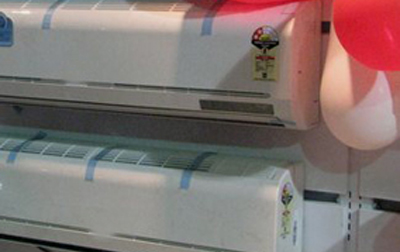 ISLAMABAD: Environmentalists, climatologists, earth scientists and meteorologists have urged industrialists especially the manufacturers of refrigerators and air conditioners to phase out the use of the HCFC in compressors.
Addressing a workshop, they said that hydrochloro-fluorocarbons (HCFCs), a greenhouse gas that depletes ozone are considered as a major cause of depletion of the ozone layer, the upper atmospheric blanket that shields us from some of the harmful ultraviolet radiation from the sun.
HCFCs were found to have a negative effect on the earth's stratospheric ozone layer which protects humans, animals and plants against the harmful ultraviolet-B (UV-B) rays of the sun, they observed.
The ozone layer is a thin, fragile shield that envelops the earth and acts like an umbrella that protects us from the sun's harmful ultraviolet-B radiation (UV-B). It is made up of ozone (O3) molecules and located in the upper atmosphere, 10 to 50 kilometers above the earth's surface.
Ozone-depleting substances (ODS) destroy ozone molecules in the stratosphere, which causes ozone depletion - the thinning of the ozone layer. Because of this, more UV-B penetrates the earth.
Muhammad Ashraf, national project director of the Ozone Cell and Joint Secretary (International Cooperation), Ministry of Climate Change, said that HCFCs compound favoured by industry is a potent greenhouse gas, contributing to the warming of the planet as carbon dioxide does. But the effect of many kinds of HCFCs on global warming is much more pronounced than an equivalent amount of carbon dioxide.
The production of one form of HCFC (called chlorodifluoromethane) has been blamed for the creation of a byproduct called fluoroform (HFC-23). Fluoroform's impact on global warming is 11,700 times greater than the impact of an equivalent mass of carbon dioxide, according to the US Environmental Protection Agency.
Ashraf, who is also Pakistan's focal personal on Montoreal Protocol, urged the industrialists to joint governments efforts and play their active part in phasing out the environmentally harmful hydrochlorofluorocarbons.
He said, "HFCs are better alternatives to HCFCs in both refrigeration and air conditioning applications and; hence, the phase out of HCFCs will not only have a positive impact on ozone layer recovery but also on climate change mitigation. For, HCFCs are powerful greenhouse gases (GHGs) which significantly contribute to the warming of the earth's atmosphere."
Muhammad Ashraf told the participants of policy level workshop that industry plays a vital role in meeting the 2015 target of 97.5 percent reduction in HCFC consumption.
Currently, the companies that produce HCFCs, use HCFCs in the production of their products and/or equipment and/or commercial and industrial owners with huge refrigeration and air-conditioning systems are the largest consumers of these substances.
Hence, the phase-out of HCFCs in this sector will have a huge positive impact to the protection of the ozone layer and reduction of GHG emissions.
In addition, the industry can benefit from the savings from the shift to energy efficient alternative technologies, he added.
Parties to the Montreal Protocol at the 19th Meeting of the Parties in 2007 in Montreal, Canada, had agreed to adjust the HCFC phase-out schedules for both developed and developing countries.
The Montreal Protocol on Substances that Deplete the Ozone Layer is an international treaty designed to protect the ozone layer by phasing out the production of numerous substances believed to be responsible for ozone depletion. It is believed that if the international agreement is adhered to, the ozone layer is expected to recover by 2050.
Gul Najam Jamy, Assistant Country Director Environment and Climate Change Unit, UNDP in Pakistan said that the Hydrochlorofluorocarbons Phase-out Management Plan (HPMP) of Pakistan has been under implementation for the last two years and the second stage covering the Refrigeration and Air-conditioning (RAC) sector will be developed.
"In the first stage, UNEP has been mandated to provide technical assistance and guidance to the Government to implement the HPMP in line with approval by the 62nd Meeting of the Executive Committee. One of the key elements of UNEP support is to assist the National Ozone Unit (NOU) in maximising ownership of the process and outcome of the HPMP implementation within the Government," he said.
He remarked that the implementation of the HPMP is a multi-disciplinary subject and requires coordination between different agencies of the Government. Some of the important ones are the Enforcement Agencies (Customs, Border Patrols, etc), Standards Organisations, Energy and Climate Change Agencies, etc which the NOU has to deal with.
The need to enhance understanding of these agencies is critical in ensuring effective implementation of the HPMP. South Asia Coordinator, United Natons Environment Programme's OzonAction network, Atul Bagai, said that besides urging industrialists to play their role, phase-out of HCFC will demand concrete measures to protect the ozone layer.
While proposing some workable measures that can help weed out use of HCFC, he said that that all HCFC stakeholders must be aware of the phase-out schedule and available alternatives, equipment owners must begin to assess the potential impact of the HCFC phase-out when considering new equipment and retrofits of existing equipment, owners of HCFC equipment or potential buyers of new refrigeration and air conditioning (RAC) equipment must be knowledgeable of HCFC issues and contractors should provide correct and timely information on HCFCs to technicians and marketing staff, and complete information on available ozone-friendly and climate friendly equipment and refrigerant solutions to customers.
Earlier, Federal Climate Change Minister, Rana Muhammad Farooq Saeed Khan, said in a statement that protecting ozone layer is critical to save the life on earth, which will require firm resolute by all sectors, particularly industry and those who produce and use gases dangerous to ozone layer.
He assured his Ministry's the fullest support and cooperation in achieving goals of Montoreal Protocol for protection of ozone layer by controlling ozone-depleting substances.


























Comments
Comments are closed for this article.