

Asian currencies tumbled on Tuesday as investors remained on edge ahead of a US move later this week to impose tariffs on $34 billion in Chinese exports to the United States. The sell-off in the Chinese yuan continued as it slipped past the 6.7 per dollar mark for the first time in nearly a year.
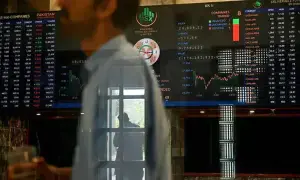
The People's Bank of China (PBOC) set the midpoint roughly in line with market expectations before the market open, at 6.6497 yuan per dollar, its weakest fixing in about 10 months. Trade tensions also battered Chinese stocks, with the Shanghai Composite Index dipping 1.9 percent to hit a fresh 28-month low. In Hong Kong, the Hang Seng index slumped 3.3 percent to its lowest in 10 months.
Meanwhile, in an effort to alleviate market concerns, the country's foreign exchange regulator said China was confident of maintaining stability in the yuan and keeping it at a 'reasonable' level. "An all-out trade war, under which all goods traded between China and the US are subject to 15-25 percent tariffs, would hurt the two economies' GDP growth rates mildly (quarter percent) in 2018 and substantially in 2019 (more than half a percent)," said Taimur Baig, Deutsche Bank's chief economist for Asia, in a note.
Baig added "this would set off a major global chain reaction. Given their trade open-ness and exposure to the electronics supply chain, there will be no respite whatsoever for Malaysia, Singapore, South Korea and Taiwan, in this tail risk scenario" The Singapore dollar slipped 0.2 percent, while the Taiwan dollar weakened 0.3 percent.
Brent crude oil futures were 0.7 percent higher putting pressure on major oil importing countries such as India, Indonesia and the Philippines as rising oil prices threaten to widen their fiscal deficits and spur inflation. The Indonesian rupiah weakened 0.5 percent, while the Indian rupee slid 0.1 percent. Elsewhere, the Thai baht dipped 0.4 percent and was among the region's biggest losers.
The South Korean won slipped 0.3 percent, with softer inflation dampening prospects for tighter monetary policy. Consumer prices in South Korea in June were 1.5 percent higher than a year earlier, data showed on Tuesday, less than the 1.7 percent expected in a Reuters poll.
Benchmark inflation has held below the Bank of Korea's 2 percent target since October last year, making inflation a hurdle to any monetary policy tightening even as interest rates in major economies are set to rise.




















Comments
Comments are closed for this article.