


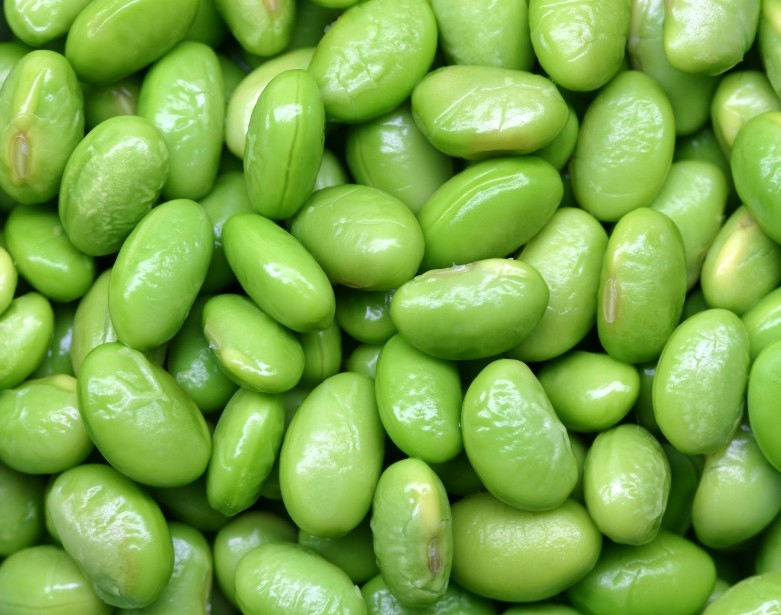
 CHICAGO: US soybeans rose on Friday after a decline in prices to a one-month low spurred export interest, with a weak dollar and higher crude oil also supporting futures.
Corn futures fell 1 percent and wheat also declined, bucking support from a sharply lower greenback, on pressure from slow export demand and news that Britain's largest farmer co-op had signed a contract to supply wheat to a US feed maker.
"It looks like soybeans finished out their move to the downside, technically speaking, and at these prices we are likely to see some end-user buying," said Bill Raffety, analyst at Penson Futures in New York.
"Farmers are going to hold (soy sales) if they can until next year," he said.
Chicago Board of Trade soybean futures for January delivery posted their biggest daily gain in a week, settling 8 cents higher at $11.75-1/2 after hitting the lowest price since Oct. 10 on Thursday.
Soybean futures were the most oversold of the major grain and oilseed futures, according to Relative Strength Index charts, while the lower futures helped prop up cash basis bids in US domestic and export markets.
However, soybeans shed 3.4 percent for the week while wheat futures declined about 3.2 percent this week, with each commodity posting its second straight weekly decline.
Corn futures fell for the first time in six weeks, dropping more than 3 percent.
CBOT December corn finished 7 cents lower at $6.38-1/2 per bushel after briefly trading in positive territory, while CBOT December wheat ended down 3-1/4 cents to $6.16-3/4.
Corn was further pressured by a forecast for larger seedings next year by analytical firm Informa Economics, which pegged 2012 corn plantings at 94.0 million acres, up last month's forecast of 93.1 million acres.
The firm trimmed its forecast for soybean seedings and left steady its estimate for plantings of all wheat varieties.
Corn prices are at a nearly historic premium to wheat, prompting poultry, hog and cattle producers to turn to cheaper feed wheat to nourish their animals.
British grain merchant Openfield said on Friday it had signed a major contract to supply feed wheat to the United States with the first shipment, of 45,000 tonnes of wheat, due for loading next week.
"Corn's poor competitive position is really illustrated by the ability to bring in feed wheat into the US from elsewhere around the world," said Agrivisor LLC analyst Dale Durchholz.
"The name of the game in the livestock feeding business is to feed animals as cheaply as possible."
Slow US exports of corn and wheat also weighed on US grain futures, with US Agriculture Department export data on Thursday showing disappointing foreign sales of each crop.
The euro rose for a second day against the dollar after Italy approved austerity measures. The dollar index was down about 1 percent early on Friday, making dollar-dominated commodities more attractive to overseas buyers.
However, uncertainty surrounding the European debt crisis continued to overshadow US commodities and traders pulled money out of the market before the weekend.
"We could see people taking some profits," Raffety said. "If you made a little bit of money this week, it's smart to take some of that off."






















Comments
Comments are closed for this article.