


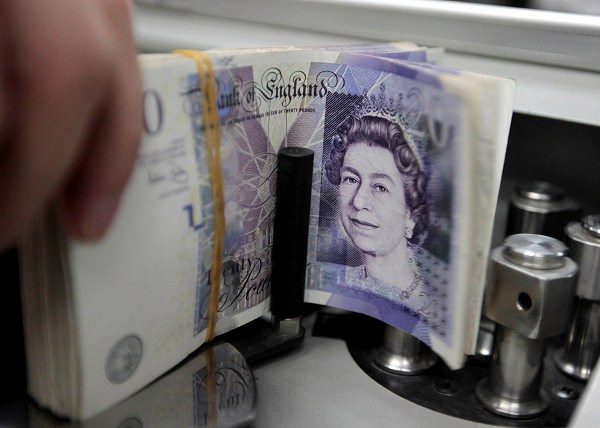
 LONDON: Sterling struggled to make further progress on Monday after hitting a 7-week high against the dollar on the back of a survey that added to signs Britain's economy has ridden out the initial fallout of June's vote to leave the European Union.
The pound also hit a 4-week peak against the euro after the Purchasing Managers' Index (PMI) for the dominant services sector showed the biggest one-month gain in the survey's 20-year history, beating all forecasts in a Reuters poll.
That was as good as it got, however, with sterling retreating against both the dollar and euro in trade thinned out by a US public holiday.
It stood just 0.1 percent stronger at $1.3307 and 83.72 pence per euro by 1540 GMT.
Sam Lynton-Brown, a strategist with BNP Paribas in London, said that while the pound does look undervalued, longer-term risks to the economy from Brexit negotiations will weigh on any efforts to push it higher.
"The political risk premium is certainly key, that's why we're going to stay here for the next six or so months," he said.
"If some of this political risk dissaipates you may get some bounce back. The post vote hit to confidence hasn't fed through but that is not to say the medium term outlook for the economy is that much better."
BNP are among a number of banks pointing to the sharp undervaluation of the pound and their CLEER indicator of fair value suggests the pound may not have much further to fall.
The services survey echoed the upbeat tone of data released last week on the manufacturing and construction sectors in August and bolstered a view that the economy was holding up well so far.
Sterling rose as much as 0.6 percent to $1.3376 after the data, its highest since mid-July. The euro fell 0.4 percent to 83.56, its lowest since early August and the broader sterling index climbed to its highest since July 15.
"Services represents a key contributor to the economy and this reading should continue to ease away concerns that the EU referendum outcome would lead to an immediate recession in the UK," said Jameel Ahmad, chief market analyst at retail broker FXTM.
He added sterling could rise a bit before meeting resistance at around $1.3480, the high struck on July 15. Other traders pointed to the strength of the yen, a big gainer against the pound and other currencies since the Brexit vote, as a factor in sterling's inability to press higher.
Speculators, however, trimmed record high bets against the pound in the week ended Aug. 30 and analysts said if investors roll back expectations of further monetary easing in coming months, sterling could advance further.
The Bank of England cut rates to near zero early last month and launched an asset purchase to cushion the economy from the shock decision to leave the EU.
"Sterling should remain supported as BoE rate expectations and the gilt curve experience a significant revaluation," Morgan Stanley said in a note.




















Comments
Comments are closed for this article.