

Sterling struggles near 7-month low versus dollar

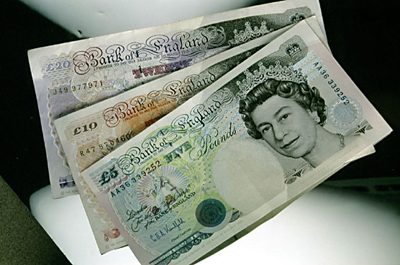 LONDON: Sterling hit a seven-month low against the dollar on Monday, hurt by a policymaker's suggestion that the currency may need to fall further, and by recent poor data that has stoked worries of another UK recession.
With the Bank of England appearing comfortable with the pound's drop, more losses are likely, traders said.
Sterling dropped to $1.5438, its lowest since July 13, before recovering to last trade down 0.3 percent on the day at $1.5472. Technical strategists said there was some near-term support at the July 13 low of $1.5414 and a break of that level could see it drift towards the June 1 low of $1.5269.
The euro rose 0.2 percent against sterling to 86.22 pence, staying within sight of its 15-month high of 87.17 pence hit on Feb. 1.
The pound's latest losses came after senior Bank of England policymaker Martin Weale said on Saturday the currency may need to weaken further to rebalance Britain's economy.
"Any comments like that from a central banker are going to add weight. We are getting increasing tones like that from the BoE, which is pushing sterling lower," said Richard Driver, currency strategist at Caxton FX.
Last week, the pound suffered its biggest weekly loss since early June 2012 after a weak retail sales report for January added to gloom about the economy.
Sterling was also hurt by the BoE's quarterly inflation report last Wednesday, which forecast higher inflation and weak growth. Governor Mervyn King said the BoE was ready to tolerate higher inflation to stimulate the economy.
The likelihood of finance minister George Osborne missing debt-reduction targets due to faltering growth, leaving the UK at risk of a potential credit downgrade, was another factor driving investors to sell the pound, traders said.
Speculators have increased their bets against the currency, with data from the Commodity Futures Trading Commission showing they have built up their largest short sterling bets since June.
Implied volatilities climbed to reflect more hedging against further pound weakness. One-month implied volatility rose to 7.95 percent from around 7.75 at the end of last week.

























Comments
Comments are closed for this article.