

Saudi cracks petchem feedstock challenge

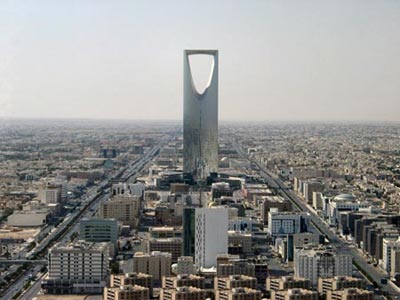 Saudi Arabia: Top oil exporter Saudi Arabia must find competitive new feedstocks to offset a gas shortage if it is to expand its petrochemical industry as part of a drive to diversify sources of income and jobs.
Petrochemical firms in the Gulf have relied heavily on ethane, a form of natural gas. Although the region sits on 40 percent of the world's known gas reserves, only Qatar has avoided burning away much of its supplies to become a net exporter.
"There is no option other than moving to liquid feedstock. Ethane is not available," said a Saudi industry source who declined to be identified.
State oil giant Saudi Aramco plans to use natural gas liquids and refined products for its flagship project to expand the Rabigh II joint venture with Sumitomo Chemical, partly because of uncertainty over the supply of natural gas over the plant's lifetime. "Competing uses for limited gas streams may reduce deliveries to Rabigh," John Tottie, an energy analyst at HSBC Saudi Arabia, said in a report.
Saudi Arabia's natural gas consumption has risen sharply because of growing demand from power generation as well as the petrochemical sector.
Gas production from the kingdom's vast fields has risen much more slowly, and progress in projects to exploit non-associated gas reserves has been sluggish, forcing refiners to look to other fuels for future growth. The kingdom has ruled out importing gas.
Saudi Arabia is a net exporter of naphtha, and industry sources say a mixed-feed cracker that Saudi Aramco and US-based Dow Chemical plan to build will also crack naphtha as the kingdom looks for alternatives to limited gas supplies.
"Saudi Aramco's new ventures use gas liquid and refined products as feedstocks, which are natural extensions of our NGL and refining business," Abdullatif al-Othman, senior vice president of Finance for Saudi Aramco, said in a speech earlier this month.
But cracking liquid hydrocarbons, especially naphtha, is not nearly as cost competitive as cracking ethane, industry sources say.
"The question is can we crack liquids in a competitive way in the Middle East? This is something that still needs to be demonstrated," said another source.
Some plants in the desert kingdom already have dual-feed capacity combining ethane and liquefied petroleum gas (LPG), but flipping to naphtha would be a bigger step.
"Petrochemicals firms will never switch to naphtha feed; ethane gas is so cheap," said a Gulf-based trader.
Saudi Oil Minister Ali al-Naimi has said he expects annual petrochemical output to reach 80 million tonnes in 2015 from 60 million in 2009 , and government-controlled SABIC alone plans to boost production to 130 million tonnes by 2020.
Aramco delivered 1.33 trillion British thermal units (BTUs) per day of ethane in 2010, up from 1.11 trillion BTUs a day in 2009, according to the company's 2010 annual report.
In Saudi Arabia, the price of ethane is set far below international prices at 75 cents per million BTUs, which helped fuel cheap expansion for petrochemical firms including Saudi Basic Industries Corp (SABIC).
Domestically, LPG is priced at 68 percent of Gulf naphtha FOB price, the industry source said.
"They already have freight advantage over the eastern competitors, and prices will not rise to (international) market prices," the source added.
The low prices for gas in Saudi Arabia have proved a problem for those seeking to develop non-associated gas fields now that its planned oil capacity expansion is completed.
Until now, they had helped to spur the petrochemical industry but could add to the challenge of moving on to different feedstocks.
The head of the Gulf Petrochemicals and Chemicals Association said, however, a greater variety of feedstocks would also yield a greater variety of petrochemical products.
While the entire value chain for ethylene has been developed in the kingdom, other value chains including C3 (propane/propylene), C4 (butane,butylenes) and the aromatics are underdeveloped.
"So in those value chains there are ample opportunities that will be in the interest of potential investors," Abdulwahab al-Sadoun, secretary general of the regional petrochemical producers group, told Reuters.
"It's instrumental in fulfilling the objective of the government to create and develop the downstream industries and create job opportunities," he said.
Copyright Reuters, 2011



















Comments
Comments are closed for this article.