


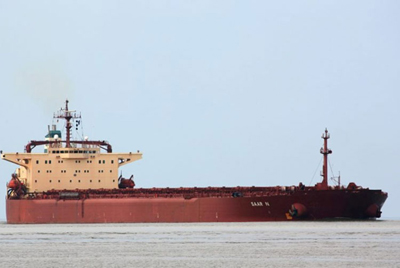
 LONDON: The Baltic Exchange's main sea freight index, which tracks rates to ship dry commodities, fell on Tuesday as weak activity continued to weigh on sentiment.
The index fell by 0.82 percent or 13 points to 1,572 points, after being flat on Monday.
It had risen for four consecutive sessions from Tuesday last week.
Brokers said while there had been a slight pick up in iron ore demand, the dry bulk market sought stronger direction.
The March 11 earthquake and tsunami in Japan, a major importer of dry bulk commodities including iron ore and coal, have hit freight activity.
"Dry bulk freight rates are expected to remain subdued in the short-term on the back of lower iron ore and coal imports by Japan, which is the second largest customer for dry bulk commodities after China," said brokerage
Governments, including China and the United States, have begun radiation screening for ships that travelled from Japan's quake-hit northeast, threatening to slow seaborne trade for the world's third largest economy.
The Baltic's capesize index fell 1.22 percent, with average daily earnings inching dropping to $10,649 after rising for five sessions previously.
It had fallen for six sessions prior to the move higher. Capesizes typically haul 150,000 tonne cargoes such as iron ore and coal.
Floods and cyclones in Australia last month hit coal production, and many producers declared force majeure at their operations, which has hurt capesize activity.
Weather-related problems have also disrupted Brazilian iron ore shipments.
Dry bulk rates are likely to get a modest boost as Japanese power plants restock coal inventories and steel companies import more iron ore to rebuild damaged output, analysts said.
"In the medium-term once Japan begins its reconstruction and the ports are reopened, restarting of coal-based power plants and steel mills would lead to enhanced demand for dry commodities," said ICICIdirect.
"This would be positive for dry bulk freight rates."
The Baltic's main index which tracks the cost of shipping key commodities such as iron ore, cement, grain and coal has halved in the last six months and languished at just over 1,500 points, close to levels last seen during economic turmoi in 2008.
The Baltic's panamax index fell 0.91 percent, with average daily earnings inching higher to $16,572.
Panamax vessels usually transport 60,000-70,000 tonne cargoes of coal or grains. Brokers said grains business was driving the panamax activity.
"In the panamax market brokers worry the lengthy list of available vessels in the Atlantic will put downward pressure on rates in this basin," Pareto Securities said.
"In the Pacific vessels returning to the market following the Japanese disaster may put a lid on rates there."
While there are indications of some vessel cancellations and delays, analysts expect deliveries to gather pace between 2011 and 2012, adding further pressure on dry bulk earnings.
"We believe the dry bulk shipping market is likely to remain challenging for the foreseeable future, given the significant number of new shipyard deliveries," Jefferies said.




















Comments
Comments are closed for this article.