


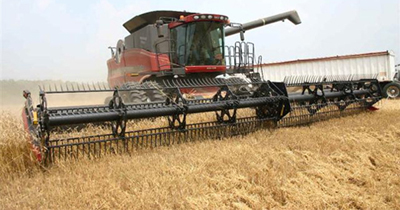
 UNITED NATIONS: Global wheat production rose by 3.4 percent this year to 676 million tons, but the increase is still below the bumper harvests in 2008 and 2009, the UN Food and Agriculture Organization (FAO) said in the March edition of its food situation report released on Thursday. Wheat planting in many countries has increased or is expected to rise this year in response to strong prices, while yield recoveries are forecast in areas that were affected by drought in 2010, the Russian Federation in particular, according the FAO Crop Prospects and Food Situation report. The report pointed out that it is still too early to forecast total cereal production for this year because the bulk of the world's coarse grains and paddy crops are yet to be planted. Looking back to last year's production, the FAO report notes that in the low-income food-deficit countries (LIFDCs) as a group, the 2010 cereal output rose by 5.6 per cent, a development that will result in reduced cereal imports in 2010-2011. However, the increased production in the LIFDCs will not necessarily bring much relief for those countries as their overall cereal import bill is estimated to increase by 20 per cent because of higher international prices, according to FAO. In Asia, good 2011 wheat harvests are forecast in India and Pakistan. In China, the drought situation in the North Plain has been eased by recent precipitation but the outlook for the wheat crop still remains uncertain. In the Asia Commonwealth of Independent States (CIS) sub-region, where Kazakhstan is the major producer, the bulk of the crop is yet to be sown, but in view of current strong prices planting is expected to be in line with the relatively high level of the past two years. In North Africa, prospects for this year's May-June harvests of winter wheat and coarse grains are generally favourable, except in Tunisia where dry conditions in January dampened hopes for a robust wheat production recovery. The current unrest in North Africa has resulted in the displacement of large numbers of people and disruption to the flow of goods and services in this heavily cereal-import dependent region, the FAO noted. In Southern Africa, the outlook for the main 2011 maize crop is favourable and relatively low prices have helped stabilize food security. A record crop of maize is forecast in Malawi and Zambia. However, in South Africa, the largest producer in the sub-region, a sharp drop in production is forecast from last year due to reduced planting in response to high level of stocks and low prices for maize at planting time. In Eastern Africa, despite bumper harvests in 2010 and generally low prices, food insecurity has increased in the drought-stricken pastoral areas. In Western Africa, post-election violence in continued to damage general economic conditions in the sub-region, trade in particular, FAO report said. In South America, however, where the season is well advanced, prospects for the 2011 maize crop are unfavourable in Argentina and Uruguay due to persistent dry weather linked to the La Nia weather pattern. In Brazil, by contrast, the outlook is positive after good rainfall since planting improved soil moisture conditions for developing crops. The need for food assistance, nevertheless, persists in many areas, the bulletin reported, with 29 countries currently requiring external assistance for food. Of those, 21 countries are in Africa and seven in Asia, including the Democratic People's Republic of Korea (DPRK). The displacement of large numbers of people in North Africa because of recent political events in the region also has made emergency assistance necessary, according to FAO.




















Comments
Comments are closed for this article.