


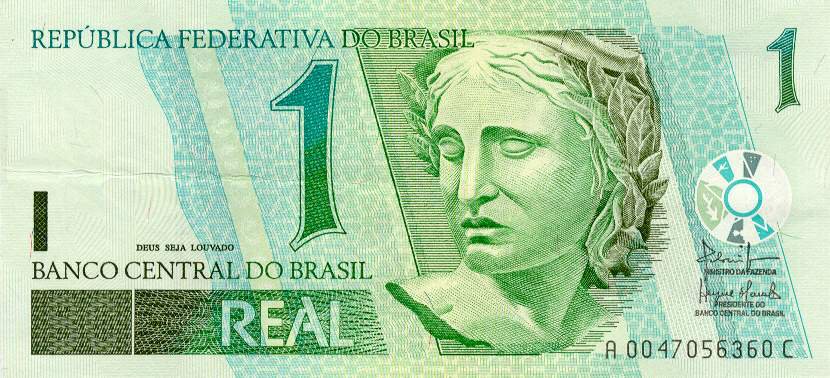
 BRASILIA: Brazil pledged on Thursday to deploy an "arsenal" of measures to protect its economy from fallout from the US Federal Reserve's latest round of monetary stimulus, saying it would do what it takes to stop a flood of foreign capital from driving up the value of its currency.
The Fed's decision to embark on another round of aggressive bond purchases could revive what Brazilian Finance Minister Guido Mantega famously decried as a "global currency war," in which countries take steps to weaken their currencies to boost economic growth. Speaking right after the Fed's announcement, Mantega said the Brazilian government will closely monitor the impact of the Fed's measures, which include monthly mortgage debt purchases of $40 billion for an indefinite period. Part of that money is likely to flood high-yielding emerging markets, causing local currencies to appreciate.
"If there are any undesirable capital flows to Brazil in the short term, we will take appropriate action," he told reporters in Brasilia. "The fact is that we won't let the real strengthen because of those measures."
The Brazilian real gained around 0.4 percent after the Fed announcement, underperforming most Latin American currencies as investors feared the government could intervene in the foreign exchange market at any moment.
By contrast, the Mexican peso rallied 1.5 percent.
"When a foreign investor looks at similar emerging economies, one with interventionist policies and the other without them, it is more likely that he will go to the economy that is free of intervention as that is a large risk factor," said Luiz Henrique de Paula, manager of the currency desk at H.Commcor brokerage in S?o Paulo.
Since early July, the Brazilian government has managed to keep the real trading between 2.0 and 2.1 units per dollar -- a narrow range that it considers as beneficial for exporters without stoking inflation.
That range has only been maintained with aggressive central bank intervention, however. On Wednesday alone, when expectations of Fed stimulus drove the real near the level of two per dollar, Brazil's central bank sold $1.37 billion worth of reverse currency swaps -- derivative contracts designed to stop the currency from appreciating.

























Comments
Comments are closed for this article.