


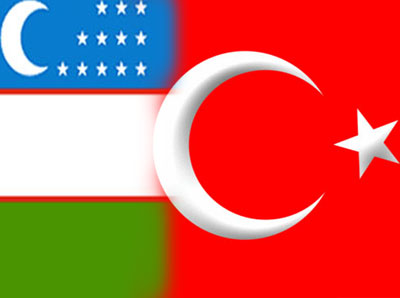
 TASHKENT: Uzbekistan has stepped up pressure against the private business interests of its one time ally Turkey, with state media denouncing Turkish firms as acting as a front for religious extremists. Long wary of the influence of Islamic fundamentalism in the Muslim majority Central Asian state, the secular authorities appear to be linking Turkish private business to the activities of banned Islamic group Nurcular. Uzbek state television has repeatedly aired documentaries accusing Turkish companies of creating a shadow economy, using double accounting and propagating nationalistic and extremist ideology.
"Over the past two years 54 Turkish nationals have faced criminal charges, 50 ventures working with Turkish capital were closed down for breaching country's laws and causing damage to the economy," a special report by the main Uzbekistan channel said. Over $0.5 billion worth of cash and goods were "confiscated by one Tashkent court decision alone," according to the documentary "Kurnamaklik" (The Ungrateful Ones). The reports came just after Uzbek law enforcement officials raided Turkuaz supermarket, one of the biggest in the capital Tashkent, in a so called "mask show" operation involving balaclava-clad special security forces. At the end of last year the first and the oldest Turkish supermarket in Tashkent was closed down for breaking local laws. At the same time one of the most prestigious English language schools in Uzbekistan, which operate with Turkish funding, declared the suspension of their educational services for "safety and security reasons." Turkey in 1991 was the first foreign state to acknowledge the independence of Uzbekistan, whose majority population and official language are Turkic in origin. Since then it has invested more than $1 billion in the Uzbek economy and around 700 Turkish firms operate in Uzbekistan. Trade turnover was around $1 billion in 2010. The Turkish embassy in Tashkent could not be reached for comment. The television documentary accused Turkish firms of disseminating Nurcular literature and establishing prayer rooms, which are illegal in Uzbekistan. State television listed more than dozen of Turkish firms and said that they were acting against the interests of two countries with common religious, cultural and linguistic ties. The Nurcular members are followers of the late 20th century Turkish Kurdish Islamic thinker Said Nursi who place a strong emphasis on the link between religion and science and believe societies can be changed through education. Nurcular members include wealthy businessmen with substantial political influence in Turkey and abroad while its leader lives in the US in exile. The group has already been banned in Russia and its members have faced persecution in some ex-Soviet republics. Meanwhile Uzbekistan's second main TV channel Yoshlar (the Youth) denounced the activities of Turkish educational companies reportedly working to create secret cells for Nurcular. The documentary named a Turkish businessman, Mehmed Zekiy, who funded "sects’ activity in Uzbekistan" and said "he had received recently 16 years imprisonment." The report showed a number of young Uzbeks sitting behind bars in Samarkand province court, saying they were "found guilty of belonging to banned extremist organisations and disseminating materials that pose threat to public security and order." According to the Ezgulik rights group, for the past few years over 50 Uzbek men were jailed for belonging to Nurcular, including three journalists and five workers of Yetti Iklim newspaper and Irmok magazine which were shut down in 2009. Most of the jailed men had graduated from schools funded by private Turkish organisations which flourished in the country when Turkey enjoyed warm relations with Uzbekistan in the mid-1990s. Relations later became strained and Uzbekistan shut down the Turkish schools and brought home hundreds of Uzbek students studying in Turkey.























Comments
Comments are closed for this article.