


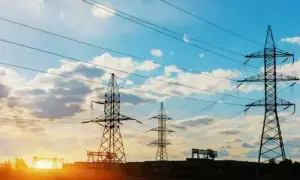
The report on the conduct of IPPs has indeed triggered extensive criticism on the profits made by Independent Power Producers (IPPs) in the last four decades and witnessed an extensive media bashing of IPPs on their conduct with an equally-hyped condemnation of the IPPs by the high offices in power and legislatures.
But all of this seems to be aimed at venting anger and criticism, which so far remains unsubstantiated.
There are indications that the direction has been maneuvered towards negotiations between the government and IPPS and reforms in the public power sector to curtail its losses in power generation, transmission and distribution. Both the approaches are a distraction and move us far away from the vision of the Prime Minister to reduce the much needed electricity tariffs and the crippling circular debt.
The report so far made public, at best, can be classified as preliminary which successfully identifies the unprecedented profits made by IPPs, which can be verified by simply analysing the past annual accounting reports of the IPPs. By and large, this was already in the knowledge of the people in the business and critics who have been voicing their concerns.
Based on this accounting analysis there are no legal grounds to reprimand the IPPs. The agreement between the government and IPPs guarantees them a minimum IRR of 17 percent but there is no upper cap on profits.
It can only be termed a morale deficit on the part of IPPs that while the consumer is suffering and in the midst of a crippling economy the IPPs are making embarrassing profits. But, for many, business is business and not a game of morality.
The approach to negotiations with the IPPs to extract out monetary concessions and change in the rules of business is unrealistic. The IPPs have been through these bouts a couple of times before with no substantive benefit to the government of the day.
Reforms in the power sector are another subject altogether on which the past and present governments have been working since decades with no success. So while focusing on IPPs this issue should be set aside at the moment and not confused with the core subject.
This writer in his last two columns had cautioned against premature negotiations with IPPs in the absence of a comprehensive, fair and transparent financial, technical and administrative audit by independent and credible auditors of the complete supply chain of the power sector of Pakistan inclusive of fuel supply chain, conduct of IPPs, conduct of regulators (NEPRA, OGRA etc), power generation and distribution companies in the public sector and the consumers. They are all part of one fraternity seamlessly linked together.
Only and only by placing the well substantiated and defined facts on the table can we truly identity the gaps and the defaulters in the chain and effectively take them on in terms of their wrongdoings, if any, the omissions, administrative and technical lapses in the system.
The government, so far, has not made public as to where it stands with its intention to conduct forensic audit of IPPs and the terms of its reference (TORs). It's an humongous and time-consuming task but an inevitable one to reduce tariffs and contain the crippling circular debt.
All over the world - be it Europe, the USA or emerging markets in Asia, the privatisation of electricity generation has resulted in the reduction of electricity tariffs and better service.
We need to work it out why Pakistan is an exception, even being among the first few countries which opted for the privatisation of power generation. Others in the meantime have advanced to deregulated electricity markets, offering competitive electricity to consumers.
However, in the case of Pakistan, the existing IPPs will not move into a deregulated market as the purchase agreements signed with IPPs are ab initio flawed in this regard, wherein the agreements guarantee profitability and risk mitigation to IPPs unlike our telecom private sector which is subjected to a competitive market-based regime providing the consumers options based on tariffs and service.
(The writer is former President of Overseas Investors Chambers of Commerce and Industry)
The writer is a former President OICCI; Global Business Leader and Strategic Affairs Analyst






Comments
Comments are closed for this article.