


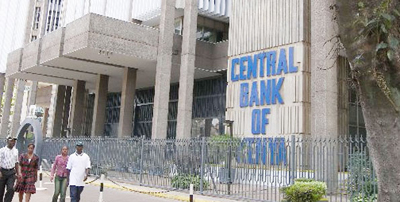
 NAIROBI: Kenya's central bank held its key interest rate steady for a third month in a row on Tuesday after worrying signs from its neighbour Uganda of the risks of easing policy before inflation slows markedly.
Analysts were split on whether Kenya's central bank would take advantage of a bigger-than-expected fall in inflation in February to 16.7 percent to kick off an easing cycle, or hold steady to help bolster its inflation-busting credentials.
The Bank of Uganda was praised last year for raising rates fast as inflation surged, but the Ugandan shilling came under fire last Thursday when the central bank trimmed its key rate for a second time with inflation still above 25 percent.
The Ugandan shilling had fallen more than 8 percent by the end of Monday's session, though it managed to claw back some ground on Tuesday. A significant decline in the Kenyan shilling would raise the risk of importing more inflation.
"The recent wobble in the Ugandan shilling might have swayed the MPC to leave the gun cocked, but not to pull the trigger," said Nairobi-based independent analyst Aly Khan Satchu.
"The IMF (International Monetary Fund) might have also erred on the side of encouraging the MPC to allow the re-establishment of their inflation busting credentials to be given a little more time," he said.
In Kenya, the central bank was slammed for waiting too long to respond to surging prices and the Kenyan shilling fell through a series of record lows against the dollar before an aggressive round of tightening took rates to 18 percent.
Unlike its Ugandan counterpart, the Kenyan shilling rose after the Central Bank of Kenya's Monetary Policy Committee (MPC) said it needed to keep rates on hold to ensure inflation in east Africa's biggest economy continues to decline.
The Kenyan shilling climbed as high as 82.60 against the dollar from 83.25 immediately before the rate announcement, still far stronger than last year's record low of 107.
"In our view, keeping the CBR on hold at this point was the right thing to do. There will be plenty of opportunity to ease rates dramatically later," said Razia Khan, head of research for Africa at Standard Chartered Bank in London.
The Central Bank of Kenya said although inflation had started to decline, risks to the outlook remained and the real economy needed to slow further. The bank's MPC highlighted the fact that inflation excluding food and fuel prices had not yet responded much to its sharp rate rises last year.
The MPC said the country's balance of payments outlook remained a matter of concern, not least because of the rise in global oil prices was a threat both to the stability of the exchange rate and continued falls in inflation.
The rate-setting committee said that while private sector credit growth was slowing, demand for imports and consumer goods had not yet slowed enough.
The MPC said annual private sector credit growth still stood at 28 percent in January, down from 30.9 percent in December.
It also reiterated concerns the Greek debt crisis could hurt growth in the euro zone, which is a key source of tourists bringing hard currency to the region and a major market for flowers and vegetables grown in Kenya.
"We believe that these are all solid reasons to leave the rates on hold for a while longer," said Leon Myburgh, sub-Saharan Africa strategist at Citi in Johannesburg.
"Of course, the next move in the policy rate is likely to be lower, it is just a question of seeing sufficient evidence that the macroeconomic environment is conducive to lowering rates," he said.





















Comments
Comments are closed for this article.