


Prior to 2002, Pakistan was importing palm oil from Malaysia alone. Over the years, Indonesia’s share of palm oil has crept up to over 80 percent of Pakistan’s palm oil imports, as per Peoc (Pakistan Edible Oil Conference). Though this represents roughly a global picture, with Indonesian palm oil snagging Malaysia’s share in the international market, the truth is a lot more intertwined.
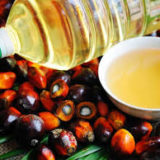
Environmental sustainability is not an active part of the narrative in emerging markets. For developing countries where human right atrocities are swept under the rug, taking care of the environment is not high up the totem pole. But Malaysia, at about $10,000 per capita has to be more conscious of its global image. While in Pakistan, all trees are good trees, Malaysian palm oil plantations have been accused of deforestation, which endangers habitats of flora, fauna and animals.
This has gotten a lot of push back from the developed economies, especially the EU, which has labelled palm oil from Malaysia as unsustainable and attempted to ban it. Prime Minister Mahathir has admitted recently that Malaysia had cleared vast tracks of forest to develop its palm oil sector but that the practice has been stopped as the country has adopted a more sustainable approach.
Malaysia is consciously moving towards other sources of income while ensuring that palm oil produced will conform to certain standards. Expansion of oil palm plantations has been banned and several companies within the country are considering converting their estates to coconut plantations instead. Since palm oil exports are less than 5 percent of its total exports, it has led to a clear field for Indonesia, but the picture is not as simple.
Indonesia has invested heavily in developing its palm oil sector, which as its leading export currently accounts for over 11 percent of its total exports. In 2008, Indonesia replaced Malaysia as the world’s main palm oil supplier as a result of a series of state-led program to promote palm oil production.
Though Indonesia is the biggest palm oil exporter, the forces behind it are Malaysian and Singaporean private investors with connections with Indonesian authorities. Thus, if domestic Malaysian palm oil cultivation is in decline, it is a still big player through Indonesia.
At $3,850 per capita, Indonesia is an emerging middle-income country, which turns a blind eye to forest fires caused by slash-and-burn methods to clear forests for palm plantations. Officially these practices are condemned by Malaysia but overlook the linkage between private investors and Indonesian farm owners. In 2011, foreign investors, most of which were based in Malaysia and Singapore, controlled almost 70 percent of Indonesia’s crude oil production.
There is an inexorable correlation between Malaysia, Singapore and Indonesia. While palm trees are grown in Malaysia and Indonesia, Singapore’s financial institutions are among the biggest lenders and investors in the palm oil industry. Singapore is also home to numerous palm oil companies, which include the three largest in the world, making it the third-largest centre for oil refining globally.
These three ASEAN countries make a trifecta of palm oil production. This is represented in Pakistan’s palm oil imports of which 28 percent stem from Indonesia, 25 percent from Malaysia, and 42 percent from Singapore as per SBP data of FY17.




















Comments
Comments are closed for this article.