

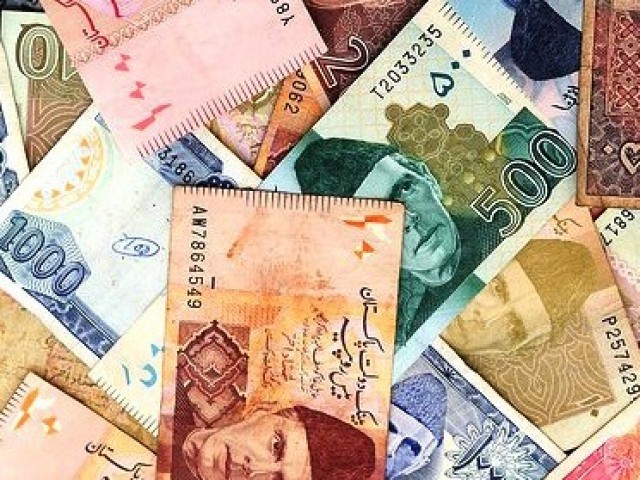
 Financial institutions of a country play a vital role in its development by channelising national savings into investment. The level of efficiency at which they can play such a role is, therefore, very important for the policymakers of a country, particularly the monetary authorities who are charged with the responsibility of looking after its banking system. Inaugurating a corporate branch of Bank of Khyber on 26th December, 2011, the State Bank Deputy Governor, Kamran Shehzad, urged upon the Pakistani banks to focus on improving their service standards and serve customers both efficiently and professionally. "Banking is actually about the confidence of the people and it is necessary for ensuring soundness of our banks and banking system," he added. Further, the State Bank had brought about major changes in its branch licensing policy to allow a menu of options to the banks for expanding their outreach to all nooks and corners of the country. Incentives in the policy were aimed at expanding financial services to the unbanked and rural areas. The policy also allows opening of branches for conventional banking services, as well as segment-specific branches such as micro-finance services, Islamic banking branches and smaller limited service banking set up like sub-branches and permanent booths. Branchless banking was the new avenue to expand financial outreach in a more cost-effective and efficient manner. Moreover, banking rules and regulations were so designed as to provide a level-playing field to all the banks. We feel that there can be hardly any argument about the observations and advice of the State Bank's Deputy Governor at the inauguration ceremony of a branch of the BoK. Though the financial system of Pakistan has generally played its intermediatory role between savers and investors quite efficiently and, unlike some other countries, its soundness and solvency has also not been a major problem but there is always room for improvement. An efficient banking service, particularly in the rural and unbanked areas, could, of course, be a great help in mobilising a higher level of financial savings and place it at the disposal of budding entrepreneurs at the local level, thus ensuring a balanced growth, reducing income inequalities and creating employment opportunities throughout the country. Kamran Shehzad has talked about policy incentives offered by the State Bank to expand the outreach of banks and improve their service standards, but in our view, such efforts have proved only partly effective in achieving the desired objectives. For instance, bank branches continue to be concentrated in affluent areas of cities and majority of population in poorer localities and rural areas is still deprived of proper banking facilities. If few branches in such areas are opened, they act mostly as deposit collecting agencies but do not care for the borrowing needs of the people residing in these areas. Such behaviour of banks is understandable because they would always set up their shops at places where there is possibility of making money and try to avoid opening of loss-making branches. The State Bank, as such, may have to push the banks more forcefully to move in the desired direction. So far as service standards are concerned, the performance of banks seems to be mixed. Now, there are no more long queues at the bank branches to pay utility bills and the seating arrangements for clients are generally quite adequate. However, the deposit rates are still unattractive due to a very large spread between deposit and lending rates and service rates are very high. Some of the depositors have even tended to withdraw their savings from the banks and invest in National Saving Schemes offered at various Saving Centres set up by the government. There is also a lot of frustration about the ATMs of the banks which generally do not dispense cash during holidays or beyond office hours. However, speaking from a macro level, two recent developments are likely to affect the banks' behaviour and their policies to a great extent. Firstly, the saving capacity of ordinary households has been reduced due to stagnant incomes, rising unemployment and continued double-digit inflation. This means that the potential of deposit mobilisation is likely to be reduced overtime. Secondly, banks' exposure to the private sector is not increasing due to higher investment in government paper propelled by increasing borrowing requirements of the government to finance its budget deficit, thus adversely affecting the intermediatory role of the banks. The State Bank is certainly aware of these issues and should pay more attention to redress such problems as ordained by its autonomous status. Copyright Business Recorder, 2011





















Comments
Comments are closed for this article.