

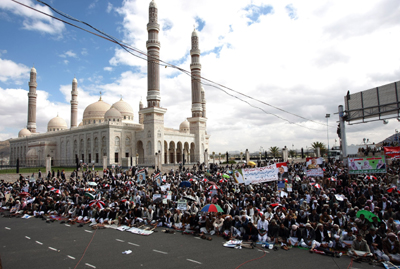
 After months of street protests and hundreds of lives lost, Yemeni President Ali Abdullah Saleh signed a deal in Riyadh on Wednesday, under which he is to step down immediately handing over power to his deputy. As per the deal brokered by the Gulf Co-operation Council (GCC) and backed by the UN, Saleh has agreed to relinquish power in return for immunity from prosecution, and leave for New York to seek medical treatment. UN envoy to Yemen, Jamal Benomar, said both parties were also to sign a UN-crafted roadmap which sets a mechanism for implementing the transition plan. The deal though is not a straightforward victory for Yemen's pro-democracy protesters. It is not without significance that the agreement has been negotiated by the Gulf states - the same states which only a few months ago sent in their troops to quell a pro-democracy uprising in Bahrain - which fear outbreak of similar rebellious movements in their own societies. Watching the Arab Spring spread like a contagion, they have prepared a second line of defence to preserve the status quo. The modus operandi seems to be to drive a wedge between the liberal and conservative religious groups among the protesters, giving a fillip to the latter. Notably, after failing to suppress, despite excessive use of force, protesters who are back in the Tahrir Square to demand replacement of the rump military regime with a civilian caretaker set-up in the run-up to the elections, Egypt's military council struck a deal on Tuesday with the conservative Muslim Brotherhood. The deal received a resounding rejection from hundreds of thousands of Tahrir Square protesters. Liberal Egyptians apprehend it will allow the Islamists to make substantial gains in the upcoming parliamentary elections and the military to exercise real power until next June, when presidential election is to be held. And that the military may use that time to manoeuvre things to ensure a permanent role for itself in the country's political future. The GCC countries, and through the UN, interested Western countries, also appear to be trying to block a liberal, democratic change in Yemen. They are supposed to have brokered an agreement for Yemen that has been approved both by the 'opposition' and the president. But it is unclear who in the opposition? Just like the pro-democracy demonstrators in Cairo, the protesters in Sanaa said they would reject any deal which gave Saleh immunity. Presumably, the anxious Gulf states chose the least unfavourable group from among the opposition to work out a deal that would give a safe passage to the brutal dictator and ensure the old regime's remnants continue business as usual. Going by the example of Egypt, the Gulf Plan too may soon run into trouble. Copyright Business Recorder, 2011



















Comments
Comments are closed for this article.