

The Punjab government has released Rs 250 million to the Punjab Livestock and Dairy Development Board (PLDDB) to initiate projects aimed at making this sector an industry of minimum 5 billion dollars in a phased programme stretched over a period of 10 years. The government has also committed to give Rs 500 million per annum for the next five years to exploit the potential of the livestock sector.
The Board will launch interventions such as genetic improvement of nondescript cattle herd for higher productivity and poverty alleviation, accelerated promotion of livestock in the corporate sector for exploiting the consumer market potential, establishment of state of the art Semen Producing Units (SPUs), preservation and genetic upgradation of local breeds to meet international standards/market.
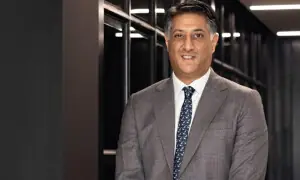
This was disclosed by the Chief Executive Officer (CEO) PLDDB Major General Muhammad Ali Khan (Retd), while talking to Business Recorder the other day. General Manager PLDDB (Field Services) Dr Naveed Niazi was also present on this occasion. He said it is unfortunate that Pakistan has negligible share in world meat trade of around 1.3 trillion dollars and the Halal meat trade of 634 billion dollars.
India alone, despite being a non-muslim country, is exporting 20 billion dollars Halal meat to Malaysia, he added. There are 64 million Cattle & Buff heads in the country. Approximately 8.5 million small and landless families are engaged in livestock raising and it is their main source of livelihood. Punjab's contribution in this sector is 54.68, he mentioned.
'PLDDB was formed by the government of the Punjab under the directives of the Chief Minister Muhammad Shahbaz Sharif to exploit the potential of livestock sector of the province as an economic engine for poverty alleviation/employability and transforming in to a viable industry through public-private partnership,' he said and added that focus is to increase income of the livestock farmers for improving his living standard. About projects of the Board, he said two state of the art centres for conservation and development of Sahiwal/Cholistani breeds are being established at Khizarabad (Sargodha) and Bahawalpur to preserve and multiply these two precious breeds of the country. Each center will have the capacity of producing one million semen doses every year inclusive of sexed semen; the technology being introduced for the 1st time in Pakistan.
The capacity will be enhanced to two million doses per year in the later phase besides adding the capacity of Embryo Transfer Technology. The semen produced at these centres will be processed/freeze and supplied to 2000 Artificial Insemination (AIs) technicians, trained under another project of the Board. This would also be provided to livestock department and private inseminators. Objectives of this project include improving the reproductive efficiency of cattle in the project areas and reducing the calving internal, conservation and development of Sahiwal and Cholistani breed besides providing facility for freezing of exotic and cross breed semen.
This would also ensure availability of sufficient quantity of semen from indigenous and exotic/cross bred cattle. At present, Muhammad Ali said, there was shortage of semen doses in the country. Around eight million cattle need semen doses every year, while availability is only 2 million thus showing a shortage of 75 percent, he added.
Regarding the project of AI Technicians, he disclosed that the Board is going to launch an extensive programme to train Artificial Insemination (AI) technicians. There are only 900 AI technicians working with the Punjab Livestock Department, while around 3000 are in the private sector whereas provincial requirement is 16000 technicians, he said and added that the Board in first phase will train 2000 AI technicians over a period of two and half years. The Board will also train 2000 women as Livestock Extension Workers, he maintained. He said that direct and indirect financial and social impact of the project would cause an increase in production of milk and meat to the tune of Rs 171,450 million.
Discussing another project, Major General Muhammad Ali Khan said that the Board would promote Hay and Silage making with the objectives to enhance the livestock productivity (milk and meat) by bridging the gap between demand and supply of fodder during scarcity period, set up a commercial model to encourage private entrepreneur to invest in silage/hay making as an industry and to ensure uniform feeding of good quality fodder to the livestock round the year.
Talking about the rationale of this project, he said 35 million cattle heads in Punjab need 191 million tons of fodder per annum, while availability is only 44 million tons thus showing a deficiency of 74 percent. 120 million tons of crop residues are fed to animal heads every year as filler having least nutritive values. Promotion of hay and silage would improve nutrition thus increasing the production of milk and meat too, he claimed.



















Comments
Comments are closed for this article.