


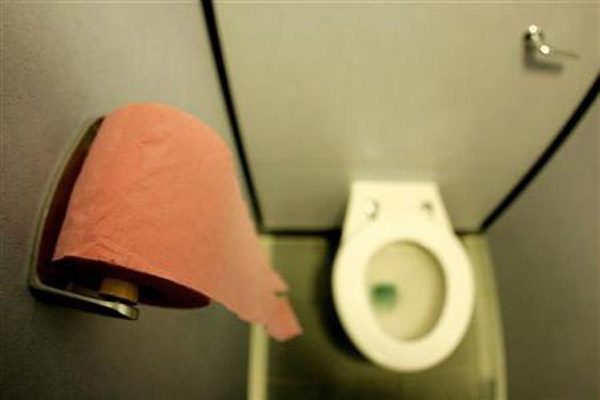
 NEW YORK: Pakistan is among the 10 countries where most urban dwellers face scarcity to safe and private toilets, this was revealed by WaterAid, a sanitation charity, in its report on Thursday.
The other nine countries with the most urban dwellers lacking access to safe and private toilets are: India, China, Nigeria, Indonesia, Russia, Bangladesh, the Democratic Republic of Congo, Brazil and Ethiopia.
With more people than ever before migrating to cities, finding a toilet is not only a chore but a public health issue for hundreds of millions of people around the world, WaterAid, said.
Nearly one in five city dwellers, or about 700 million people worldwide do not have access to decent toilets, according to the Britain-based WaterAid.
About 600 million people use dirty or crowded communal toilets and pit or bucket latrines, while some 100 million have no facilities at all, it said.
Ensuring sanitation for all by 2030 was among the global development goals adopted last year by the 193 members of the United Nations.
Here are a few facts from WaterAid's report on urban areas where toilet troubles are most pressing:
* India has the highest number of urban dwellers who do not have access to safe and private toilets - 157 million people.
* Eight Olympic-sized swimming pools could be filled daily with excrement produced by India's 41 million urban residents who must defecate in the open.
* The 10 countries with the least number of safe and private toilets per capita in urban areas are all located in Africa. In descending order, they are South Sudan, Madagascar, the Republic of Congo, Ghana, Sierra Leone, Togo, Ethiopia, Liberia, the Democratic Republic of Congo and Uganda.
* Defecating in the open is most common in South Sudan, followed by the West African island nation of Sao Tome and Principe, Eritrea, Liberia, Benin, Namibia, the South Pacific island nation of Kiribati, Togo, Madagascar and Nigeria.
* China, the world's most populated country, is building toilets faster than the demand created by new urban arrivals, who number about 329 million since 2000.
* Nigeria, Africa's biggest economy, is furthest behind in responding to the needs of urban dwellers for toilets. Since 2000, only one in three urban residents in the West African nation have had access to toilets.
* The line of people who lack access to decent toilets would stretch around the earth 29 times.
* Diarrhea resulting from poor sanitation such as inadequate toilets and dirty water kills 315,000 children yearly, according to estimates by WASHwatch, an online project that collects data on water and sanitation.



















Comments
Comments are closed for this article.