


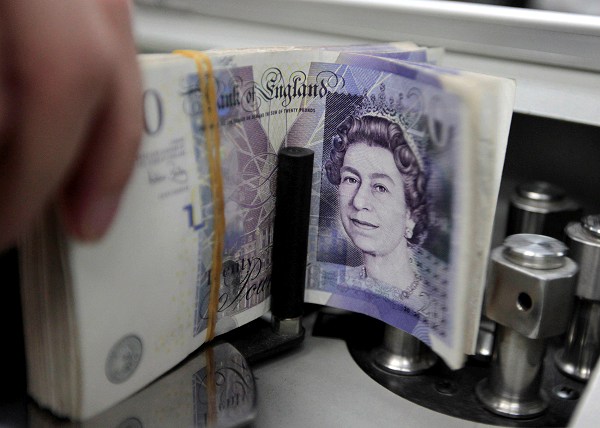
 LONDON: Sterling slightly strengthened on Tuesday, rising from three-year lows against the euro and pulling further away from a five-week trough against the dollar, after slightly higher than expected inflation data.
Consumer price rises gathered speed, up 0.6 percent in July compared with a year earlier, their biggest rise since the end of 2014. Economists in a Reuters poll had expected a 0.5 percent rise.
And factory gate prices rose at their fastest pace in over two years as the fall in sterling after the vote to leave the European Union pushed up import prices. Data showed producer prices rose by 0.3 percent in July, compared with the same month last year, stronger than a median forecast in a Reuters poll.
Sterling hit the day's high against the dollar at $1.2994 , up 0.8 percent, compared with $1.2937 before the data was released. It hit a five-week low of $1.2865 on Monday and was last trading at $1.2970, still up 0.7 percent on the day.
The euro was flat on the day at 86.80 pence, having traded at 87.09 pence beforehand. The euro hit a three-year high of 87.245 pence earlier in the London session.
Analysts said in a market where speculators held record-high bets against sterling, the data gave an excuse to some to trim those positions. But a rally is likely to be temporary, given the outlook for British interest rates and the economy.
Two weeks ago, the BoE cut interest rates to record lows and announced a bond buying programme with analysts expecting slowing activity, after Britain's vote to leave the EU, likely to drive the central bank to ease policy further in coming months.
"The stronger inflation data gave the heavily short-sterling market the opportunity to attempt an upside correction," said Ipek Ozkardeskaya, senior market analyst at London Capital.
"The $1.30 level has acted as a solid resistance. Clearing the $1.30 could pave the way for a further correction while a failure to successfully clear that barrier should encourage the sellers on the rally and keep the bias on the downside."
Analysts said higher inflation readings in the coming months would not change the BoE's monetary policy outlook. A lower currency tends to push up prices of imported goods, but the BoE has said it will tend to look through this while deciding policy.
"Today's numbers are unlikely to unseat the BoE's resolve in regards to using monetary policy to try to mitigate some of the negative economic impact from the Brexit shock," said Andy Scott, economist at HiFX.
He expects sterling to drop to $1.25 against the dollar and 1.10 against the euro from around 1.1520 currently.




















Comments
Comments are closed for this article.