

Money influx from Qatar into European banks

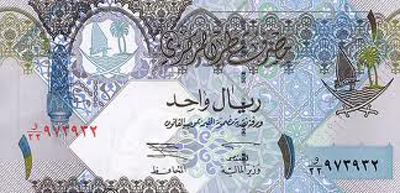 DOHA: Hopes may be disappointed for an influx of money from Qatar and other rich Gulf states into battered European banks, since Gulf investors are likely to see many of the banks as too risky and out of line with their investment strategies.
As Europe's banking system has weakened over the last several months, financial markets have been abuzz with rumours and media reports about possible investments from the Gulf particularly from cash-rich Qatar, which has been on an international acquisitions spree.
In June, Spanish bank Santander denied a report that it was in talks on Qatar buying a stake in it.
Last month, France's BNP Paribas denied a similar report. The latest speculation centres on assets of financial group Dexia; the prime ministers of France and Belgium were meeting on Sunday to discuss breaking up the group.
Analysts and bankers said it was possible that Qatar would make relatively small investments, perhaps of several hundred million euros, in European financial firms. Some European media reports last week said Qatar was part of an international consortium discussing a purchase of Dexia's Luxembourg arm, valued at some 900 million euros ($1.2 billion).
But analysts said Qatar and other Gulf states were unlikely to invest aggressively enough to make much difference to big European financial institutions.
"Not even Qatar's pockets are deep enough to really throw meaningful capital at the European financial system. They could participate in some of the capital raising that banks are doing, but ultimately, public multilateral support is needed," said Rachel Ziemba, director at Roubini Global Economics in London.
"Investors like Qatar will be seriously looking to see whether the macroeconomic framework and policy response will give them a good return on their investment. Qatar was slow to invest in the first round of bank recaps in 2008 to 2009, and actually extracted some of the stronger returns."
A Doha-based financial industry executive said he believed Qatar was probably "talking with every bank in Europe. But it remains to be seen whether the negotiations will lead to anything concrete."
Official data are not available but Qatar's sovereign wealth fund, the Qatar Investment Authority (QIA), is estimated to have assets worth around $70 billion, of which an unknown proportion is currently disinvested and available for new deals.
QIA has been active abroad in the last several years, spending more than $20 billion on stakes in German carmakers Porsche and Volkswagen, Agricultural Bank of China, Santander Brasil, Spain's Iberdrola and German builder Hochtief. It has snapped up Britain's luxury department store Harrods and two European football teams.
In June 2008, QIA and a member of Qatar's ruling family paid about 1.8 billion pounds ($2.8 billion) for a stake in British bank Barclays, subsequently reaping a profit of about 600 million pounds on part of it.
In August this year it bought about 17 percent of the lender that will be created by the merger of Greece's Alpha Bank and Eurobank, injecting 500 million euros into the new entity at a critical time for the cash-strapped country.
But analysts said the Alpha Bank merger did not indicate Qatar was willing to take on financial sector risk on a large scale especially at a time when, like other Gulf States, it is seeking to ensure political stability with a sharp boost in government spending. Qatar has roughly doubled some public sector salaries and pensions this year.
"I think the Qataris would be looking for value, and European banks will have to get cheaper and more desperate before Qatar would jump in," one Doha-based analyst said.
"It would not be on the scale that would have a massive impact on the crisis. Qatar will hardly be a white knight, but rather take a more opportunistic approach."
Other Gulf states may be even more cautious, analysts said. The Abu Dhabi Investment Authority has some $600 billion of assets, but Abu Dhabi was required to bail out Dubai during a property market crash two years ago and if the global economy worsens, it may yet need to provide more support.
And Abu Dhabi has been burned in the past; in 2007 it agreed to a $7.5 billion investment in Citigroup Inc but filed an arbitration claim at the end of 2009 accusing the US bank of misrepresentation, after its stock price plunged. Citigroup said it had not acted improperly.
Saudi Arabia also has a huge financial warchest, but its government embarked this year on a $130 billion spending programme on housing and other projects. With global oil prices approaching levels at which its budget surplus could disappear, it may not want to undertake risky new investments abroad.
Another issue for Qatar and other Gulf states is whether European financial investments would serve their long-term, strategic aims. Increasingly, the Gulf is looking to Asia for growth and investment, while investing in energy and technology projects might make more sense than buying into an apparent sunset industry such as Western banking.
"I would expect Qatar and other Gulf SWFs (sovereign wealth funds) to continue to look for solid investments that are available cheaply, but they are not altruistic per se," Ziemba said.
"They are looking to make financial returns and invest in companies that help extend their supply chain, help Qatar.enter new supply chains and gain access to key technology transfer through partnerships to help build up human capital.
The financial market speculation about Qatar's intentions resembles that over China. Rumours have abounded this year that Beijing will deploy more of its $3.2 trillion in foreign exchange reserves to buy the government debt of Greece and other weak European countries.
But so far, Chinese buying has not prevented a collapse of the bond prices of indebted European states.
There is no evidence that China is buying more euro zone bonds than the weighting of the euro in its reserves would indicate, and many of the bonds it does hold are believed to be German and other top-quality credits, not the debt of weak countries.
Copyright Reuters, 2011
















Comments
Comments are closed for this article.