


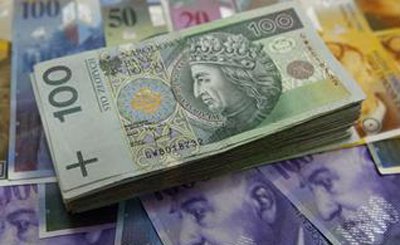
 BUDAPEST: The Polish zloty led a weakening of most Central European currencies on Monday after Poland and the Czech Republic released weaker than expected manufacturing figures.
Analysts said the risk of a slowdown in economic activity and a rise in budget deficits was growing in the region, while inflation remains persistently low.
The zloty eased 0.2 percent by 0819 GMT to 4.3816 against the euro.
Poland's April manufacturing Purchasing Managers' Index (PMI) was 51, below analysts' forecast of 53.2 and the Czech index at 53.6 was below expectations for 54.3.
Figures above 50 indicate economic growth but the weaker than expected dynamics underpin the risk that the central bank of Poland, the region's biggest economy may ease monetary policy.
Polish government bonds were flat or firmed slightly, with the 5-year paper trading at a yield of 2.25 percent, down 2 basis points.
Polish government bonds were well-anchored after Friday's flash inflation figures for April confirmed that the country retained its disinflation trend, Raiffeisen analyst Stephan Imre said in a note even before the PMI data.
"Only a meaningful deepening of core deflation or worsening GDP outlook could pull the rate cut trigger in our view," he added.
The April PMI was another sign that the economic outlook is less bright than expected but liquidity in Polish markets was low ahead of the country's May 3 national holiday.
Worries over government policies in Poland and fiscal loosening in Warsaw, Bucharest and Budapest have led Raiffeisen to downgrade its recommendation for Polish eurobonds to 'sell' and other bonds in the region to 'hold' from 'buy', apart from Serbia which remains a 'buy', the bank said.
The forint firmed a shade, bucking the easing of other units in the region.
Hungary's PMI index ticked up to 52.2 in April from 51.7 in March. But the latest industrial output figures showed the risk of a slowdown, ING Bank analyst Peter Virovacz said in a note.
Hungarian government bonds were flat. Yields surged last month after the central bank indicated that the end of its rate cuts may be near and the draft 2017 government budget showed a loosening.
"There does not seem to be much more room for a decline in yields, unless further government or central bank action underpins this (i.e. in Poland or Hungary to increase banks' holdings), or if inflation figures continue to negatively disappoint in the future," said Erste analyst Zoltan Arokszallasi.

























Comments
Comments are closed for this article.