


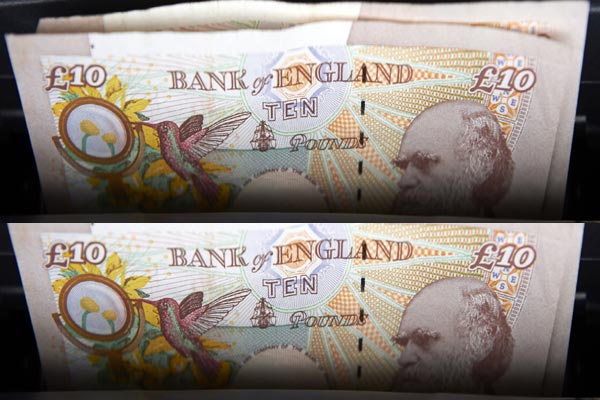
 LONDON: Sterling dipped on Wednesday after data showed the number of unemployed in Britain rising while wage growth fell short of expectations, adding to a view that recent growth in the labour market was easing off.
The subdued jobs and wages report soured the outlook for the economy at a time when investors are cautious given the risks from a vote on whether Britain wants to stay in the European Union or not.
The referendum is on June 23 and while the opinion polls show a neck-and-neck race, in the betting market, punters see only a one-in-three chance of Britain exiting the Union.
A TNS opinion poll published on Wednesday showed support for staying in the EU was rising and offered support to the pound. Nevertheless, investors worry that Brexit would cause huge damage to a country with a trade deficit of 12 billion pounds, its widest in eight years, and a current account deficit that soared to 7 percent of GDP in the final quarter of 2015.
On Wednesday, the jobs report showed the number of unemployed people in Britain rose by 21,000 in the three months to February, the first increase since the May-July period of last year. The unemployment rate held steady at 5.1 percent in the three months to February.
Official data also showed total earnings of workers, including bonuses, rose by an annual 1.8 percent in the three months to February, slowing from 2.1 percent in the three months to January. Economists taking part in a Reuters poll had expected growth of 2.3 percent.
Sterling fell to the day's low of $1.4345 after the data, down 0.35 percent on the day, having traded at $1.4372 beforehand. It was last trading at $1.4370, still weaker on the day and off a three-week high of $1.4420 struck on Tuesday.
The euro extended gains to trade at 79.17 pence, having traded at 79.03 pence before the data was released.
"The data was on the weaker side, but the currency is being driven by Brexit concerns," said Manuel Oliveri, FX strategist at Credit Agricole. "Any poll that shows some support for the remain camp is offering support to the pound."
Traders said the pound is likely to trade in a $1.40-$1.46 range until the referendum is out of the way.
On Tuesday, Bank of England Governor Mark Carney told members of parliament that uncertainty around the referendum was weighing on the economy, adding that London could lose its position as the world's leading financial centre in the event of Brexit.
Major banks expect sterling could lose about a fifth of its value if Britain votes to leave. As a result, the cost of hedging against sharp swings in the pound remains elevated, trading near its highest since the global financial crisis.

























Comments
Comments are closed for this article.