


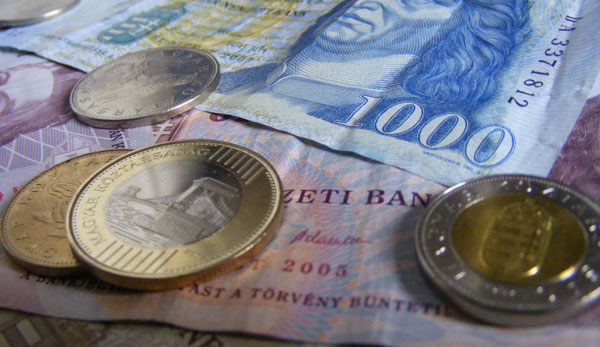
 BUDAPEST/WARSAW: The forint eased on Friday as Hungary's inflation slipped back into the negative, while assets in Warsaw took a breather after a beating due to concerns over Poland's credit rating.
Economic data released in Central Europe continued to show the dichotomy of anaemic prices and healthy output growth from which regional central banks have drawn different conclusions.
The Czechs have delayed exit from a cap to keep the crown weak, Hungary has resumed rate cuts and Serbia has stopped them. Poland has not cut rates despite market expectations and Romania's central bank is hawkish, fearing a sharp inflation rebound.
Hungarian consumer prices fell 0.2 percent in annual term in March, after a 0.3 percent rise in February. A slowdown in core inflation to 1.3 percent indicates second-round impacts from a decline in crude prices, analysts said.
The forint eased only 0.15 percent against the euro to 312.50 by 0821 GMT, supported by a higher-than-expected 979 million euro trade surplus for February.
"Depressed inflation dynamics could help the National Bank of Hungary to resume its interest rate cut cycle in the next months," Erste analyst Gergely Urmossy said in a note, projecting that the 1.2 percent base rate will be cut to 0.75 percent by end-June.
Hungarian markets have priced in 0.8 percent bottom for the base rate, one Budapest-based fixed income trader said, adding that bonds did not react to the inflation figures.
Polish bonds and the zloty were also treading water after a week which saw the spread of Poland's 10-year bonds over Bunds widening 15 basis points to about 2.85 percentage points, and the zloty hitting a 3-week low against the euro and the forint.
Moody's, which will review Poland's rating next month, said on Monday that Poland's constitutional crisis was negative for the rating.
The warning was also a reminder of concerns over government spending and a proposed bill to convert Swiss franc mortgages.
To calm markets, Finance Minister Pawel Szalamacha said the government had dropped a plan to cut value-added tax, and a spokesman said it might be possible to allow banks to spread the mortgages conversion costs over years.
The zloty traded at 4.292 against the euro, well off the 5-month highs hit early this week at 4.2276.
"If Monday's data from China are very negative, the EURPLN rate might rise above 4.3," said PKO BP analyst Joanna Bachert.




















Comments
Comments are closed for this article.