

US data shows weak labor market, NY factory activity

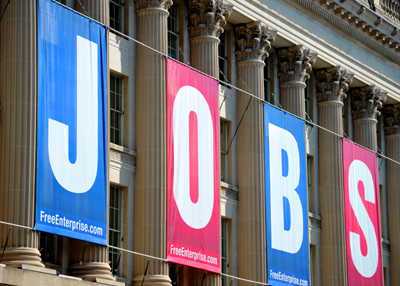 WASHINGTON: New claims for US jobless benefits hit the highest level since late June last week and a gauge of New York state factory activity contracted in September, sustaining the view the Federal Reserve would take new action to boost growth.
However, US industrial production edged up 0.2 percent last month as a solid auto-related gain in manufacturing helped offset a drop in utility output, and consumer prices rose a surprisingly steep 0.4 percent.
Peter Kenny, managing director of Knight Capital in Jersey City, New Jersey, speaking before the August production figures were released, said the slew of data on Thursday was bad but not "apocalyptic," and other analysts agreed.
"Business activity has slowed and confidence has fallen, but we haven't slipped into a recession yet," said Michelle Meyer, an economist at Bank of America Merrill Lynch in New York.
Despite the economic data, US stocks opened higher, while US Treasury debt took back some losses. The dollar rose versus the yen.
The number of Americans filing new claims for state unemployment aid rose unexpectedly to 428,000 in the week ended Sept. 10 from a revised 417,000 in the prior week, the Labor Department said.
It was the second straight weekly increase and took initial claims to their highest level since the week ended June 25. Wall Street analysts expected a modest dip in new claims.
Separately, the New York Federal Reserve Bank said its "Empire State" general business conditions index fell to minus 8.82 in September -- its lowest level since November -- from minus 7.72 the month before. It was the fourth straight month factory activity in the state contracted.
FED TO THE RESCUE
The data could provide an added sense of urgency for Fed Chairman Ben Bernanke and his colleagues, who plan to take an extra day at their policy review next week to deliberate their options. Many economists expect the central bank to unveil new measures to lift growth when the meeting concludes on Wednesday.
But despite dim prospects of the nation's 9.1 percent unemployment rate coming down much any time soon, many Fed watchers expect a relatively modest step to try to bring down long-term interest rates without ramping up dollar printing.
An unexpectedly stiff reading on inflation could provide fodder for a lively central bank debate.
The Labor Department said its Consumer Price Index increased 0.4 percent last month, after rising 0.5 percent in July. The reading was higher than analysts' forecasts of a 0.2 percent rise, with food prices posting their biggest gain since March.
The core CPI -- which excludes food and energy -- rose 0.2 percent, in line with expectations and the same as in July.
Given limited pricing power for producers as consumers grapple with high unemployment, inflation is expected to recede, although both the headline and core year-on-year readings rose last month.
Still, the core index in August was held back by new auto costs, which were unchanged for the second straight month. New car prices had risen sharply in May following an earthquake in Japan that disrupted global supply chains.
In its report on output at the nation's mines, factories and utilities in August, the Fed said manufacturing production rose 0.5 percent as auto production picked up. Utilities' output fell a sharp 3 percent as August was cooler following a bout of unusually hot weather in July. Mining output increased 1.2 percent.
Analysts now put the odds of a new US recession at nearly one-in-three after recent reports showed no employment growth in August and a plunge in consumer confidence. Data on Wednesday showed consumer spending ground to a halt in August as well.



















Comments
Comments are closed for this article.