


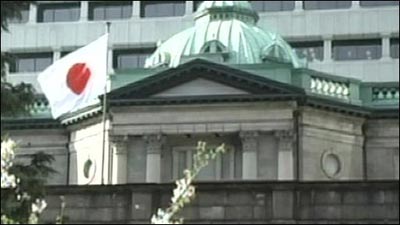
 HAKODATE: Bank of Japan board member Ryuzo Miyao said on Wednesday the country's economy may get less support than initially expected from overseas demand as the recovery in the US and European economies loses steam.
"Japan's economy will continue a moderate recovery based on output and exports after supply constraints are resolved," Miyao said in a speech to business leaders in Hakodate on the northernmost main island of Hokkaido.
"But there are some concerns over the recovery scenario," he added, also citing persistent yen rises, higher energy costs and prolonged deflation expectations as factors that could hurt growth.
A former academic, Miyao has voted with the majority since joining the board last year and is regarded as among those on the board who are more pessimistic about the economy.
Below are key quotes from Miyao's speech:
JAPAN ECONOMY
"Japan's economy is picking up steadily as supply constraints stemming from the (March 11 earthquake) disaster have mostly been resolved. Production and exports, in particular, are on a growth trend .
"Japan's economy will continue a moderate recovery based on output and exports after supply constraints are resolved. But there are some concerns over the recovery scenario: these are slowing overseas economies, the yen's sustained strength, increased electricity costs and worries about prolonged deflation."
OVERSEAS DEMAND
"The first concern regarding the Japanese economy's recovery scenario is the likelihood of overseas demand falling more than expected as the recovery in the US and European economies slows, as a result hurting Japan's recovery.
POLICY
"The BOJ took additional easing at the Aug. 4 meeting ... Although the economy has recovered steadily mainly in output, the BOJ took into account negative factors for the outlook including uncertainty about the global economy and the effect of the change in the base-year for the consumer price index."
EUROPE
"European financial and capital markets remain unstable.
"Since the Greek crisis broke out in May 2010, more and more countries have become targets of market attacks, while the authorities have expanded assistance each time. As the contagion spreads to Italy and Spain, risks surrounding Europe's debt problems are heightening .
"What is worrying for the future are the spillover effect from the debt problems on Europe's banking sector and real economy. This concern seems to have partly materialised in the form of rises in CDS and widening spreads of corporate bonds. We thus need to closely watch developments."
US, EMERGING NATIONS
"The US economy is recovering but the pace of recovery has slowed substantially.
"Emerging economies in Asia have maintained a high growth rate driven by China, and I expect their medium- to long-term growth expectations to remain high. But underlying economic indicators are showing some slowdowns, due in part to monetary tightening to counter price hikes .
"The effects of the earthquake have largely ended since July but external demand could struggle to pick up on the slowing pace of economic recovery in Europe and the United States."
UNORTHODOX POLICY
"When policy rates are reduced close to zero percent further monetary easing becomes difficult. At the same time a central bank can pledge to keep zero rates in the foreseeable future or expand the size of its assets or change their composition to boost the effects of monetary easing.
"The BOJ's 'comprehensive easing' taken from October last year includes all such elements and is thus an unorthodox monetary policy package. The BOJ has pledged to continue the zero rate policy until price stability is in sight, and is buying various assets .
"A series of US monetary policy steps since the Lehman crisis are similar.
"While unorthodox policy steps have the mechanism of affecting the economy through various channels, excessive easing is feared to have side effects. "We need to be fully aware of the fact that unorthodox monetary policy could have unique side effects.
"We need to examine the timing and steps that maximise the effects and minimise the drawbacks and be cautious and decisive in our policy response."
Copyright Reuters, 2011


















Comments
Comments are closed for this article.