


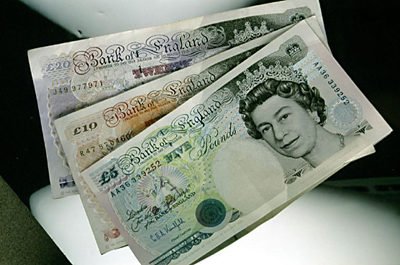
 LONDON: The pound rose against the euro on Monday, helped by robust Britsh house price data and growing concerns about the risk of Greece leaving the euro zone that underpinned safety flows into sterling assets.
The euro was weak across the board with Athens stuck in negotiations with its euro zone partners and the International Monetary Fund over reforms required by its lenders to unlock remaining bailout funds as it is rapidly running out of cash.
The euro was down 0.2 percent at 72.10 pence, but sterling eased against the dollar to $1.4910. It rose past $1.50 on Friday as investors pushed back US rate hike expectations and bought pounds on a robust British jobs report.
On Monday, property website Rightmove said asking prices for homes on sale in England and Wales hit an all-time in the month to early April, pushed up by a fall in the number of properties on the market.
It echoed other surveys which have suggested that house price growth in Britain is picking up again, and a sign that consumer demand was robust.
Citi said it was recommending a short euro and long sterling position, targeting a drop to 71 pence.
"A Greek deal is unlikely to be fleshed out at the Eurogroup meeting," said Todd Elmer, strategist at Citi, referring to the April 24 meeting of Eurogroup finance ministers in Riga.
He said political uncertainty before an election on May 7 was not currently acting as much of a drag on the pound.
Still there is an element of caution as most polls show the Conservatives and the Labour Party neck and neck, meaning a hung parliament is likely.
A strong showing by smaller parties such as the Scottish Nationalists also makes it hard to predict what kind of stable government can be formed.
Many traders in London's traditionally right-leaning City say a Labour-led government would be a negative.
But many foreign investors worry as much about the prospect of a weak administration that might be unable to deal with Britain's twin deficits, or about the Conservative promise to hold a referendum on whether Britain should stay in the European Union or leave.
"We expect sterling to be most sensitive to the election outcome, and it could be vulnerable to further weakness if the result is interpreted as negative for business, fiscal policy and the economy," said Michael Stanes, investment director at Heartwood Investment Management.


























Comments
Comments are closed for this article.