

Australia central bank sees gathering risks to global growth

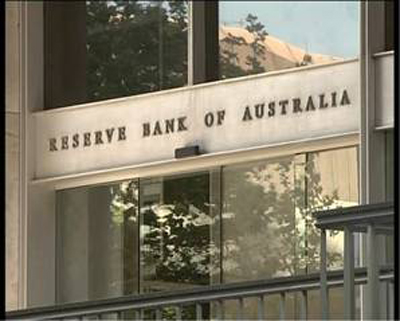 SYDNEY: Australia's central bank considered raising interest rates this week as it lifted forecasts for inflation, but decided it was prudent to wait as acute uncertainty in markets threatened global growth.
In its quarterly statement on Friday, the Reserve Bank of Australia (RBA) said a key risk was that sovereign debt problems in Europe and the United States could play out in a "disorderly and disruptive manner", leading "to a marked rise in global risk aversion and uncertainty."
"Overall, it seems easier to envisage significantly worse outcomes for global growth than it is for significantly stronger outcomes," the central bank said.
Fears the United States could fall back into recession sent US stocks skidding more than 4 percent on Thursday, an eye-watering fall reminiscent of those panic selling seen during the global financial crisis in 2009.
The market was well ahead of the RBA in its fears for the global economy, with the Australian dollar struggling at $1.0490. It has already dropped more than five full cents from a 29-year peak set just last week.
Interbank futures posted huge gains as investors bet the turmoil would force the RBA to reverse course and slash its 4.75 percent cash rate.
The market is now pricing in a cut as early as September and nearly 100 basis points of easing by Christmas.
The RBA said the risks were more balanced domestically. It reiterated its upbeat outlook for the resources sector, while acknowledging the strong local dollar and cautious consumers were hurting other parts of the economy including manufacturing, tourism and tertiary education.
"In what is a challenging environment, the Board is committed to ensuring that inflation remains consistent with the 2-3 percent medium-term target that has served the Australian economy well over the past two decades," the central bank said.
Underlying inflation is seen likely to be at, or above, 3 percent in 2011 and remain above the RBA's target band in 2012 and 2013.
The RBA added the 2012 outcome would be boosted by around a quarter percentage points due to the introduction of a carbon price, but said the Board would look past any once-off effects when setting interest rates.
"This has got to be the most complicated environment the Reserve Bank has faced since it has had its inflation targeting regime," said Paul Bloxham, HSBC chief economist for Australia and New Zealand.
"We still think the next move for rates will be up because the RBA expects inflation to rise and they'll need to respond at some point."
So far, credit markets in Australia have been relatively unaffected by the global uncertainty, the RBA said. It also noted Australian banks were not having problems raising funds.
Still, the central bank revised down its 2011 growth forecast as the disruption to coal production by extreme weather conditions late last year and early this year was having a longer-lasting impact.
It now sees the economy growing at 3.25 percent, compared with an earlier estimate of 4.25 percent. But the RBA kept its upbeat growth forecast of 3.75 percent for 2012 and 2013.
"Conditions are expected to remain very strong in the mining industry, as well as those parts of the economy benefiting from high rates of resources-sector investment and output, and from the income effects from high commodity prices," it said.
Mining investment was expected to rise to over 6 percent of Australia's A$1.3 trillion of gross domestic product, from an already high 4 percent. As a result, resource export volumes were expected to surge with liquefied natural gas seen trebling.
The main uncertainty at home was whether consumers stay cautious or start spending freely again, with the RBA assuming they would remain cautious over coming months.
On the other hand, it noted Australia's dismal productivity performance was pushing up unit labour costs and adding to inflationary pressure.
"With the terms of trade expected to decline somewhat over the next few years as additional global commodity supply comes on line, a return to faster rates of productivity growth is likely to be required if living standards are to continue to rise at the average rate of the past two decades," it said.
Copyright Reuters, 2011





















Comments
Comments are closed for this article.