


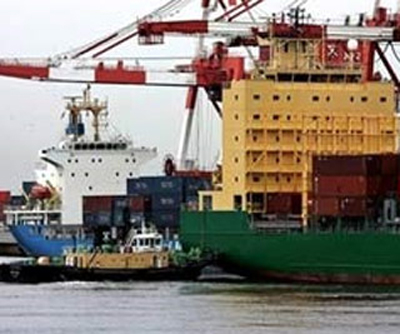
 TOKYO: Japan's current account surplus plunged 69.5 percent from a year earlier in April, the finance ministry said Wednesday, as the March earthquake and tsunami badly hampered factory production.
While the drop was much smaller than falls of more than 80 percent forecast by economists, it was the smallest surplus for the month of April in 26 years.
The surplus in the current account -- the broadest measure of trade with the rest of the world -- fell to 405.6 billion yen ($5.0 billion) in April from 1.33 trillion yen a year earlier, official data showed.
Japan logged a trade deficit of 417.5 billion yen in April, reversing a surplus of 871.1 billion yen a year earlier.
The trade balance "fell into the red as imports grew against a fall in exports due mainly to the impact of the East Japan Great Earthquake", the finance ministry said in a monthly report.
Analysts say the decline in the current account surplus was widely expected because of the damaging impact of the March disaster, which shattered supply chains and caused major production disruption to Japan's biggest companies.
But with the supply chain rapidly coming back online, they say Japan's exports are likely to recover and expect the surplus will not contract much further.
"Companies have been resuming production and goods have started moving but a recovery in exports has been slow so far," said Satoshi Osanai, economist at Daiwa Institute of Research.
"The supply chain has been recovering faster than expected but (the final products) may not be reaching ports yet" for export, he said, adding it would be only a matter of time for exports to recover on solid foreign demand.
The finance ministry said in a separate report Wednesday that Japan ran a trade deficit of 1.05 trillion yen in the first 20 days of May, more than three times higher than a year-earlier deficit of 324 billion yen.
Official data last week showed factory output edged up 1.0 percent in April against a record drop of 15.5 percent a month earlier.
"Production and exports will likely recover as plant facilities are further restored," said Tatsushi Shikano, senior economist at Mitsubishi UFJ Morgan Stanley Securities.
Shikano said it may take several months for the overall current account surplus to return to pre-quake levels as import figures are likely to be boosted by higher crude oil prices.
"In May and June, we may see some signs of recovery in the current account balance, and it may take until July or August for figures to recover to pre-quake levels," he said.
The current account measures trade in goods, services, tourism and investment.
It is calculated by determining the difference between Japan's income from foreign sources against payments on foreign obligations.
Copyright AFP (Agence France-Presse), 2011























Comments
Comments are closed for this article.