

BoJ to mull increasing loan scheme for growth sectors

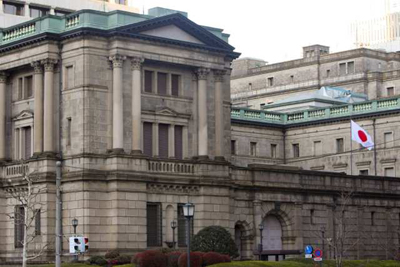 TOKYO: The Bank of Japan will consider expanding a loan scheme targeting growth industries by up to one trillion yen ($12 billion) at a rate review next week, sources said, keeping up its efforts to battle chronic ills plaguing the economy hit by the devastating earthquake in March.
But given growing signs that the economy is recovering from the immediate shock of the disaster, the central bank is set to hold off on easing monetary policy further unless a sharp yen spike threatens to dampen business sentiment.
It is also expected to maintain its assessment that while the economy remains under pressure, it will resume moderate growth by the end of this year, said sources familiar with the BoJ's thinking.
The loan scheme targeting industries such as clean energy or nursing care and investment in research and development. is a long-term approach to fighting deflation. It is different from the BOJ's asset buying scheme, introduced in October 2010 as a direct, short-term monetary easing measure.
The central bank offers up to 3 trillion yen in 0.1 percent, one-year loans to banks that lend to 18 industries with growth potential under a programme established last year as a long-term effort to revitalise the economy and beat deflation.
It will consider adding up to one trillion yen to the scheme, with only 60 billion yen left to lend even though four more tranches are planned before the programme expires in March of next year.
In such a case, the BOJ will consider ways to funnel more money to small, regional companies. One idea is to tweak the scheme to encourage more asset-based lending where companies can borrow using inventory and receivables as collateral.
That would give small and up-and-coming firms that do not own property -- a standard collateral for bank loans -- better access to cash.
Unless the size is increased, the central bank will not be able to complete the four loan tranches planned before the scheme expires next year.
BoJ Governor Masaaki Shirakawa and his two deputies want to keep this programme alive. They feel that flooding markets with cash is not enough and that the BOJ should help battle deflation and low potential growth by nurturing new industries.
The loan scheme has drawn solid demand from banks attracted by low costs. Banks enrolled in the scheme already plan to lend a combined 8.4 trillion yen to the targeted industries, according to the BoJ.
But some central bank officials -- such as board member Seiji Nakamura -- are wary of expanding the scheme, which critics say is effectively a subsidy to banks.
Regional banks have complained that the scheme is unnecessarily pushing down lending rates and squeezing their already narrow profit margins.
Proponents of the scheme would need to address such concerns and if there is no consensus on how to do it, the central bank may keep the 3 trillion yen cap or postpone a decision until July.
The BoJ does not see recent signs of slowdown in global growth as a reason to change its base scenario that Japan's output will bottom out and supply constraints will ease allowing the economy to resume growth by the end of this year.
The yen's renewed rise is a concern but the pace has been moderate so far, leaving the central bank with little reason to ease policy now by boosting its buying of a range of financial assets.
The BOJ is ready to ease policy further if the quake's damage to the economy proves bigger than expected. But with the outlook highly uncertain, it hopes to save its limited policy options for when the economy faces greater trouble.
It would therefore take a sudden yen spike toward the record high of 76.25 to the dollar, hit days after the March quake, and a sharp stock price fall for the BoJ to ponder easing now.
MARKET REACTION: The surprise move would knock down bond yields and the yen, although the impact would probably be short-lived.
Copyright Reuters, 2011























Comments
Comments are closed for this article.