

NATO says not abandoning Afghanistan

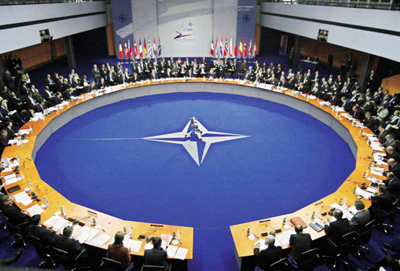 BRUSSELS: NATO's chief insisted Thursday that the alliance was not heading to the exit in Afghanistan as defence ministers met ahead of a key US decision on the scope and pace of a drawdown of US troops.
Secretary General Anders Fogh Rasmussen said the transition plan, which aims to hand Afghans the lead on the battlefield this year with the aim of giving them full control by 2014, was "on the right path."
"Transition is based on conditions, not calendars, but I'm confident that we can complete our security of handover to the Afghans by the end of 2014," Rasmussen said.
"That does not mean we are heading for the exit. Our commitment to Afghanistan will endure well beyond that through our long-term partnership," he said at the start of the meeting between NATO's 28 members and 20 partners in Afghanistan.
US Defense Secretary Robert Gates, who met with his counterparts in Brussels one last time before retiring at the end of the month, has sparred with White House aides pushing for a faster reduction of the 100,000 US troops, out of a total presence of 130,000.
After a four-day farewell trip joining US forces in Afghanistan, Gates said Tuesday that US and NATO-led forces were on the verge of securing a "decisive blow" against the Taliban insurgency.
His remarks reflected his view that a troop surge in the nearly 10-year-old war has begun to bear fruit and that a withdrawal, set to start in July, should proceed at a cautious pace.
As US President Barack Obama weighs his options, some White House officials believe the death of Osama bin Laden and a ballooning budget deficit demand a steep reduction in the US military presence in Afghanistan.
The US-led invasion of Afghanistan in 2001 was triggered by the Taliban's failure to hand over bin Laden in the aftermath of the September 11, 2001 attacks, but the war has become unpopular in Europe.
Rasmussen insists that the killing of bin Laden by US special forces in Pakistan will not alter the alliance's commitment to finishing the job in Afghanistan.
"Obviously during that process, or transition, you will see a gradual change of role that our troops play in Afghanistan from combat into support," Rasmussen said on Monday.
"And you may also see some withdrawals. But such reductions in the troop level will take place in an organised and coordinated manner," he said.
The transition is due to begin in seven areas of Afghanistan in weeks but the exact start date remains unclear.
British Prime Minister David Cameron announced last month that Britain would pull out 450 troops by the end of 2011, defying defence chiefs who wanted a smaller reduction. Britain has 9,500 troops in Afghanistan.
The Netherlands withdrew its combat troops last year and decided to send police trainers this year. Canada plans to switch to a training mission this year while Poland has said it wants to do the same in 2012.
Lawmakers in Germany, the third-largest contingent with 5,000 troops, agreed in January to extend the mission by 12 months but with a clause calling for them to begin coming home at the end of the year, if conditions permit.
As NATO plots its exit strategy, Afghan President Hamid Karzai reprimanded the alliance last week after he said 14 civilians were killed by an air strike in Helmand province.
Obama expressed his "sorrow" over the recent civilian casualties in a videoconference call on Wednesday.
Copyright AFP (Agence France-Presse), 2011





















Comments
Comments are closed for this article.