


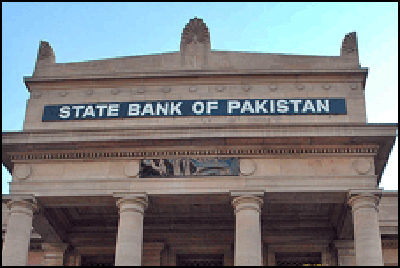
 ISLAMABAD: The State Bank of Pakistan (SBP) has projected gross domestic product (GDP) growth of 2.3 per cent for the current fiscal year 2011, owing to catastrophic floods in August, last year.
Although cotton crop and rice were adversely impacted by floods but the impact was not as bad as anticipated.
Despite the staggering humanitarian cost of the August 2010 floods, there is a possible upside for the agriculture sector.
Other than better-than expected wheat production this year, we are also optimistic about cotton, Sugarcane and rice in FY12, said the SBP Second Quarterly Report on the State of Pakistan's Economy for FY11 presented by Chairman of the Standing Committee on Economic Affairs Malik Azmat Khan in the National Assembly on Thursday.
The Report pointed out that during Jul-Feb FY11, Pakistan's current account deficit was only $98.0 million against $3,027 million in the corresponding period in FY10.
A preliminary assessment suggests that the external sector will remain comfortable, the Report said adding:
we remain cautiously optimistic about progress on the fiscal side, as shown by the recent fiscal measures to reduce the gap by Rs 210 billion this fiscal year.
Having said this, net foreign inflows in the Financial Account have declined sharply, as the stalled IMF program has stopped inflows from other IFIs and bilateral donors.
Nevertheless, the improvement in the current account has pushed Pakistan's FX reserves to record highs, while the PKR remains stable, the report observed.
The SBP report noted with concern that the outlook for inflation is not heartening. Although our projections for FY11 have eased marginally to 14.5-15.5 percent, we fear that inflationary expectations are becoming engrained.
The Report also pointed out that it was important to make a distinction between administered and non-administered prices.
However, we believe fiscal slippages and excessive use of central bank financing which the public correctly sees as printing currency notes has become increasingly instrumental in price/wage-setting behavior.
This is where inflationary expectations come into play, in terms of pushing non-administered prices, it said.
The SBP Report noted that increasing the tax base is without doubt the toughest structural reform to implement, and the one that needs the greatest political will.
The sense of stagnation/resistance is understandable; however, one should realise that a more credible break-through in this area, would pave a much easier path for Pakistan's economy going forward, the report added.
The report said that the lack of fiscal space implies that domestic POL prices will have to match international prices, which means further pressure on inflation, especially food inflation. Furthermore, given the increasing use of imported furnace oil for power generation, tariffs will also have to increase, which could raise social and political pressures.
Then there is the issue of the circular debt in both the power sector and commodity financing, which continues to burden the fiscal side, the Report added.
Oil prices will hit the external sector (this impact could be compounded with softer cotton prices); POL increases will hit the demand for automobiles and construction (and its affiliated sub-sectors); and rising furnace oil prices will exacerbate the energy shortfall that currently exists, it said.
More broadly, the consistent cutting in development spending (PSDP) to meet deficit targets, suggests there are only three avenues that Pakistan can take exceptional steps to increase fiscal revenues; reforming loss-making PSEs; and eliminating end-user subsidies.
On the revenues side, the report said that although RGST has become the focal point, addressing revenue leakages and glaring exemptions (e.g. agriculture and ineffective taxation of properties) needs serious attention.



















Comments
Comments are closed for this article.