


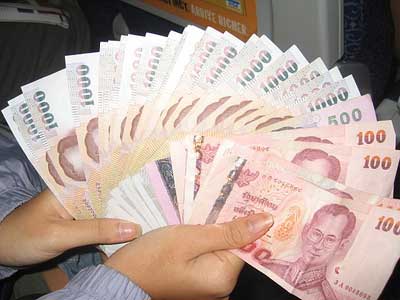
 SINGAPORE: The Thai baht retreated on Thursday as investors, wary of potential central bank intervention to stem further appreciation, booked profits after the currency strengthened in the previous session to levels last seen before the 1997 Asian financial crisis.
The baht fell 0.4 percent to 29.20 per dollar as of 0320 GMT. That compared with gains in some emerging Asian currencies, with the Taiwan dollar up 0.2 percent.
On Wednesday, the baht hit 29.07, its strongest since 1997, according to Thomson Reuters data, as foreign investors poured into Thai bonds.
The central bank has not been spotted buying dollars, but local importers bought the greenback on dips, traders said.
"The market is cautious and watching if there is BOT (Bank of Thailand) intervention," said a foreign bank trader, adding the baht may weaken to 29.24 on more dollar-short covering.
Late on Wednesday, BoT Governor Prasarn Trairatvorakul, who has argued before that the currency's rise was in line with economic fundamentals and with the trend in other regional currencies, said it was "a bit too much and fast".
Traders and analysts suspect the central bank could intervene if the market tries to take the baht below 29.00 per dollar.
The baht has been the best performing emerging Asian currency so far this year with a 4.8 percent gain against the dollar, Thomson Reuters data showed.
The appreciation came as most of Asian peers stayed under pressure, as a weakeneing yen has hurt the export competitiveness of other Asian countries, especially South Korea.
Thai authorities may take steps to stem forestall further advances by the baht as it could hinder exports, which account for some 75 percent of gross domestic product, analysts said.
"Though outright pure intervention is rather unlikely. We'd be more likely to see macro prudential measures in an effort to restrain foreign portfolio inflows," Sacha Tihanyi, senior currency strategist for Scotiabank said.
Still, investors were seeking to buy the baht on dips as the currency is likely to see more capital inflows from investors seeking higher yields, traders and analysts said.
The country is also attracting more foreign direct investments and overseas money for domestic infrastructure projects, they added.


























Comments
Comments are closed for this article.