


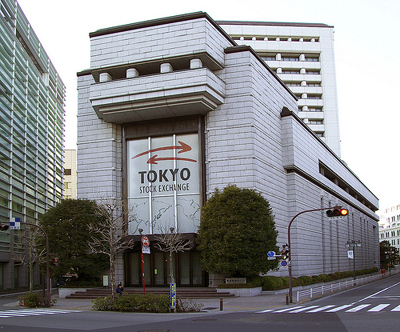
 TOKYO: Tokyo shares fell by noon Tuesday as a strong aftershock highlighted the challenges of stabilising a stricken nuclear plant, with Japan upgrading the crisis to the same level as Chernobyl.
The Nikkei 225 index lost 155.77 points, or 1.60 percent, to 9,563.93. The Topix index lost 11.82 points, or 1.39 percent, to 840.52.
Cautious investors continued to gauge the emerging economic impact of the March 11 earthquake-tsunami disaster and the subsequent nuclear crisis.
On Monday the International Monetary Fund lowered its 2011 growth forecast for Japan, citing "large uncertainties" hanging over the world's third-biggest economy a month after the quake.
The IMF forecast Japan's economy would grow 1.4 percent in 2011 compared with an earlier forecast of 1.6 percent made before the March 11 earthquake and tsunami hit production and shattered supply chains.
Investors were also given a soft cue from Wall Street overnight.
The US earnings season marked a weak start with shares in aluminium giant Alcoa falling in after-hours trading, as sales growth was weaker than expected.
"There is going to be more of a wait-and-see attitude as investors brace for additional US earnings, especially from financial institutions this week," Yumi Nishimura, deputy general manager at Daiwa Securities, told Dow Jones Newswires.
Exporters were lower as the yen strengthened from 84.78 yen to the dollar in early trade to 83.50 yen around noon on deepening nuclear fears. Sony was off 2.95 percent at 2,500.
In another volatile session, shares in Tokyo Electric Power Co (TEPCO), the operator of the crippled nuclear plant, were up 7.80 percent at 539 yen Tuesday.
Japan's nuclear safety agency raised the crisis level of the Fukushima Daiichi nuclear power plant accident from 5 to 7, the highest on the international scale and on par with Chernobyl in 1986.
Workers are battling to control overheating reactors whose cooling systems were knocked out by last month's enormous waves.
The re-assessment from level five on the scale came as Japan was rocked by yet another powerful aftershock from the 9.0 magnitude quake that unleashed a devastating tsunami on March 11.
The 6.2 magnitude tremor hit 77 kilometres east of Tokyo on Tuesday and swayed buildings in the capital, temporarily shutting down subway services and halting bullet trains. US geologists originally put the magnitude at 6.4.
In a fresh setback, a fire broke out early Tuesday morning at a battery unit outside a building at the No. 4 reactor unit, but was quickly extinguished and did not spread to other areas, TEPCO said.
The operator said it was not related to Tuesday's quake.




















Comments
Comments are closed for this article.