

 ANKARA: Turkey will miss its official economic growth forecasts for the next three years, a Reuters poll suggested, with several economists putting the blame on falling investment due to the government delaying long-awaited structural reforms.
The poll taken over the last week of 27 economists based in and outside Turkey predicted a 3.0 percent expansion this year, below the government's forecast of 3.2 percent.
Growth is expected to pick up to 3.2 percent next year and 3.5 percent in 2018, well below Ankara's targets of 4.4 percent and 5 percent, respectively.
"We don't expect a significant recovery in private investment unless there is progress in the structural reform roadmap.
The structural reforms have not been carried out yet, and this will have a negative impact on investments," said Muammer Komurcuoglu, economist at Is Invest.
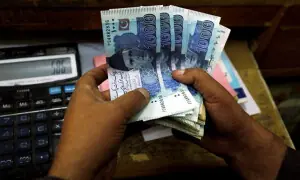
"For this reason, our growth forecasts are below the government's targets," he said. Since last week, when the government extended by another three months the state of emergency it imposed after an attempted coup in July, the lira has been trading near historical lows.
Turkey's involvement in the fight against Islamic State in Syria and Iraq has also weighed on the lira and driven down tourism revenues.
July's failed coup has hurt the economy.
Tourism has also taken a battering this year as tension between Turkey and Russia and a spate of bombings have led to a fall in tourist arrivals.
Economists forecast that tourism revenue will drop about $8 billion this year, equivalent to 1 percent of Turkish gross domestic product.
Tourism revenues are among the key sources of financing for Turkey's current account deficit.
A 38 percent drop in the number of foreigners visiting Turkey in August signals more pain for an economy already smarting from weak private investment and exports.
Turkish GDP grew a stronger-than-expected 4 percent in 2015 and 3.9 percent in the first half of this year.
But the average unemployment rate rose to 10.7 percent this July, official data showed on Monday, up from 9.8 percent in the same period a year earlier.
Economists forecast inflation at 8 percent at the end of this year, higher than the government forecast of 7.5 percent. Inflation is expected to ease to 7.5 percent in 2017, although that too is still higher than the government's 6.5 percent forecast.
Turkey has missed its inflation targets for five years in a row, with a 20 percent lira depreciation against the dollar and rising food prices to blame for the failure last year.
The central bank is expected to keep its benchmark one-week repo rate unchanged at 7.5 percent until at least the end of next year.



















Comments
Comments are closed for this article.