

Three central banks, three directions

 WASHINGTON: The world's major central banks are about to break ranks.
Since the financial crisis entered its worst phase in late 2008, monetary policy has moved in the same direction across all advanced economies. On Thursday, the European Central Bank looks all but certain to become the first to shift interest rates higher as it tries to tame rising inflation.
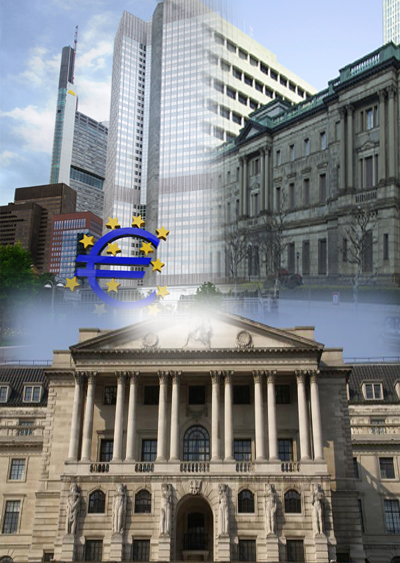
The ECB, the Bank of Japan and the Bank of England all conclude policy-setting meetings that day, and they will probably reach three different decisions.
The BOJ, which already cut rates to near zero, will probably downgrade its economic assessment and may consider finding more ways to ease as a buffer against the earthquake's economic damage. Most economists think Japan is heading for a brief recession before rebuilding efforts revive growth.
The BoE is caught between the crosswinds of high inflation and weak economic growth, which creates considerable policy debate but only a slim chance for any move this week.
While Thursday's policy course looks largely set, the next moves are harder to predict.
Inflation is well above both the ECB's and BoE's targets. But the primary culprits are food and energy costs, which are responding to mostly external forces, not overheating domestic demand. An ECB hike won't stop fighting in Libya.
That is why Sherry Cooper, the chief economist at BMO Financial Group in Toronto, has her doubts about whether the ECB ought to be tightening -- particularly when government spending cuts are putting a drag on economic growth.
"While food and energy prices have certainly been rising, it has little if anything to do with G7 monetary policy and it is therefore hard to imagine why rate hikes in Europe or the US would be warranted," she said.
Despite a flurry of hawkish comments from some Federal Reserve officials, investors still see a 2011 US rate hike as a fairly remote possibility. Fed Chairman Ben Bernanke is scheduled to speak on Monday, and markets will be listening closely to see whether he reveals any support for the view that rates ought to move higher by year end.
The ECB has a few extra considerations to keep in mind before it makes any more moves. Lena Komileva, global head of G10 strategy with Brown Brothers Harriman in London, said higher ECB rates could cause problems for countries like Greece, Ireland and Portugal that are struggling to solve sovereign debt crises.
"Surging borrowing costs and a strong euro exchange rate breed increased default risks along the crisis-stricken periphery," she said. "Increased ECB hawkishness off the back of energy prices is a double-edged sword."
Komileva said she thinks investors are pricing in more tightening than the ECB will actually deliver.
As for the BOJ, sources told Reuters the central bank would revise down its economic assessment at Thursday's meeting, but it is not clear whether it will announce additional support measures then or wait until a later meeting on April 28.
Shortly after the earthquake and tsunami hit in March, the BOJ doubled its funding for asset purchases and has come under pressure to buy more government bonds. Additional measures could include offering low-interest one-year loans to banks so they can provide credit to quake-affected businesses.
Even before the earthquake struck, Japan's economy looked shaky and the International Monetary Fund had recommended that the BOJ keep rates low, said Mahmood Pradhan, the IMF's mission chief. He said the central bank's actions in the weeks following the disaster had been appropriate.
"I think they should be doing exactly what we have seen them do since the earthquake," he said in an interview on Reuters Insider. "We've seen very large liquidity injections -- over 40 trillion yen -- and I think they should maintain that. That's really what the economy needs."




















Comments
Comments are closed for this article.