


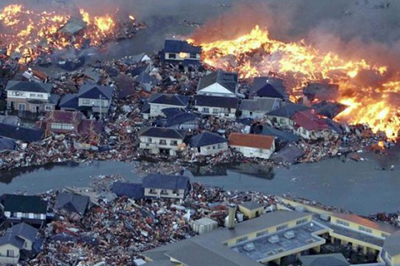
 SYDNEY: The devastating earthquake and tsunami in Japan will cost Australia some Aus$2 billion (US$2.07 billion) in lost export earnings, trimming economic growth, Treasurer Wayne Swan said Sunday.
Japan is the country's second-largest trade partner after China and the seafloor quake and tsunami on March 11, which left about 28,000 people dead or missing, damaged ports and power stations.
Australia is the world's biggest shipper of coal and iron ore and Swan admitted the catastrophe would leave its mark on the Australian economy.
"Preliminary Treasury estimates show that the earthquake and tsunami will cut demand for our bulk commodity exports in the short term and likely slash around $2 billion from export earnings in 2010-11," he said.
"This could subtract less than a quarter of a percentage point from GDP growth this financial year, and comes on top of the half a percentage point impact from the floods and cyclone at home.
"Japan's nuclear situation and power shortages continue to weigh on international financial markets and may prolong the impact of this crisis on the global economy," Swan added.
The hit to the economy comes after the Treasury said destructive floods in Australia this year could cost up to $8.3 billion in lost coal production a sharp increase on earlier projected losses.
The huge deluge that swamped coal-producing Queensland state in January caused significant damage, halting mine production and cutting key transport infrastructure,
The government has estimated the floods, which covered an area the size of France and Germany combined and were followed by destructive Cyclone Yasi, will cut coal production by about 15 million tonnes in the March quarter alone.
But businesses expect total coal production losses to be much higher, worth roughly between Aus$5.5 and Aus$8 billion.
"No one was ever under any doubt that the financial toll of the devastation we've seen in Queensland and elsewhere in Australia this summer was going to be substantial," Swan said.
"The latest figures back that up, and indicate the cost is likely to be even larger than we initially thought."
The twin natural disasters are expected to weigh heavily on the Australian budget due to be announced on May 10, which will seek to balance their costs against inflationary risks caused by an unprecedented Asia-driven mining boom.
Swan warned of tough decisions ahead.
"These events all have significant implications for our budget as well as our economy," he said.
"Weaker growth will clearly mean that revenues take a substantial hit in the near-term, and this comes on top of the rebuilding and recovery costs in Queensland.
"As the prime minister said last week, there'll need to be some tough decisions in the budget as we stick to our strict fiscal rules."
Australia, dubbed the "wonder from Down Under", was the only major Western economy to avoid recession during the financial crisis thanks mainly to its coal and iron ore exports and emergency stimulus package.
It now has unemployment of just 5.0 percent and a currency at historic highs against the US dollar, although interest rates have risen rapidly since dropping dramatically during the crisis. They are currently at 4.75 percent.




















Comments
Comments are closed for this article.