


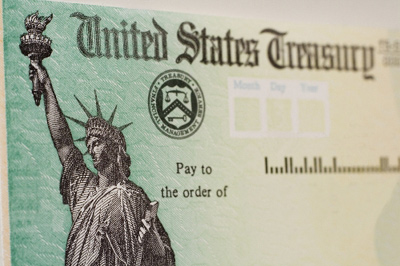
 NEW YORK: US benchmark Treasuries yields dropped to their lowest levels in two weeks on Friday as concerns that the economy would be harmed by tax hikes and spending cuts and a fall in consumer confidence spurred demand for safe haven bonds.
Investors are focused on Washington as President Barack Obama and lawmakers launch a last-chance round of budget negotiations days before a New Year's deadline to reach a deal or watch the economy go off a "fiscal cliff."
Window-dressing for year-end and month-end extension buying also boosted demand for Treasuries on the second last trading day of 2012.
"I think the most likely scenario is that we will probably go over the cliff, there is a lot of posturing on both sides," said John Fath, managing partner at BTG Pactual in New York.
Political bickering in Washington is making investors lose faith that lawmakers will reach substantive consensus on how to reduce the US deficit, with the most likely outcome that they will agree on smaller issues in early January and then extend negotiations on larger issues to later in 2013.
Treasuries have benefited from uncertainty over the outcome of the negotiations, and yields have been held down as investors worry that a fall in confidence will harm the economy, which would keep rates low.
Benchmark 10-year notes rose 8/32 in price on Friday, with yields falling to 1.71 percent, down from 1.73 percent on Thursday and from a two-month high of 1.85 percent a week and a half ago.
Thirty-year bonds rose 18/32 in price to yield 2.88 percent, down from 2.90 percent on Thursday and the lowest since Dec. 17.
An agreement to avoid a fiscal crunch, and boost the country's debt ceiling, would likely benefit riskier assets and send Treasuries yields higher, though some investors question how long a stocks rally and Treasuries selloff would last if the deal lacks a long-term plan for the deficit.
The risk of further negative actions on the US credit rating is also weighing on the market.
Treasuries rallied when Standard & Poor's cut the US credit rating to the second highest investment grade in August 2011, though investors have said there's no certainty the market will react the same way a second time.
"The kneejerk reaction is that there could be a move to flight-to-quality," said Fath. Longer term, "there might be a bit of an illusion in the marketplace, particularly with lawmakers, that it will have no effect or bearing on rates, but at some point it will."
Fitch Ratings and Moody's Investors Service both rate the US the top triple-A and all three major rating agencies have a negative outlook on the country.
The Federal Reserve will buy up to $5.25 billion in notes due in 2021 and 2022 on Friday in its final buyback as part of its Operation Twist program, in which it buys long-term notes and funds the purchases with sales of short-term notes.
The central bank will replace that operation next year with outright purchases of Treasuries from 5-years to 30-years as it seeks to boost spending and economic growth.
Center>Copyright Reuters, 2012

















Comments
Comments are closed for this article.