


 TOKYO: Japanese authorities advised against allowing infants to drink tap water in Tokyo due to raised radiation levels and the United States became the first nation to block or bans some food imports from Japan.
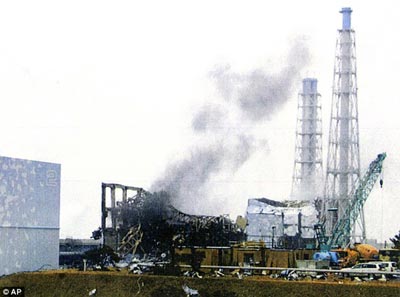
The crisis at the tsunami smashed nuclear power plant, 250 km (150 miles) north of the Japanese capital, appeared far from over with workers attempting to gain control ordered to leave the site after black smoke began rising from one of its six reactors.
The plant was crippled by a 9.0 magnitude earthquake and tsunami on March 11. Some 23,000 people have been left dead or missing.
Tokyo authorities said water at a purification plant for the capital of 13 million people had 210 becquerels of radioactive iodine more than twice the safety level for infants.
"This is without doubt, an effect of the Fukushima Daiichi plant," a Tokyo metropolitan government official said, referring to the nuclear power station.
Tokyo governor Shintaro Ishihara, however, said the radiation level posed no immediate health risk and water could still be used.
"But for infants under age one, I would like them to refrain from using tap water to dilute baby formula," he said.
International concerns about food safety are growing, with the United States the latest to impose controls.
The U.S. Food and Drug Administration said it was stopping imports of milk, vegetable and fruit from four prefectures in the vicinity of the crippled nuclear plant.
South Korea may be next to ban Japanese food after the world's worst atomic crisis since Chernobyl in 1986.
France this week asked the European Commission to look into harmonising controls on radioactivity in imports from Japan.
Food made up just 0.6 percent of Japan's total exports last year.
Authorities said above safety radiation levels had been discovered in 11 types of vegetables from the area, in addition to milk and water.
The Asian nation's worst crisis since World War Two may have caused $300 billion damage and has sent shock waves through global financial markets.
U.S. Defence Secretary Robert Gates said he was concerned about radioactive fallout affecting the U.S. 55,000 troops in and around Japan, many involved in a massive relief operation for Washington's close ally.
"We're also deeply concerned about the wellbeing of our Japanese allies," he said.
The Japan crisis has dealt a blow to the nuclear power industry around the world.
Italy became the latest nation to re-assess its programme, announcing a one year moratorium on site selection and building of plants.




















Comments
Comments are closed for this article.