


 SINGAPORE: The Indian rupee and the South Korean won jumped against the dollar on inflows, while the Philippine peso rose on talk of incoming money as hopes for further policy easing by major central banks boosted riskier assets.
The rupee gained up to 1.2 percent to 54.75 against the dollar, the highest since May 22, helped by share investment inflows, following official clarification of some tax rules and supported by improved foreign investor sentiment.
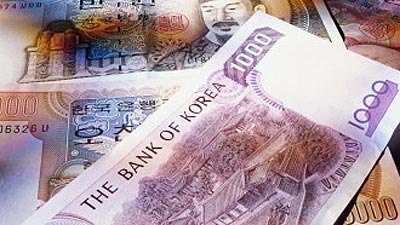
The won cleared technical resistance to touch a near two-month peak with foreign money seeking South Korean bonds and shares.
Expectations of more monetary easing, triggered by gloomy factory data from Europe to the United States, caused investors to cover short positions in emerging Asian currencies such as the Malaysian ringgit and the Singapore dollar.
Most regional units also gained versus the euro as the European Central Bank (ECB) was widely seen lowering its benchmark policy rate at its meeting on Thursday.
"The best trade is to sell euro/Asia FX as Asia is still healthy while Europe is sick. The ECB is expected to cut its rate by 25 basis points," said a senior Malaysian bank dealer in Kuala Lumpur.
"If you go short euro/Asia, you don't need to worry about dollar. Euro/dollar is more prone to negative news."
Earlier this year, especially before the euro zone's debt crisis deepened, emerging Asian currencies had been major beneficiaries of monetary policy easing by big central banks.
But it is premature to expect regional units to enjoy such rallies again, some dealers and analysts said.
"All bets are on QE3, but I doubt such inflows (to emerging Asia) can be sustained," said Frances Cheung, senior strategist at Credit Agricole CIB in Hong Kong, referring to a third round of quantitative easing by the US Federal Reserve.
"Even with QE3, I doubt if the impact could be as big as previous easing. USD yields are already very low so any further diversification in the search for higher yields in Asia triggered by quantitative easing could be very limited," Cheung added.
WON
Dollar/won slid to 1,137.5, the lowest since May 8, breaking through a 200-day moving average and a 100-day average.
It is first time for dollar/won to end local trade below the 200-day average since September and the 100-day average since May.
The pair came under pressure as stock and bond inflows triggered stop-loss selling.
Recently, some foreign central banks have bought South Korean bonds, especially long-term debts, bond market sources said.
Hyundai Industries Co Ltd also said it has won a 1.34 trillion Korean won ($1.17 billion) order to build 10 large container ships from an Europe-based company, causing expectation for more dollar supplies.
PHILIPPINE PESO
Dollar/peso hit this year's low of 41.71 as interbank speculators sold the pair amid talk of one-off inflows of some $600 million-$700 million with US names buying the local unit recently, dealers said.
The talk could be linked to BDO Unibank INC's $1 billion stock rights issue, dealers and analysts said.
On Monday, the Philippine lender said in a statement that it has completed the offering, which raised gross proceeds of 43.5 billion pesos ($1.03 billion).
The outlook for the peso remains bright, given the country's positive growth picture and hopes for a rating upgrade, although it may see some corrections after the sharp gains and as the transaction of inflows could have been completed, dealers and analysts said.
"The broader fundamentals are quite positive for PHP," said Jonathan Cavenagh, a senior FX strategist at Westpac in Singapore.
"But we'd better wait for better entry levels to get long PHP," said Cavenagh, adding he would prefer to wait for a rally in one-month dollar/peso non-deliverable forwards (NDFs) back toward 43.00.
The one-month NDFs fell 0.7 percent to 41.66, the lowest since 2008 April.
A Manila-based dealer said peso spot could strengthen to the mid-41 level, saying: "If we get corrections, the market is poised to sell dollar/peso on rallies."





















Comments
Comments are closed for this article.