

Pompeo urges NATO allies to adapt to new threats from Russia, China

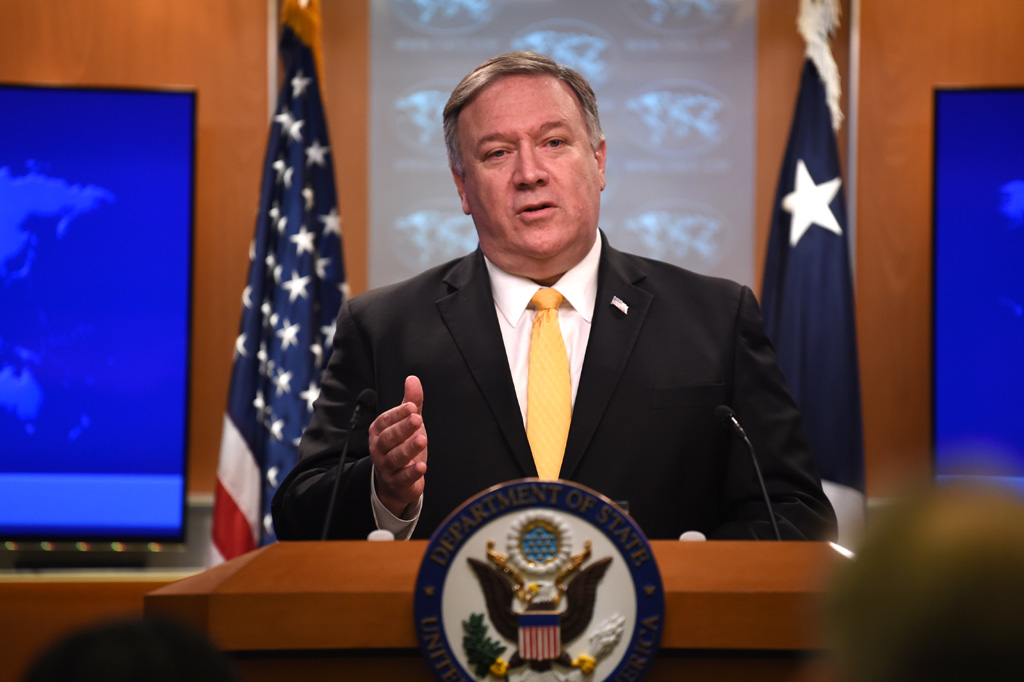
WASHINGTON: US Secretary of State Mike Pompeo on Thursday called on NATO allies to adapt to confront a wide variety of emerging threats, including Russia's increased aggression, Chinese strategic competition and uncontrolled migration.
Pompeo made the call at the start of a meeting of North Atlantic Treaty Organization foreign ministers in Washington marking the 70th anniversary of the transatlantic military alliance.
"We must adapt our alliance to confront emerging threats ... whether that's Russian aggression, uncontrolled migration, cyber attacks, threats to energy security, Chinese strategic competition, including technology and 5G, and many other issues," Pompeo said.
In a 2018 strategy document, the U.S. military put countering China and Russia at the heart of a new national defense strategy.
The meeting's first session focused on ways to deter Russia, including in the Black Sea where it seized three Ukrainian naval vessels last year.
NATO chief Jens Stoltenberg called on Moscow to release the ships and their crews.
He said Russia's breach of the 1987 Intermediate-range Nuclear Forces (INF) Treaty was part of a "pattern of destabilizing behavior."
Washington has said it will withdraw from the treaty this summer unless Moscow ends its alleged violations of the pact, which rid Europe of land-based nuclear missiles.
"We will not mirror what Russia is doing," said Stoltenberg. "We will be measured and coordinated, and we have no intention of deploying ground-launched nuclear missiles in Europe."
In his remarks, Pompeo said NATO should also confront increased cyber warfare, including from China.
Washington has warned it will not partner with countries that adopt China's Huawei Technologies systems, but has been at odds on the issue with the European Union, which has shunned U.S. calls to ban the company across the bloc. The bulk of NATO members are EU countries.
Huawei is under scrutiny from Western intelligence agencies for its perceived ties to China's government and the possibility its equipment could be used for espionage. Huawei has repeatedly denied engaging in intelligence work for any government.
The United States has also been at odds with European countries over the failure of many of them to meet NATO defense spending guidelines of 2% of GDP.
Stoltenberg told reporters that NATO allies should commit to increased defense spending to improve burden-sharing in NATO.
"All NATO allies made a pledge to invest more in defense to improve burden sharing in our alliance, and I expect all allies, including Germany, of course, to make good on the pledge we made together," the NATO secretary general said.
U.S. President Donald Trump has called on NATO countries to pay even more than 2% of their gross domestic product for defense. He told NATO leaders last year to increase defense spending to 4% of GDP. He said the United States pays 4.3% of its GDP to NATO.
Trump has singled out Germany for not doing enough.
Stoltenberg said Germany was now making progress, but all allies needed to do more.
"We didn't make this pledge to please the United States. We made it because we live in a more unpredictable and uncertain world," Stoltenberg said.
The NATO chief said disagreement between NATO members Turkey and the United States over Turkey's plan to buy S-400 missile defense systems from Russia was not part of the formal agenda of the Washington meeting, but would be discussed on the margins.
The United States has halted delivery of equipment related to its advanced F-35 fighter jets to Turkey over its S-400 plans.
The United States says Turkey's purchase of the Russian air defense system would compromise the security of F-35 aircraft, which is built by Lockheed Martin Corp and uses stealth technology.











Comments
Comments are closed for this article.