

Commercial use of residential units: CDA to implement building bye-laws
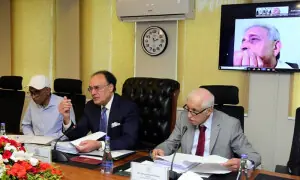
The Capital Development Authority (CDA) board has directed its planning wing to devise a strategy for the implementation of the existing building bye-laws, which strictly prohibit commercial use of residential units, it was learnt.
"Under the Islamabad Residential Sectors Zoning Regulation no land or building will be put to a use that does not conform to the building bye-laws. According to the law CDA has the authority to impose heavy fines against the owners of residential buildings being used for commercial purposes", an official source told Business Recorder on Saturday.
The official said that under the law, the CDA could also cancel the plot allotment within three months if the violators continue the commercial use of residential plots. The CDA board has asked its planning wing to devise a strategy to ensure strict implementation of building bye laws as well as directed it to make necessary amendments in the existing law if required to improve implementation, he said.
He said that the increasing use of residential units for commercial purposes is not only an open violation of building bye laws but also creating security problems as well as increasing the miseries of citizens. He also disclosed that owners of residential buildings are violating CDA's laws with the connivance of the Authority building control structure directorate.
According to a survey conducted by the CDA Building Control Structure Directorate in 2009, 835 houses were being used commercially in residential areas of the capital. As many as 345 houses out of 835 were being used as offices of international organisations including embassies, 97 as guesthouses, six as restaurants, 259 as schools and 128 for other businesses such as beauty parlours and clinics.
Due to CDA's failure to monitor the building bye-laws, the dwellers of the houses in close vicinity to the embassies are suffering because of the security arrangements made for the foreign missions. The official pointed out that the schools and hostels situated in residential areas not only increase pressure on the civic facilities provided in the area, but also produce hurdles in the mobility of vehicular traffic as hundreds of vehicles enter and leave the area during the times of opening and closing of these institutions. The commercial use of residential units in the federal capital is also badly affecting the commercial areas of the city, he added.
He said that in violation of CDA's zoning regulations, there were commercial offices in the residential areas of the federal capital include NGOs, schools, guesthouses, hotels, beauty parlours, other businesses and embassies. These are mainly located in F-7, F-6, F-8, and G-6, G-10, E-7, F-10, I-8 and sector I-9.
According to a real estate agent the rent of housing units in the residential sectors is increasing with each passing day, which is also causing serious housing shortage. Most of the NGOs and multi-national companies offer high rent to the owners due to which people with smaller monthly income find it difficult to get affordable accommodation in the federal capital.


















Comments
Comments are closed for this article.