

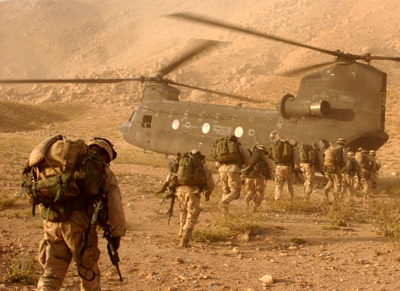
 The Afghanistan scenario remains frustratingly grim and unpredictable. The little hope that the much-ballyhooed Qatar peace process would help Afghanistan moving out of the shadows of war and ushering in real peace seems to be fading out. The Taliban has refused to join the talks scheduled to open at their newly set up office at Doha accusing Americans' "shaky, erratic and vague" standpoint. Washington's reaction to the Taliban threat of boycott is confused if not vague with the State Department wondering "whether ...there is a way to get back to it (Qatar process), we'll just have to see". And 'see' Americans must because not alone the Taliban, even their man in Kabul, President Hamid Karzai, is asking them to "immediately" pull out of the rural areas of Afghanistan, from where the Nato forces were gradually pulling out, handing over local law and order authority to local administrations. Where do we go from the rather early jolt to the Qatar peace processes, the Americans are in a real quandary? By coming May, the Nato conference at Chicago is expected to come up with a clear, well-defined roadmap, but the reports from the Afghan warfront are disappointingly disproportionate to the costs the Western alliance and its regional allies like Pakistan have paid for the final victory - without referring to the pages of history which read that Afghanistan has been the 'graveyard of empires'. Not that despite massive investment of hard currency and human blood victory over the ragtag Taliban insurgents was a gamble from day one, chances of victory if there were any, have been increasingly frittered away as the Afghan war enters its endgame loop. Of course, the Taliban had fought furiously, even largely blunted the much-touted 'surge' but they were nowhere closer to succeeding any time soon. But then the Americans help them, of course vicariously. As American engagement in arid, dusty and inhospitable land began losing public support and the cry for a pullout became louder the Nato countries, President Obama thought it better to pull out than keep dreaming for a 'modern, pro-West democracy'. The outer date for end to the combat role of the Isaf force was fixed at the end of 2014, a deadline ridiculed, jokingly enough, by his political detractors as too early. But the scheme is that the United States would still remain in Afghanistan under the rubric of 'advice and assist', when actually nursing the design to maintain a permanent presence as a forward operating base to keep watch on energy-rich Central Asia. But the whole edifice of fond hopes and unreal war victories came crashing in the wake of the highly offending display of arrogance and crass insensitivity to human values. After the shocking urinating on corpses of the Taliban incident came the absolutely unacceptable act of desecration of the Holy Quran, which triggered countrywide angry protests, and then this brutal killing of unarmed Afghans in their homes by a rogue US soldier. If these incidents stem from the sick mind of the invaders they also tend to prove that Nato troops are sick of the prolonged Afghan war, which is increasingly forfeiting public support in their countries. The rapid nose-diving of domestic Afghan support for foreign military presence and growing disenchantment in homelands the United States has lost the political clout that it thought would help its negotiating strength at the Doha talks. The anti-foreign sentiment that was previously confined to the Taliban has spread as a result, in the words of former ambassador Rustum Shah Mohmand, "More Tajiks, Uzbeks, Turkmen and even Hazaras will become part of a growing insurgency". Maybe the message is yet to sink in the Nato mind but the Afghan Taliban are fully aware of the rapid transformation now under way in the Afghan mind. Why would they throw barter away their clearly augmented diplomatic option at the Qatar negotiations? Their opponents have got to recognise and accept the emerging reality and let it be their strength for peaceful exit from Afghanistan. After all, the Americans decided to sit with the Taliban after fully analysing the fallout on its relationship with other Afghan power centres, including the Karzai-led government in Kabul. Now that the Taliban have conditioned their participation with acceptance of their demands of keeping Karzai out and promised fast-track troop pullout, the American side should agree to that framework. Given the challenge of Afghanistan becoming increasingly hostile to a foreign military presence - no less obvious from the recurring incidents of foreign troops being attacked by their Afghan counterparts - the US-led coalition need to reappraise its policies and move urgently for the blood that is being spilled now is an insult to humanity. Copyright Business Recorder, 2012














Comments
Comments are closed for this article.