

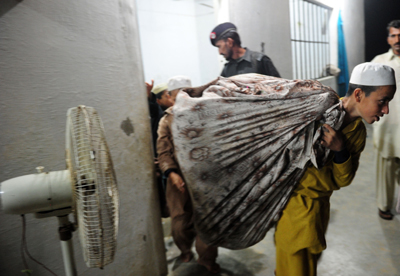
 Not a week goes by when Pakistanis aren't left in shock at the preposterous and heinous events unfolding around them. The latest story of a "madrassah jail" being operated in Karachi in which more than 50 students - ages 7 to 45 - were kept in chains in its basement is just one addition to this chain. The picture which has emerged from preliminary reports - based on interviews with those held in captivity and statements given by local police - is demonstrative of the ignorance and desperation of the families of these boys and men. Many of the captives were reportedly drug addicts, and their families had entered them in the seminary for rehabilitation. A few were apparently mentally ill and were put there to ward off "evil spirits". What happened in that madrassah is sheer cruelty and abuse of power by the seminary's administration. The torture marks on many of the captives' bodies, and their verbal statements before the media, are evidence of the kind of "treatment" they were being given. Forced to live in sub-human conditions, physically tortured, and emotionally isolated from the rest of the world, these boys and men went through more psychological trauma than therapeutic recovery. But unfortunately, with nearly half the seminaries operating in the country unregistered, there is no way for the authorities to monitor their activities. This effectively means that they can get away with just about anything as long as it is being done inside their four walls. Ironically not only did the families willingly bring their children to this jail, but even after they found out about the madrassah's barbaric treatment, some still showed willingness to let their children stay. This kind of attitude, this acceptance of inhumane treatment, is the result of lack of knowledge about the reality of addiction and mental illnesses. Studies have indicated that in the last 30 years, drug users in Pakistan have gone up from 50,000 to over 8 million. There is no credible aggregated data on people with mental health issues, because either people can't identify mental illness or are too ashamed to admit it. Coupled with this, absence of any effective public awareness campaigns by the government, means that a good percentage of people don't even know who to turn to for help. Thus it is understandable when parents, falling prey to superstition, rely on the local clerics for help in all matters of life. Their blind trust on seminaries doing what is best for their child leads to their acceptance of whatever abuse their children might face. To combat this mindset, there needs to be a decisive policy on eliminating torture, whether in state jails or in religious institutions. Also, a lot more work needs to be done disseminating information about drug addiction, mental illness and their treatment. On Tuesday, the police had already started handing over children to their parents after they had been questioned. Predictably, no parents decided to file a case against the seminary officials. For those families who had admitted their loved ones for drug addiction treatment, there won't be any follow-up to monitor what they will do next. As things go, there probably won't be any effort to educate the families about the options available to them to rehabilitate their family members. The raid was a result of a news package which pointed out human rights violations in the vicinity of the madrassah. It is hoped that the seminary officials are captured and made to face the consequences of their actions. But what the media, our policy-makers, city district government, and concerned citizens, must also focus on is what happens to the captives after they return home and the story has run its usual news cycle. This raid has not changed the challenges they and their families are facing. It is up to us to make sure a recurrent fate does not await them in some other seminary. Copyright Business Recorder, 2011




















Comments
Comments are closed for this article.