

The rising cost of utility bills has gotten people thinking about ways and means to kerb spending and somehow reduce costs. Very often the term 'solar power' crops up and conventional wisdom permits people to realise that it's a technology that harnesses the suns light and somehow converts this into realisable energy. Since the sun doesn't charge any money for coming out the operating cost has got to be free. All of this is true. However, what people are left wondering is:
-- How much does it cost ?
-- Does it work reliably ?
-- How can it be implemented ?
-- Is it complicated ?
Before going on to answer these questions, lets talk about the available solar technologies. There is an abundance of solar technologies available ranging from solar cookers, solar water heaters, solar for electricity generation, solar air-conditioning etc. This article will focus on solar water heating as it's a technology that offers commercial sensibility for the urban residential landscape.
Solar water heaters:
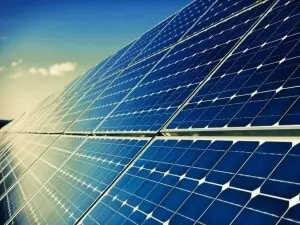
Solar water heaters use the suns energy and convert this into heat. This heat can produce hot water that is in excess of 70 degrees C. For domestic hot water applications such as showering and washing, a temperature below 50 degrees C is sufficient. Water heating through solar is a proven technology that is successfully operating in all parts of the world including Pakistan. Working installations exist in Karachi through to the Northern Areas.
How much does it Cost?
The rising cost of gas has made it financially viable to install this technology at both a large and small scale.
-- Typical cost of a solar water heater suitable for a family of 4 persons cost's Rs 30,000
-- Less the cost of a conventional gas geyser (Rs 18,000)
-- Capital cost difference = Rs 12,000
-- Annual gas bill for a family (excluding the cost of a stove) = Rs 12,000
-- Saving from solar (80% - backup will be used 20% of the time)
-- Payback = 1.25 years
-- Considering that the life of the equipment is greater than 15 years a payback of 1.25 years is excellent
-- Does it work reliably?
-- Yes? There is adequate sunshine available in Pakistan to allow solar thermal equipment to produce hot water throughout the year. The key is to size and install the system correctly. Unlike conventional gas geysers that are able to produce hot water at any time of the day so long as gas is available, solar water heaters can only produce hot water during daylight hours when the sun is shining. Hence, the size of panels and tank storage required depends on the consumption per day. Failure to size the system accurately will result in an unsatisfactory result. The blame will rest not on the technology but on the system designer.
-- How can it be implemented?
A solar water heater is a piece of engineering. To have a correct working installation requires that site conditions be examined (is there enough sunshine available where the system will be placed etc) and consumption requirements be ascertained. For this a proper company dealing with not only the sale of the product but also the installation and after sales support should be engaged.
Is it a complicated exercise to operate?
Once installed the equipment is very easy to operate. Most small scale units designed for residences have no moving parts so chances of failure are minimal. As long as the unit is kept clean, one can enjoy hot water courtesy of the sun.
Tips for users looking to invest in this technology:
-- make sure to engage a proper company that suggests a correctly sized unit
-- have site conditions examined prior to installation including hot water piping requirements
-- have the system cleaned on a regular basis
-- have either an electrical or gas backup heating arrangement for the days when the sun doesn't shine or incase the consumption of water exceeds typical demand.
Writer: Shaaf Abdul Aziz Mehboob - Director of Adaptive Technologies (Pvt) Ltd; vice-president: Renewable and Alternative Energy Association of Pakistan. A firm dealing with solutions pertaining to energy efficiency and renewable energy. E:mail: [email protected]















Comments
Comments are closed for this article.